Holistic Health AI
Home Persian Seasonal Wellness · فصول

Eat, move, and rest with the seasons

Persian medicine teaches that the body is a season in itself — warm or cool, dry or moist — and that good health comes from gently matching food, herbs, sleep, and movement to the season outside. This is the rhythm Iranian families have followed for a thousand years, and the same rhythm modern circadian and Blue Zone research keeps rediscovering.

Persian seasonal botanicals across the year

Spring

Farvardin – Khordad · Mar – May

Cleanse and lighten. Warm & moist — the body wakes, sap rises, the liver cleanses winter.

Organ in focus

Liver & gallbladder (kabed) — drain stored winter heaviness.

Common imbalances

  • Sluggish digestion and morning heaviness
  • Spring allergies, itchy eyes, congested sinuses
  • Skin breakouts as the body offloads winter residues
  • Mood swings as energy lifts but sleep remains short

Daily rituals

  • Khaneh-tekani — the Nowruz spring cleaning is also a body reset: simplify meals for a week.
  • Walk outside as the sun rises; the lengthening light retrains circadian rhythm.
  • Drink a morning glass of warm water with lemon and a pinch of saffron.

Eat

  • Bitter greens — watercress, dandelion, parsley, fresh fenugreek (shanbalileh)
  • Spring herbs (sabzi-khordan): mint, tarragon, basil, savory, scallion, radish
  • Sour brighteners — verjuice (ab ghureh), sumac, lemon
  • Lighter grains — barley, freekeh, soaked sprouted wheat
  • Rose petals, violet, and chamomile teas to lift mood

Ease back on

  • Heavy slow-cooked stews
  • Excess dairy and cheese
  • Late-night eating

Helpful herbs

Conditions in season

Summer

Tir – Shahrivar · Jun – Sep

Cool, hydrate, slow down. Hot & dry — the body runs hot, fluids drain, the heart works harder.

Organ in focus

Heart & blood (qalb va dam) — protect with cooling, moistening foods.

Common imbalances

  • Headaches and irritability from heat
  • Dehydration, dry skin, fatigue in the afternoon
  • Acid reflux and inflamed gut
  • Restless sleep on hot nights

Daily rituals

  • Heaviest meal at midday; light yogurt-and-herb dinner.
  • Afternoon rest (qiluleh) — the Persian siesta protects the heart in heat.
  • Sprinkle rosewater on the forehead and wrists to cool quickly.

Eat

  • Cucumber, watermelon, melon, summer berries, fresh figs
  • Yogurt and doogh (yogurt + water + mint + cucumber + salt)
  • Mast-o-khiar — yogurt, grated cucumber, dried mint, walnut, raisin, rose
  • Faloodeh and khak-shir drinks instead of iced sugar drinks
  • Pomegranate, sour cherry, verjuice — cooling sour fruits

Ease back on

  • Hot spices in midday meals
  • Heavy red meat at lunch
  • Long sun exposure 11am–4pm

Helpful herbs

Conditions in season

Autumn

Mehr – Azar · Oct – Dec

Moisten and warm gently. Cold & dry — winds rise, lungs and skin dry out, sleep deepens.

Organ in focus

Lungs & large intestine (rieh) — protect from dryness and wind.

Common imbalances

  • Dry cough, dry throat, cracked lips
  • Constipation and dry skin
  • Joint stiffness in cold mornings
  • Low mood as light declines

Daily rituals

  • Soak walnuts and almonds overnight — eat 5–7 each morning.
  • Oil massage (rowghan-mali) once a week — sesame or olive oil before a warm shower.
  • Move sleep 30 minutes earlier as the sun sets earlier.

Eat

  • Soaked nuts and seeds — walnuts, almonds, sesame (ardeh/tahini), pistachio
  • Olive oil, ghee, sesame oil — warming, moistening fats
  • Cooked fruits — quince (beh), apple, pear, fig, date
  • Pumpkin, butternut squash, beet, sweet potato
  • Saffron, cinnamon, cardamom teas in the late afternoon

Ease back on

  • Raw cold salads at dinner
  • Dry crackers and dry breads without oil
  • Skipping warm breakfast

Helpful herbs

Conditions in season

Winter

Dey – Esfand · Dec – Mar

Kindle the inner fire. Cold & moist — the body conserves, kidneys store warmth, digestion slows.

Organ in focus

Kidneys & bones (kolieh) — store warmth, protect the lower back.

Common imbalances

  • Cold hands and feet, low circulation
  • Heaviness, low motivation, winter sadness
  • Stiff joints and lower-back ache
  • Frequent colds and slow-clearing congestion

Daily rituals

  • Warm feet before bed — wool socks, a foot soak with rosemary and salt.
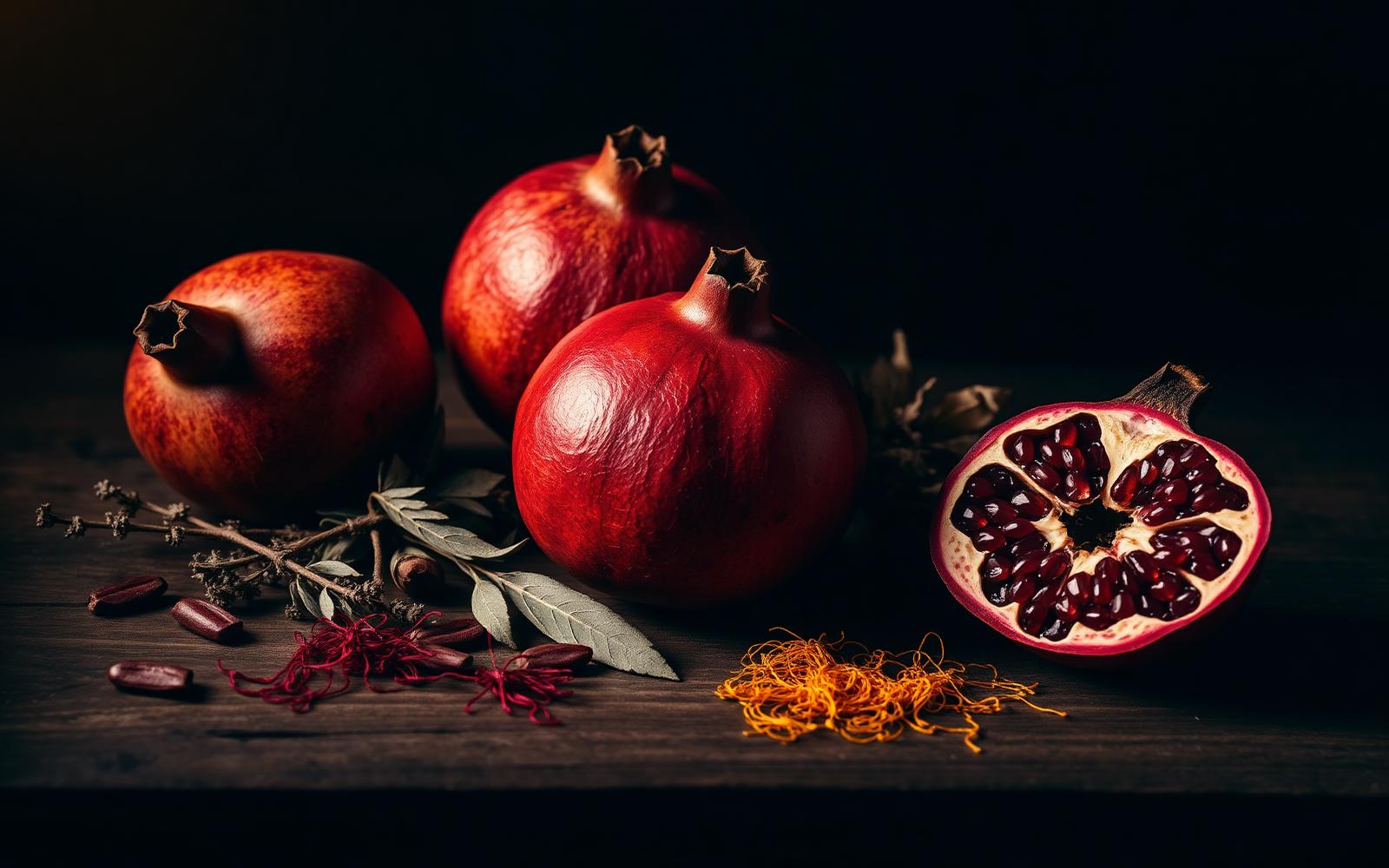
  • Yalda night practice: pomegranate, walnut, poetry — a winter heart-warmer.
  • Daily 15-minute brisk walk at midday when the sun is highest.

Eat

  • Slow-cooked Persian stews (khoresht) — gheymeh, ghormeh-sabzi, fesenjan
  • Bone broths with turmeric, ginger, and barley
  • Roasted roots — beetroot, carrot, parsnip, sweet potato
  • Ginger, cinnamon, black pepper, clove, black seed (siah-daneh)
  • Dates, walnuts, sesame halva — warming, mineral-rich snacks

Ease back on

  • Iced drinks and frozen desserts
  • Raw cold salads as a main meal
  • Long fasts in cold weather

Helpful herbs

Conditions in season

Knowledge Hub

Eat, Move, and Rest with the Seasons

Persian medicine treats the year as four bodies in motion — spring's rising warmth, summer's heat, autumn's drying winds, winter's stillness. Aligning food, herbs, and routine with the season is one of the simplest, oldest tools for resilience.

Why this matters

  • Circadian and seasonal rhythms regulate hormones, immunity, mood, and metabolism.
  • Eating seasonally captures peak nutrient density and supports local food systems.
  • Mismatched habits (cold raw foods in winter, heavy stews in summer) burden digestion and energy.
Traditional Persian
  • Spring (Bahar): cleanse the liver — bitter greens, fresh herbs, rose water.
  • Summer (Tabestan): cool the blood — cucumber, mint, yogurt, pomegranate, sour cherry.
  • Autumn (Pa'iz): moisten and warm — sesame, dates, gentle stews, walnut.
  • Winter (Zemestan): kindle inner fire — ginger, cinnamon, slow-cooked roots, saffron.
Modern Science
  • Vitamin D drops in winter at higher latitudes — increase oily fish, sunlight, and supplementation when indicated.
  • Heat acclimation in summer requires increased fluid, electrolytes, and cooling foods.
  • Sleep timing shifts seasonally — honor earlier bedtimes in winter when feasible.
Healthy Aging
  • Seasonal eating diversifies the microbiome over the year, linked to immune resilience.
  • Cold exposure in winter (brief, intentional) supports brown fat and metabolic health.
  • Light exposure at sunrise stabilizes circadian rhythm year-round.

Related Conditions

Explore Related Libraries

Frequently Asked Questions

Do I really need to change my diet each season?

You don't need to overhaul everything — but emphasizing cooling foods in summer and warming foods in winter is a low-effort, high-yield adjustment your digestion will notice.

What if local seasons don't match Persian seasons?

Use the principle, not the calendar: hot weather calls for cooling foods, cold weather calls for warming foods — wherever you live.

Sources & References