Herb Library
Hyssop
زوفا

Hyssop

Hyssopus officinalis
Also: Zufa · زوفا · Common hyssop · Hyssopus · Bible hyssop
Warm · Dry

Hyssop (zufā) — biblical Mediterranean chest herb traditionally used to clear phlegm, support breathing, and tone sluggish digestion.

Overview

Hyssop appears in the Old Testament as a ritual purifier and in Dioscorides, Galen, and Avicenna as a respiratory and digestive herb. Modern phytochemistry centers on its volatile oil (pinocamphone, isopinocamphone) and rosmarinic acid for its expectorant and antioxidant activity.

Scientific name
Hyssopus officinalis
Plant family
Lamiaceae (mint family)
Also known as
  • Zufa
  • زوفا
  • Common hyssop
  • Hyssopus
  • Bible hyssop

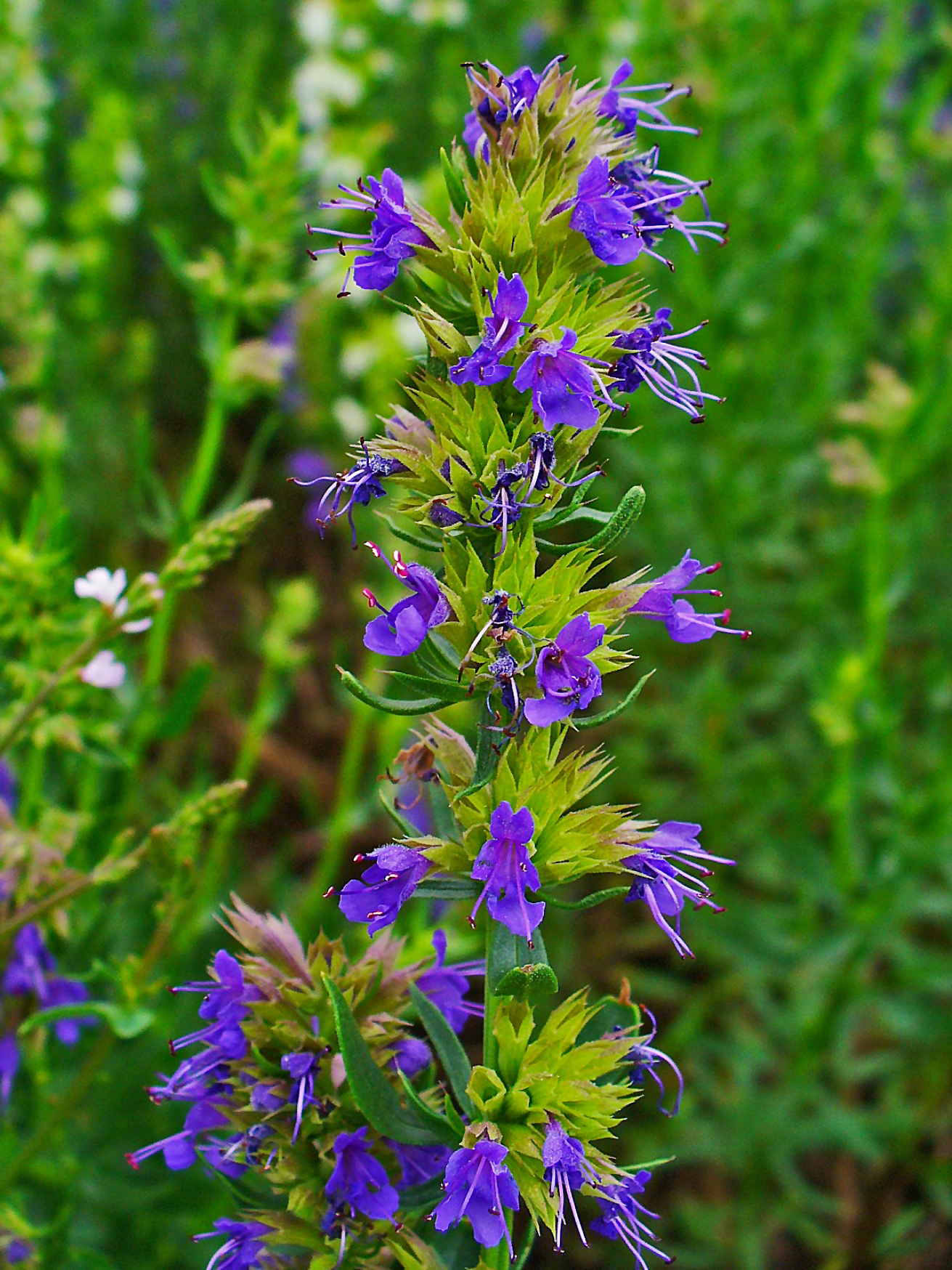
Botanical descriptionHyssop is a low evergreen shrub 30–60 cm tall with slender, woody stems, narrow lance-shaped dark green leaves, and elegant spikes of small deep-blue, sometimes pink or white, flowers. The aerial parts in flower are the medicinal portion.

Key Takeaways

What to know in 30 seconds

  • Aromatic chest herb with documented expectorant activity.
  • Mentioned in Avicenna's Canon and the Old Testament alike.
  • Strong tea with honey is the classical winter cough remedy.
  • Concentrated essential oil is not safe for internal use — stay with the herb.
Why It Matters

Why this matters for everyday wellness

Lingering productive coughs, sinus congestion, and a sluggish gut in cold weather are quiet drains on energy. Hyssop is one of the oldest household answers to that pattern — gentle as a tea, strong enough in tradition to have earned a place in three continents of medicine.

Practical Everyday Uses

Practical everyday uses

  • Steep 1 tsp dried flowering tops in 1 cup hot water, covered 10 min, sweetened with honey.
  • Add a handful of dried herb to a hot-water bowl for steam inhalation.
  • Use a strong cooled infusion as a sore-throat gargle.
  • Tuck a few sprigs into bean soups and roasts for digestive lift.
Source: Traditional Persian Wisdom

Traditional Persian perspective

Historical & cultural knowledge passed down through generations — not a medical claim.

Historical use

Persian and Greco-Arab medicine consider hyssop (زوفا) hot and dry in the third degree — opening the chest, dispersing thick cold-damp phlegm, warming a sluggish stomach, and brightening a melancholy disposition.

Traditional applications

Traditional expectorant — helps clear thick phlegm · Aromatic antimicrobial volatile oils · Antioxidant rosmarinic acid

Cultural significance

Hyssop has perfumed monastic gardens, biblical cleansing rituals, and the herbal liqueur Chartreuse. In Persian apothecaries (attari) it is still sold for winter cough syrup and steam inhalation.

Healthy Aging

Healthy aging relevance

Recurrent winter chest infections and lingering postnasal congestion are independent predictors of frailty after 65. A weekly cup of hyssop tea or a steam inhalation when symptoms first appear is the kind of low-cost, traditional habit that helps the lungs and sinuses stay open across the decades.

Source: Modern Scientific Research

Modern scientific evidence

Benefits supported by peer-reviewed studies & contemporary nutrition science — informational only, not medical advice.

  • Traditional expectorant — helps clear thick phlegm
  • Aromatic antimicrobial volatile oils
  • Antioxidant rosmarinic acid
  • Gently warming for cold digestive patterns

Nutritional profile

Antioxidants
  • Rosmarinic acid
  • Marrubiin
  • Diosmin
Other notable nutrients
  • Volatile oils (pinocamphone, isopinocamphone, β-pinene)
Traditional Persian Medicine

Traditional Persian medicine uses

  • Wet, productive cough and bronchial congestion
  • Mild seasonal colds and sinus heaviness
  • Sluggish, gassy digestion
  • Low spirits in cold, damp weather
  • Sore throat (gargle)
Historical Uses

Historical uses across cultures

From classical Persian, Greek, and Islamic-Golden-Age sources.

  • Mentioned over a dozen times in the Old Testament as a ritual purifier and cleansing herb.
  • Dioscorides and Galen prescribed it for productive cough and 'cold' chest patterns.
  • Avicenna devoted a chapter in the Canon to its respiratory and digestive uses.
  • A staple of medieval monastic gardens and a flavoring herb in Chartreuse and Bénédictine liqueurs.
Traditional Formulas

Named traditional formulas

  • Damkardeh-ye zūfāدمکرده زوفا

    Classical Persian covered infusion of dried hyssop flowering tops for wet cough and chest heaviness.

  • Zūfā wa 'asalزوفا و عسل

    Hyssop honey — sprigs steeped in raw honey 2 weeks, a daily teaspoon in cold weather.

  • Three-chest blend

    Hyssop + thyme + licorice in equal parts as a productive-cough damkardeh.

Contraindications

Who should avoid this — and known interactions

  • Pregnancy and breastfeeding
  • Children under 6 (medicinal doses)
  • Seizure disorders — avoid the essential oil entirely
Everyday Use

How it's commonly used

  • Brew 1 tsp dried flowering tops in 1 cup just-boiled water, covered 10 min
  • Sweeten with honey only after the tea has cooled below 110°F
  • Steam inhalation for stuffy chest
Safety

Safety & cautions

  • Concentrated hyssop essential oil can be neurotoxic — do NOT take it internally
  • Avoid in pregnancy, breastfeeding, and children under 6
  • Caution with epilepsy or seizure history (essential oil only)
Preparation

Traditional preparation methods

  • Damkardeh — 1 tsp dried flowering tops per cup, covered 10 min
  • Hyssop honey — sprigs steeped in raw honey 2 weeks, 1 tsp as needed
  • Steam inhalation — handful of herb under a towel for chest comfort
  • Gargle — strong cooled infusion for sore throat
Persian Remedies

Traditional remedies

  • Winter cough tea — 1 tsp dried flowering tops per cup, covered 10 min, sweetened with honey after cooling.
  • Steam inhalation — handful of dried herb in a bowl of just-boiled water, head under a towel for 10 min.
  • Sore-throat gargle — strong cooled infusion gargled 3–4× daily for redness and scratchiness.
  • Hyssop honey — sprigs steeped in raw honey for 2 weeks, a teaspoon as a daily winter spoonful.

Related conditions

Traditionally associated — not a treatment claim

Ask Holistic Health AI about Hyssop

Personalized, evidence-informed guidance from your AI Wellness Coach.

Open AI Wellness Coach

Related Herbs

Related Foods

Related articles

Frequently asked questions

+Is hyssop tea safe for daily use?

Short-term daily use of mild hyssop infusion (1 cup) is traditional and generally well tolerated by healthy adults. Avoid continuous long-term use and stay with the herb rather than the essential oil.

+Hyssop vs thyme — which is better for a cough?

Both are aromatic chest herbs. Thyme is more antimicrobial and slightly drier; hyssop is more strongly expectorant and better for thick, wet coughs. Many traditional Persian formulas blend them.

+Where do I find hyssop?

Look in well-stocked Persian and Middle Eastern attari (apothecary) shops as 'zufā', or in European herb-tea sections under Hyssopus officinalis. Grow it easily from seed in a sunny spot.

References

Sources & references

Reviewed by Holistic Health AI Editorial Team Last updated Traditional wisdom + modern evidence Educational, not medical advice
Continue Exploring

Where Hyssop fits in the bigger picture

Cornerstone topic hubs where Hyssop appears as a featured ingredient.

Explore further

Continue exploring Hyssop

Related herbs, foods, conditions, and Persian remedies across Holistic Health AI.

Related Health Goal guides
Relevant Healthy Aging Blueprint pillars