Overview
The Persian banafsheh has been treasured for over a thousand years as a cooling, moistening flower for dry coughs, sleepless nights, and headaches arising from heat. Avicenna gave it an entire chapter in his Canon. Its violet pigment comes from anthocyanins, and its mucilage gives the demulcent, throat-soothing quality.
- Scientific name
- Viola odorata
- Plant family
- Violaceae (violet family)
- Banafsheh
- بنفشه
- Sweet violet
- English violet
- Banafsaj
- بنفسج
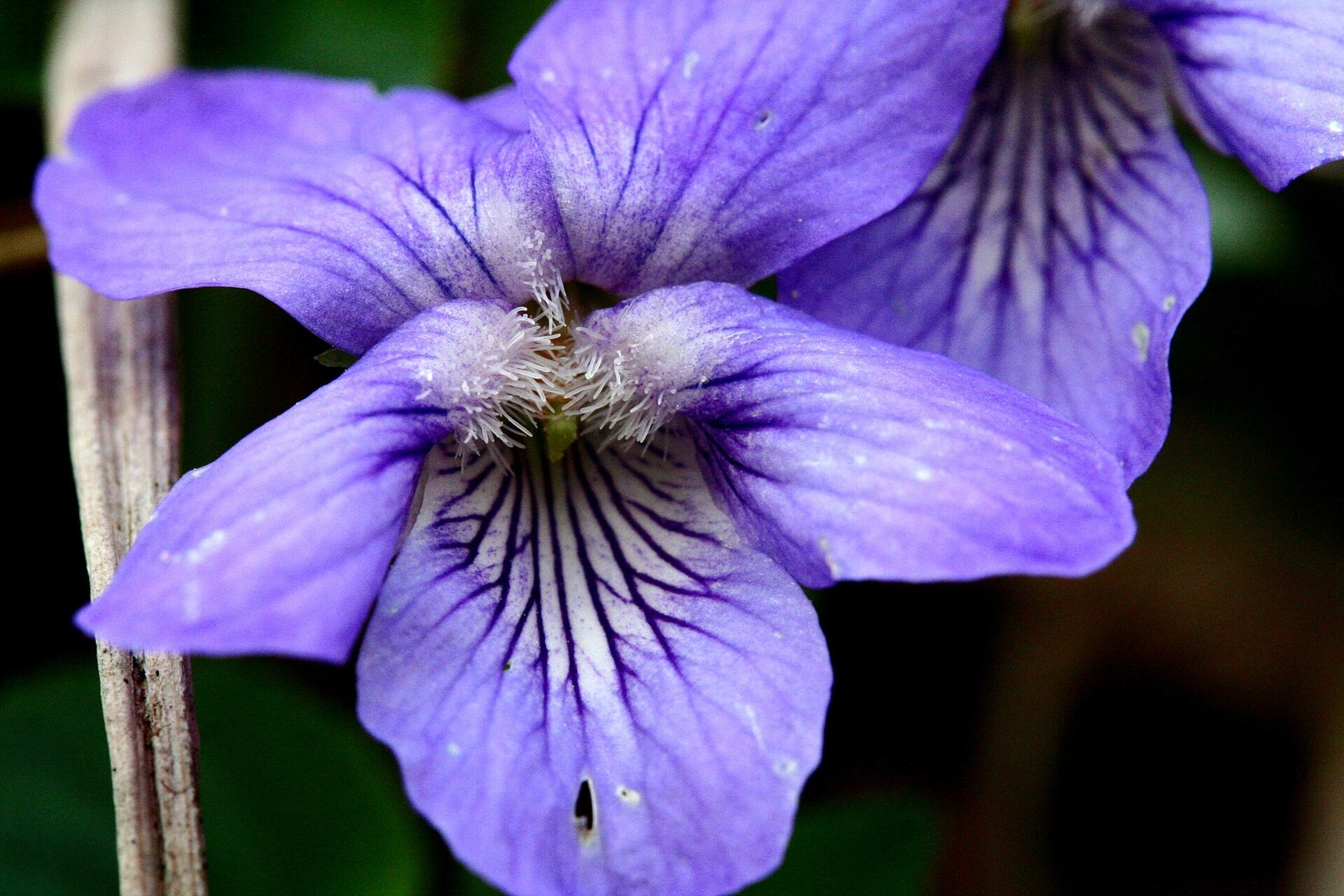
Botanical descriptionSweet violet is a low-growing perennial with heart-shaped basal leaves and small fragrant deep-purple (occasionally white) flowers borne on slender stalks in early spring. Both flower and leaf are used.
What to know in 30 seconds
- Cooling, moistening flower — Avicenna's go-to for dry cough and feverish heat.
- Sharbat-e banafsheh (violet syrup) is a Persian household sore-throat remedy.
- Gentle enough to use with children (mild infusion).
- Common 'African violet' is a different plant — use Viola odorata only.
Why this matters for everyday wellness
Dry coughs, restless nights, and tension headaches from over-heated days quietly compound. Violet is one of the rare herbs that soothes all three patterns with the same cooling, moistening signature — and folds easily into a Persian household tea or sharbat.
Practical everyday uses
- Steep 1 tsp dried flowers in 1 cup hot water, covered 5–8 min, before bed.
- Make sharbat: simmer violet flowers with water + sugar, strain, store; 1 Tbsp in cool water.
- Combine with rose petals + linden for a calming evening tea.
- Apply a cooled compress of violet infusion to a hot, aching forehead.
Traditional Persian perspective
Historical & cultural knowledge passed down through generations — not a medical claim.
Persian medicine considers sweet violet (بنفشه) cool and moist in the first degree — softening dryness, calming feverish heat, easing tension headaches, inviting sleep, and gently moving the bowels.
Demulcent mucilage soothes dry throat and cough · Anthocyanin pigments offer antioxidant activity · Traditional gentle laxative and febrifuge
Violet syrup (sharbat-e banafsheh) is a Persian household drink offered to children with sore throats and to elders on summer evenings. The flower is also a beloved Persian poetic symbol of modesty and renewal.
Healthy aging relevance
Dry mucous membranes, fragmented sleep, and tension headaches all become more common with age. Sweet violet's gentle moistening and cooling action — paired with rose, linden, or chamomile — is a traditional Persian evening ritual that addresses all three patterns without sedatives.
Modern scientific evidence
Benefits supported by peer-reviewed studies & contemporary nutrition science — informational only, not medical advice.
- Demulcent mucilage soothes dry throat and cough
- Anthocyanin pigments offer antioxidant activity
- Traditional gentle laxative and febrifuge
- Calming for restless sleep tied to heat
Nutritional profile
- Vitamin C (leaves)
- Vitamin A (leaves)
- Anthocyanins
- Rutin
- Quercetin
- Mucilage (soothing fiber)
- Salicylic acid (trace)
Traditional Persian medicine uses
- Dry, irritating cough and hoarse throat
- Insomnia tied to heat and restlessness
- Headaches from heat, sun, or mental strain
- Feverish discomfort and dry skin
- Mild constipation from dryness
Historical uses across cultures
From classical Persian, Greek, and Islamic-Golden-Age sources.
- Pliny and Dioscorides recorded violet for headaches, hangovers, and dry coughs in antiquity.
- Avicenna devoted an entire chapter to banafsheh, prizing it for heat, insomnia, and constipation.
- Violet-petal preserves perfumed the Abbasid and Safavid courts.
- Loved by Persian poets — Saadi, Hafez, and Rumi — as a symbol of modesty, devotion, and renewal.
Named traditional formulas
- Sharbat-e banafshehشربت بنفشه
Classical Persian violet-flower syrup — flowers simmered in water with sugar, bottled, and diluted as needed.
- Joulab-e banafshehجلاب بنفشه
Heart-cooling drink of rosewater, violet syrup, and water for restless, hot temperaments.
- Triple-cooling evening tea
Violet + rose petals + linden in equal parts for restless sleep and tension headaches.
Who should avoid this — and known interactions
- Known violet-family allergy
- Pregnancy — use food/sharbat amounts only, not concentrated extracts
- Salicylate sensitivity (rare)
How it's commonly used
- Tea: 1 tsp dried flowers, covered, 5–8 min, evenings
- Sharbat: 1 Tbsp violet syrup in cool water for sore throat
- Combine with rose and linden for a Persian calming blend
Safety & cautions
- Identify the plant carefully — 'African violet' (Saintpaulia) is NOT the same and not edible
- Concentrated violet seed/root preparations are emetic — use only flower and leaf
- Rare allergic reactions; avoid concentrated essential oil in pregnancy
Traditional preparation methods
- Damkardeh — 1 tsp dried flowers per cup, covered 5–8 min
- Sharbat-e banafsheh — simmer flowers in water + sugar, bottle, dilute 1 Tbsp per glass
- Cold infusion in summer — handful of flowers in cool water 4 h
- Compress — strong infusion soaked on a cloth, applied to the forehead
Traditional remedies
- Sharbat-e banafsheh — violet-flower syrup, 1 Tbsp in cool water for sore throat and feverish summer days.
- Evening calming tea — violet + rose petals + linden flowers, covered 5–8 min before bed.
- Cooled forehead compress — strong violet infusion soaked on a soft cloth for hot headaches.
- Children's dry-cough infusion — half-strength violet tea sweetened with a teaspoon of honey.
Related conditions
Traditionally associated — not a treatment claim
Ask Holistic Health AI about Sweet Violet
Personalized, evidence-informed guidance from your AI Wellness Coach.
Related Foods
Related articles
- SleepWhat to Eat (and Drink) for Better Sleep
The connection between food, timing, and sleep — plus a Persian evening ritual that actually works.
- StressNatural Ways to Support Your Stress Response
Adaptogenic herbs, food, breath, and ritual — a calm, evidence-based toolkit for daily stress.
- TraditionPersian Medicine 101: The Wisdom Behind Mizaj
A short introduction to the four temperaments and how traditional Persian medicine still influences kitchens today.
Frequently asked questions
+Is the violet in florist bouquets the same plant?
Florist 'violets' are often pansies (Viola × wittrockiana) or African violets (Saintpaulia). Medicinal banafsheh is specifically Viola odorata, the small fragrant spring flower. Buy from an attari, herbal apothecary, or grow it from seed.
+Can children drink violet tea?
A weak mild infusion of sweet violet is a long traditional Persian remedy for children's dry coughs. Use a single flat teaspoon of flowers per cup, steep 5 minutes, and sweeten lightly.
+What is sharbat-e banafsheh?
It's a Persian violet syrup — flowers simmered with sugar and water, strained, and bottled. A tablespoon stirred into cool water makes a cooling, sore-throat-soothing drink that's part of the household summer apothecary.
Sources & references
- Viola odorata L. — A review of its phytochemistry and traditional uses — Journal of Ethnopharmacology (PubMed)
- Avicenna's Canon of Medicine, Book II — Materia Medica entry on Banafsaj — Classical Persian medicine
- Sad Giah Hezar Darman (صد گیاه و هزار درمان) — One Hundred Plants and One Thousand Remedies — Dr. Hossein Erfani, 4th edition (1375 / 1996–1997). Primary traditional Persian herbal reference cited throughout this platform; presented as traditional knowledge, not as modern medical proof.
- Office of Dietary Supplements — Fact Sheets — US National Institutes of Health (NIH)
- Herbal Database — Memorial Sloan Kettering Cancer Center
- Herbs at a Glance — US NIH National Center for Complementary and Integrative Health (NCCIH)
- FoodData Central — searchable nutrient database — US Department of Agriculture (USDA)
- The Nutrition Source — Harvard T.H. Chan School of Public Health
- PubMed — peer-reviewed biomedical literature — US National Library of Medicine