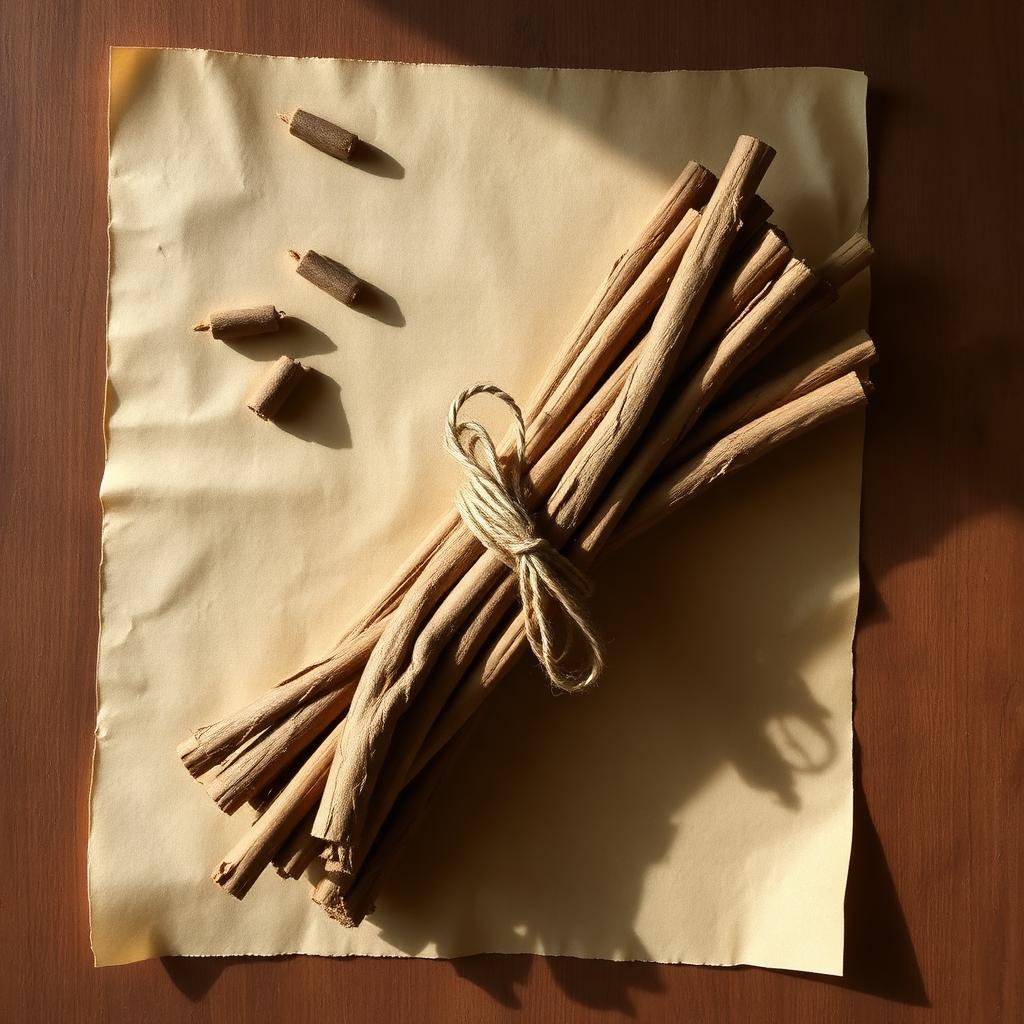
Licorice Root — The Sweet Healer with a Strong Warning
An ancient sweet root, fifty times sweeter than sugar, used across Persia, Greece, China, and India for sore throats, coughs, and stomachs. Powerful — and one of the few common herbs that needs clear cautions about blood pressure.
- English
- Licorice root
- Family
- Fabaceae
- Also known as
- Shirin bayan, Mulethi, Sweet root
What this may support
The well-documented side effect of excess licorice — raised blood pressure, lowered potassium, water retention — appears in case reports and a few clinical trials of high or daily intake.
Helps mouth and stomach ulcers heal — especially in the DGL form.
Calms sore throats and dry coughs.
In laboratory tests, liquorice extracts containing glycyrrhizin calmed inflammation and slowed viruses. Laboratory results do not tell us what happens in a person. In human trials, there was a modest benefit for ongoing indigestion.
Patterns described in research and tradition — not a treatment claim.
A little background
- Mentioned in Persian, Greek, Egyptian, Ayurvedic, and Chinese medical texts.
- Avicenna prescribed it for cough, ulcer, and 'fatigue of the chest'.
- A daily chew of root sticks was a Persian household habit for hoarse voices.
What tradition has long understood
- Warm and moist — softening, moistening, soothing.
- Given for dry coughs, hoarseness, weak stomach, and ulcer.
- Added in small amounts to herbal blends to harmonize and sweeten.
What the research now shows
- Trials of deglycyrrhizinated licorice (DGL) lozenges and powders show meaningful symptom relief in mouth ulcers, mild peptic ulcers, and post-anesthesia sore throat.
- In laboratory tests, liquorice extracts containing glycyrrhizin calmed inflammation and slowed viruses. Laboratory results do not tell us what happens in a person. In human trials, there was a modest benefit for ongoing indigestion.
- Topical glycyrrhetinic acid creams ease eczema and aphthous ulcers in small trials.
- The well-documented side effect of excess licorice — raised blood pressure, lowered potassium, water retention — appears in case reports and a few clinical trials of high or daily intake.
Evidence-based benefits
- Calms sore throats and dry coughs.
- Helps mouth and stomach ulcers heal — especially in the DGL form.
- Eases mild, ordinary indigestion.
- Lends a gentle sweetness to herbal blends.
The active compounds inside
- Glycyrrhizin — the compound that makes liquorice sweet. It calms irritation, but it also raises blood pressure, which is why the amount matters.
- Glycyrrhetinic acid — its active metabolite.
- Liquiritin and isoliquiritin — plant pigment compounds that act as antioxidants, which means they help protect cells from everyday wear.
What to actually do this week
- Sore throat: lozenge or weak tea (½ tsp shredded root, 5 min, max 1 cup/day) for up to 1–2 weeks.
- Mouth ulcers: DGL lozenge, dissolved slowly, 3–4 times daily for a few days.
- Mild peptic discomfort: DGL chewable, 20 min before meals, short courses.
- Avoid daily long-term use of glycyrrhizin-containing licorice — choose DGL if you need months of support.
Preparation methods
- Use thin shaved root for tea, or capsule/lozenge for clinical use.
- For long-term use, choose DGL (deglycyrrhizinated) — the blood-pressure compound is removed.
- Avoid 'licorice candy' as medicine — sugar plus glycyrrhizin is the worst of both worlds.
Typical culinary use
- Persian herbal blends and digestive teas.
- Chinese five-herb blends.
- Sweetener in cough syrups and lozenges.
Best food combinations
- Licorice + ginger — soothing cough syrup base.
- Licorice + chamomile + marshmallow — gentle ulcer-soothing blend (short courses).
- Licorice + fennel + cinnamon — digestive tea.
Herbs that quietly help
- Chamomile
- Ginger
- Fennel
Gentle cautions
- Do not use daily for more than 1–2 weeks at a time without medical supervision (non-DGL form).
- Avoid entirely if you have high blood pressure, heart disease, kidney disease, or low potassium.
- Symptoms of too much: swelling, headache, muscle weakness, high BP — stop immediately.
Medication interactions to know
- Blood pressure medications, diuretics — risk of low potassium and dangerous interactions.
- Digoxin — low potassium from licorice can amplify digoxin toxicity.
- Corticosteroids — licorice prolongs their action.
- Hormone-sensitive conditions — mild estrogenic activity at higher doses.
Pregnancy & breastfeeding
- Avoid medicinal amounts in pregnancy — large studies link high licorice intake to preterm birth and developmental concerns.
- Avoid in breastfeeding except in small culinary doses.
A few honest answers
Why is something so sweet considered medicine?
The sweetness comes from glycyrrhizin, which is also anti-inflammatory in mucus membranes — throat, stomach, gut lining. The same compound, in excess, drives the side effects.
What's the difference between licorice and DGL?
DGL has the glycyrrhizin removed, which strips the blood-pressure risk but keeps the soothing flavonoids. For long-term use, DGL is the safer choice.
Can I just drink licorice tea daily?
Better not. Use it as a short therapeutic course (one to two weeks at a time), then rest. For daily, long-term support, switch to DGL.
Real questions, honest answers
Why does my dietitian warn me away from licorice?
I love black licorice candy — is that dangerous?
Will it actually help my ulcer?
In plain language
A few ideas worth understanding clearly. Tap to read each one explained as Hakim would — quietly, without jargon.
Glycyrrhizin
Explain this simply. The compound that makes licorice sweet, soothing — and risky in excess.
Why it matters. Everything good and difficult about licorice comes back to this one molecule.
DGL (deglycyrrhizinated licorice)
Explain this simply. Licorice with the risky compound removed.
Why it matters. It's how clinicians use licorice safely over months — for ulcers, indigestion, and gut lining support.
Practical scenarios — where to begin
Painful canker sores a few times a year.
- DGL lozenge dissolved slowly 3–4 times daily.
- Reduce stress and acid foods during a flare.
- If frequent, screen for B12 and iron.
Mild reflux-like symptoms, no diagnosis.
- Try DGL chewable 20 min before meals for two weeks.
- Walk after meals.
- If symptoms persist or worsen, see a clinician — don't self-treat ulcers.
Cough turning hoarse.
- Licorice tea, max one cup a day, for one week only.
- Pair with thyme-honey tea.
- Steam at night.
A two-week DGL course for a flaring stomach — with rest days built in
Not a prescription — a quiet example of how the foundations can fit an ordinary week. Adapt freely.
| Day | Morning | Afternoon | Evening |
|---|---|---|---|
| Mon | Warm thyme tea | DGL lozenge before lunch | Soup |
| Tue | Honey + lemon | DGL lozenge before lunch | Light dinner |
| Wed | Oats + walnuts | DGL lozenge | Walk |
| Thu | Chamomile tea | DGL lozenge | Family dinner |
| Fri | Yogurt + fruit | DGL lozenge | Sleep early |
| Sat | Long walk | Persian rice & stew | Tea (no licorice today) |
| Sun | Slow breakfast | Rest day (no licorice) | Plan the week |
Where to wander next
These are the next quiet places to explore — each chosen because it deepens what you just read, not because it is merely related.
Why this. Chamomile carries some of the same soothing work without the blood-pressure risk.
ContinueWhy this. Fennel and licorice are classic blend-mates for cough and stomach.
ContinueWhy this. When licorice isn't safe for you, ginger often covers the digestive ground.
ContinueConnects to Nutrition · Stress · Immunity.
Feeds: Short-course soothing tea · Pre-meal DGL.
Shapes: Digestion · Stomach · Throat.
"Some of the strongest medicines are the ones we must put down on purpose."
If you keep licorice on hand, decide today whether you need DGL or whole-root — and write the safe duration on the jar.
"Help me decide whether licorice or DGL is right for what I'm dealing with — and for how long."
Ask Hakim, Your Personal AIWhere this comes from
- Raveendra KR et al., Evid Based Complement Alternat Med 2012 — licorice extract in functional dyspepsia, RCT.
- Omar HR et al., J Investig Med 2012 — licorice abuse and cardiovascular complications, clinical review.
Questions worth asking
If you keep licorice on hand, decide today whether you need DGL or whole-root — and write the safe duration on the jar.
Hakim's Thoughts on Licorice Root — The Sweet Healer with a Strong Warning
"Licorice is a generous herb that asks to be respected. Used briefly and intentionally, it is one of the great healers. Used carelessly and daily, it can quietly raise blood pressure and unsettle the heart. Both halves of that story are true."
— Hakim
One thoughtful next step
If this resonated, sage — the memory keeper of the garden is a gentle next step. A natural next read is "Sage — The Memory Keeper of the Garden" — it carries the same thread from a different angle. Take what feels right; leave the rest for another season.
Sage — The Memory Keeper of the Garden Ask Hakim, Your Personal AIYou may also enjoy…
A silver-leafed Mediterranean herb whose Latin name, salvia, means 'to save'. Traditionally drunk for clear thinking, hot flashes, and so…
ContinueThree crimson threads, hand-picked from a single autumn flower. For three thousand years, saffron has been Persia's most beloved medicine…
ContinueA warm, bittersweet root quietly added to lentils, rice, and stews across South and West Asia for three thousand years. Modern science no…
ContinueA knotted, pungent root that traditional kitchens turn to for the same things modern trials confirm: nausea, slow digestion, period cramp…
ContinueContinue the thread with Hakim in a calm daily ritual.
Continue