The Mediterranean Diet: A Practical Beginner's Guide
The most-studied dietary pattern in the world — what it actually looks like on a daily plate.
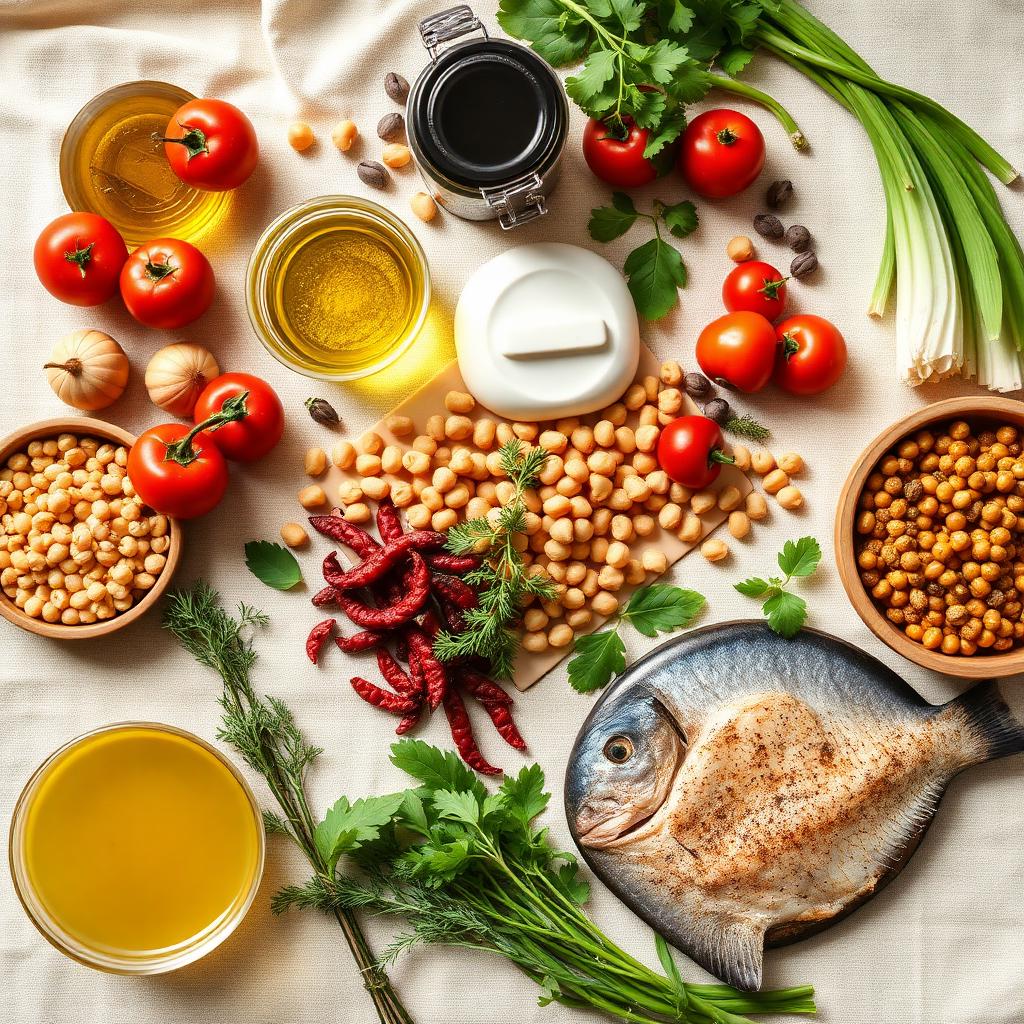
The Mediterranean diet is less a 'diet' and more an everyday pattern. It is the most-studied dietary approach for heart, brain, and metabolic health.
Daily
Vegetables and fruit (especially leafy greens, tomatoes, peppers, citrus, berries), whole grains (bulgur, oats, whole-wheat bread), olive oil at every meal, nuts and seeds, herbs and spices, water, and small amounts of cheese or yogurt.
Weekly
Fish 2–3 times, eggs, beans and lentils 3–4 times, poultry in moderation.
Less often
Red meat, butter, refined grains, sweets, processed snacks.
Sample day
Breakfast: Greek yogurt with walnuts, blueberries, a drizzle of olive oil. Lunch: lentil and vegetable soup with whole-grain bread. Dinner: roasted salmon, broccoli, and chickpeas with lemon and olive oil. Snack: handful of almonds and an orange.
Why it works
It is plant-forward without being restrictive. It includes the most-studied protective foods (EVOO, nuts, fish, vegetables) and avoids ultra-processed foods. The lifestyle around it — shared meals, regular movement, slower pace — likely matters as much as the food.
Sources & references
Background reading
- The Nutrition Source — Harvard T.H. Chan School of Public Health