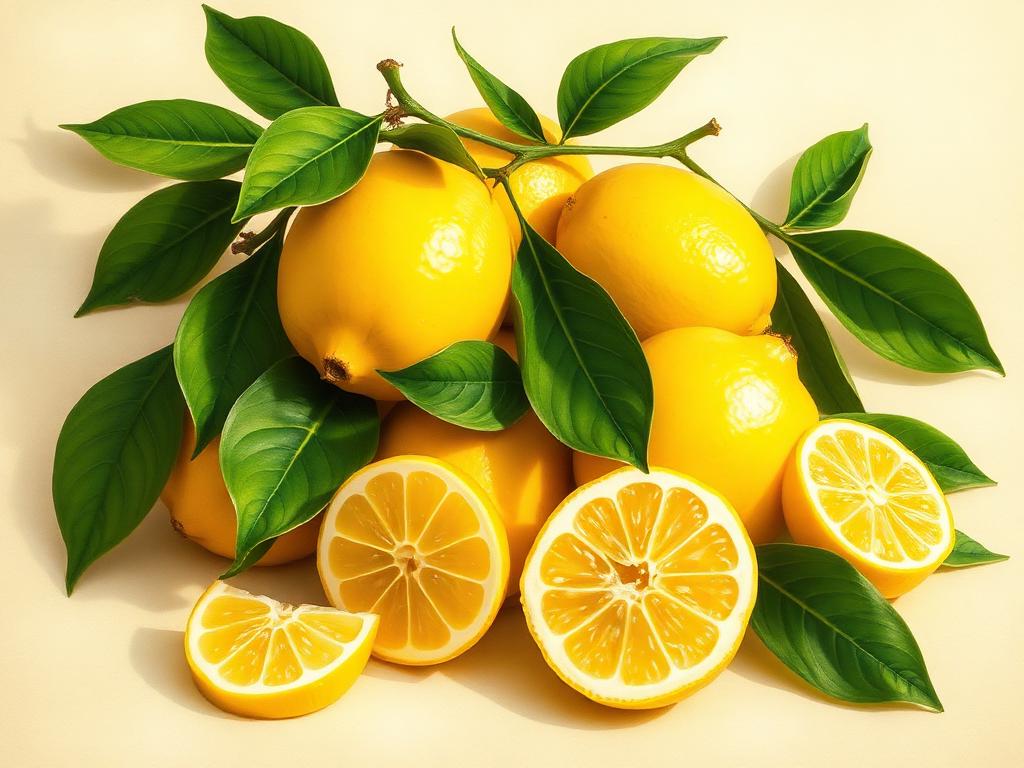
Overview
Lemon is one of the most versatile foods in any kitchen — juice for dressings, zest for aroma, dried Persian limes (limoo amani) for the soul of khoresh and ghormeh sabzi. A small daily lemon habit is a quiet pillar of Mediterranean and Persian wellness.
What to know in 30 seconds
- Vitamin C supports immunity and iron absorption
- Citric acid awakens digestion and saliva
- Aromatic limonene supports mood and freshness
- Pairs with plant iron to boost absorption
Why this matters for everyday wellness
Lemon earns a place in a healthy-aging routine because it combines vitamin c supports immunity and iron absorption with citric acid awakens digestion and saliva — a rare combination that supports the cardiovascular, metabolic, and cellular systems that drive how we age.
Practical everyday uses
- Squeeze into warm (not hot) water in the morning
- Whisk into olive-oil dressings
- Add limoo amani to khoresh and abgoosht
- Use zest in baking and rice
Traditional Persian perspective
Historical & cultural knowledge passed down through generations — not a medical claim.
Persian medicine considers lemon cool and dry — awakening digestion, freshening the mouth and breath, and balancing heavy or fatty foods.
Vitamin C supports immunity and iron absorption · Citric acid awakens digestion and saliva · Aromatic limonene supports mood and freshness
Dried Persian limes (limoo amani) give Iranian stews their distinctive tang — sun-dried, pierced, and simmered whole.
Healthy aging relevance
Lemons are a low-calorie everyday tool for healthy aging — supporting hydration when added to water, kidney-stone prevention through urinary citrate, and iron absorption from plant foods. A daily lemon habit pairs naturally with Mediterranean and Persian eating patterns linked to long life.
Modern scientific evidence
Benefits supported by peer-reviewed studies & contemporary nutrition science — informational only, not medical advice.
- Vitamin C supports immunity and iron absorption
- Citric acid awakens digestion and saliva
- Aromatic limonene supports mood and freshness
- Pairs with plant iron to boost absorption
Nutritional profile
- Vitamin C
- Potassium
- Limonene
- Hesperidin
- Eriocitrin
- Citric acid
Traditional Persian medicine uses
- Limoo amani (dried Persian lime) — the soul of khoresh, ghormeh sabzi, and abgoosht
- Warm water with lemon and honey at the first sign of a sore throat
- Lemon juice on salads to brighten flavor and aid iron absorption
- Lemon peel infused in olive oil as a Persian and Mediterranean finishing oil
How it's commonly used
- Squeeze into warm (not hot) water in the morning
- Whisk into olive-oil dressings
- Add limoo amani to khoresh and abgoosht
- Use zest in baking and rice
Safety & cautions
- Acid can erode tooth enamel — rinse mouth or use a straw
- Avoid lemon juice on direct sun-exposed skin — phytophotodermatitis risk
Traditional preparation methods
- Squeeze fresh into warm (not hot) water in the morning
- Pierce dried limoo amani and simmer whole in stews for 30+ minutes
- Use zest before juicing — the oils are concentrated in the peel
- Rinse the mouth or use a straw — citric acid can erode tooth enamel
Related conditions
Traditionally associated — not a treatment claim
Ask Holistic Health AI about Lemon
Personalized, evidence-informed guidance from your AI Wellness Coach.
Related Herbs
Related Foods
Related articles
Frequently asked questions
+How is lemon traditionally used?
Persian medicine considers lemon cool and dry — awakening digestion, freshening the mouth and breath, and balancing heavy or fatty foods.
Sources & references
- Citrate therapy and kidney stone prevention — Review — Journal of Urology (PubMed)
- Vitamin C and non-heme iron absorption — Review — American Journal of Clinical Nutrition (PubMed)
- Citrus limon — Phytochemistry and traditional uses — Journal of Ethnopharmacology (PubMed)
- Office of Dietary Supplements — Fact Sheets — US National Institutes of Health (NIH)
- Herbal Database — Memorial Sloan Kettering Cancer Center
- Herbs at a Glance — US NIH National Center for Complementary and Integrative Health (NCCIH)
- FoodData Central — searchable nutrient database — US Department of Agriculture (USDA)
- The Nutrition Source — Harvard T.H. Chan School of Public Health
- PubMed — peer-reviewed biomedical literature — US National Library of Medicine