Overview
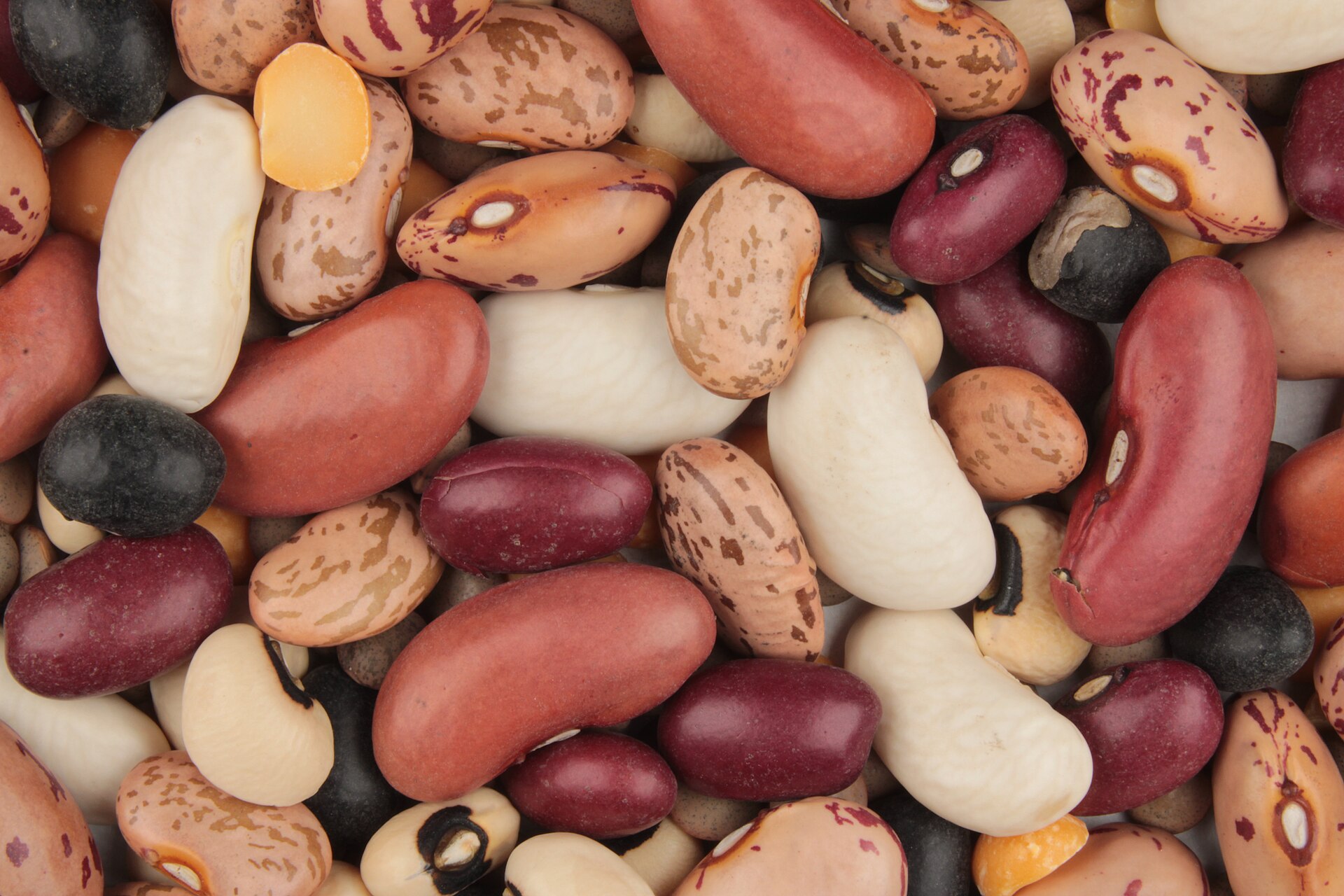
Beans — kidney, white, pinto, black, mung, red — anchor traditional diets from Persia to Latin America to Africa. Affordable, shelf-stable, and exceptionally rich in plant protein, fiber, iron, and folate, they are repeatedly linked to longevity in the world's Blue Zones.
What to know in 30 seconds
- Plant protein with fiber — one of the most satiating combinations in nutrition
- Soluble fiber supports cholesterol and blood sugar
- Iron, folate, and magnesium for blood and energy
- Prebiotic — feeds beneficial gut bacteria
Why this matters for everyday wellness
Beans earns a place in a healthy-aging routine because it combines plant protein with fiber — one of the most satiating combinations in nutrition with soluble fiber supports cholesterol and blood sugar — a rare combination that supports the cardiovascular, metabolic, and cellular systems that drive how we age.
Practical everyday uses
- Soak overnight, discard soak water, then simmer 1–2 hours
- Cook in big batches and freeze — a weekly habit
- Pair with whole grains (rice, bread) for a complete protein
- Spice with cumin, turmeric, and golpar to ease digestion
Traditional Persian perspective
Historical & cultural knowledge passed down through generations — not a medical claim.
Persian medicine considers beans warm and dry — building, strengthening, and grounding — best balanced with warming spices like cumin, turmeric, and golpar to ease digestion.
Plant protein with fiber — one of the most satiating combinations in nutrition · Soluble fiber supports cholesterol and blood sugar · Iron, folate, and magnesium for blood and energy
Red kidney beans are the soul of khoresh ghormeh sabzi — Iran's national stew — and beans also star in ash, abgoosht, and lubia polo.
Healthy aging relevance
Beans are the single food most consistently linked to longevity across the world's Blue Zones. Their fiber feeds the gut microbiome, their plant protein helps preserve muscle, and their slow-release carbohydrates steady blood sugar — three of the most important interventions for aging well at any age.
Modern scientific evidence
Benefits supported by peer-reviewed studies & contemporary nutrition science — informational only, not medical advice.
- Plant protein with fiber — one of the most satiating combinations in nutrition
- Soluble fiber supports cholesterol and blood sugar
- Iron, folate, and magnesium for blood and energy
- Prebiotic — feeds beneficial gut bacteria
- Consistently linked to longevity in long-lived populations
Nutritional profile
- Folate
- Thiamin (B1)
- Vitamin B6
- Iron
- Magnesium
- Potassium
- Manganese
- Copper
- Anthocyanins (black/red beans)
- Polyphenols
- Resistant starch when cooled after cooking
Traditional Persian medicine uses
- Khoresh ghormeh sabzi — red kidney beans with herbs, lamb, and dried lime, Iran's beloved stew
- Lubia polo — green beans with rice and tomato, a comforting weekday meal
- Abgoosht — chickpea, white-bean, and lamb stew shared from one pot
- Bean-and-herb soups (ash) eaten through the cold months for grounding warmth
How it's commonly used
- Soak overnight, discard soak water, then simmer 1–2 hours
- Cook in big batches and freeze — a weekly habit
- Pair with whole grains (rice, bread) for a complete protein
- Spice with cumin, turmeric, and golpar to ease digestion
Safety & cautions
- Always cook thoroughly — raw or undercooked kidney beans contain lectins that cause severe digestive upset
- Introduce gradually if new to legumes — gas usually subsides with regular intake
- Canned beans: rinse to lower sodium
Traditional preparation methods
- Soak dried beans 8–12 hours; discard the soak water to reduce gas-producing oligosaccharides
- Add a piece of kombu seaweed or bay leaf when simmering for easier digestion
- Cook fully — never eat raw or undercooked kidney beans (lectin risk)
- Cool cooked beans before reheating to develop gut-feeding resistant starch
Related conditions
Traditionally associated — not a treatment claim
Ask Holistic Health AI about Beans
Personalized, evidence-informed guidance from your AI Wellness Coach.
Related Herbs
Related Foods
Related articles
- NutritionGetting Enough Plant Protein: A Practical Guide
How to easily hit your daily protein from beans, lentils, nuts, seeds, and grains.
- Heart Health12 Foods That Genuinely Support Heart Health
A clear, evidence-based food list for protecting your heart — drawn from Mediterranean and traditional dietary patterns.
Frequently asked questions
+How is beans traditionally used?
Persian medicine considers beans warm and dry — building, strengthening, and grounding — best balanced with warming spices like cumin, turmeric, and golpar to ease digestion.
Sources & references
- Legumes: the most important dietary predictor of survival in older people of different ethnicities — Asia Pacific Journal of Clinical Nutrition (PubMed)
- Dietary pulses and cardiovascular disease — Systematic review — Nutrients (NIH PMC)
- Beans and the gut microbiome — Frontiers in Nutrition
- Office of Dietary Supplements — Fact Sheets — US National Institutes of Health (NIH)
- Herbal Database — Memorial Sloan Kettering Cancer Center
- Herbs at a Glance — US NIH National Center for Complementary and Integrative Health (NCCIH)
- FoodData Central — searchable nutrient database — US Department of Agriculture (USDA)
- The Nutrition Source — Harvard T.H. Chan School of Public Health
- PubMed — peer-reviewed biomedical literature — US National Library of Medicine