Nuts & Seeds Library
Almond
بادام

Almond

Prunus amygdalus (syn. Prunus dulcis)
Hot · Moist

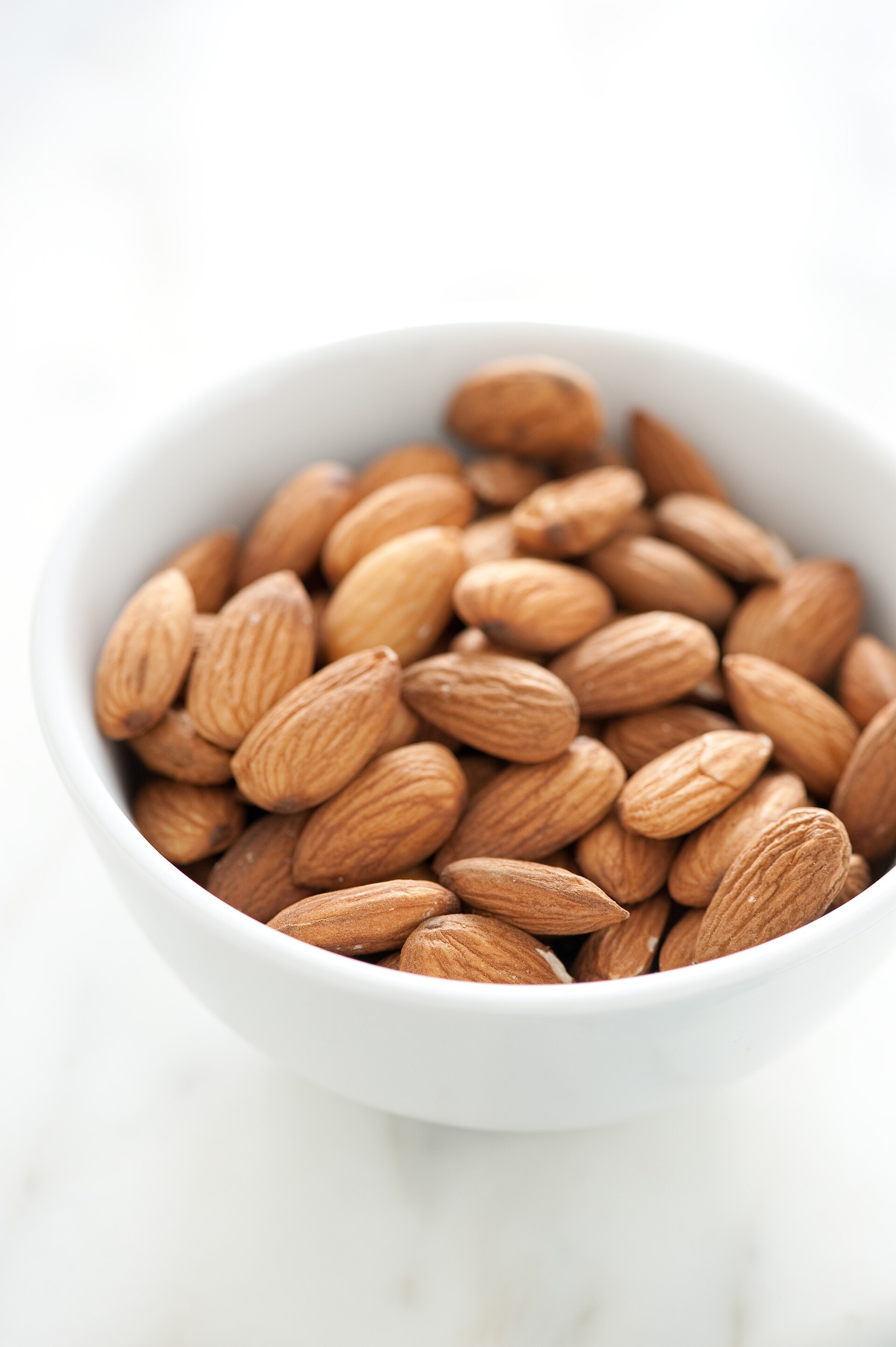
Almond (bādām) — vitamin-E-rich nut that nourishes the heart, skin, chest, and nervous system in Persian tradition and modern nutrition.

Overview

Almonds (Prunus amygdalus) have grown along the Silk Road for thousands of years and remain one of the most studied nuts in modern nutrition. They are exceptional sources of vitamin E and magnesium, deliver plant protein and healthy fats, and sweeten Persian and Mediterranean cuisine alike. In classical Persian medicine almost every part of the tree — flowers, leaves, bark, fruit, and oil — has a documented household use.

Traditional perspective

Historical use

Persian medicine considers sweet almonds warming and moistening — nourishing and strengthening for the body, calming for the nerves, soothing for a dry chest and irritated digestion, and beautifying for the skin. Soaked, peeled almonds are a classic remedy for restless minds and dry constitutions, and almond oil has been used for centuries as a gentle external application for burns, itching, swelling, and skin irritation.

Traditional applications

Rich in vitamin E — supports skin and antioxidant defenses · Rich in magnesium — supports sleep, muscles, and nervous-system balance · Rich in healthy monounsaturated fats — supports heart health

Cultural significance

Almonds appear in noql (sugared almond confection) at every Persian celebration, in sharbat-e-bademnoosh sweet almond drink, and as the green almond chaqāleh badam of early spring.

Healthy aging relevance

Almonds deliver vitamin E, magnesium, monounsaturated fats, and prebiotic fiber in one of the most-studied cardiovascular-friendly foods. A daily 1-oz serving is consistently linked to better cholesterol, steadier blood sugar, and healthier skin — three pillars of aging well that scale to any age.

Modern scientific evidence

Benefits supported by contemporary research — informational only, not medical advice

  • Rich in vitamin E — supports skin and antioxidant defenses
  • Rich in magnesium — supports sleep, muscles, and nervous-system balance
  • Rich in healthy monounsaturated fats — supports heart health
  • May help support healthy LDL cholesterol when replacing refined snacks
  • May help support healthy blood-sugar regulation around meals
  • Fiber and protein promote lasting satiety and steady nutrition
  • Traditionally calming for the mind and nourishing for the body

Nutritional profile

Protein~6 g per 1 ozFiber~3.5 g per 1 oz
Vitamins
  • Vitamin E
  • Riboflavin (B2)
  • Niacin (B3)
Minerals
  • Magnesium
  • Calcium
  • Phosphorus
  • Copper
Antioxidants
  • Flavonoids in skin
  • Alpha-tocopherol
Healthy fats
  • Monounsaturated fats
  • Polyunsaturated fats
Other notable nutrients
  • Plant sterols
  • Prebiotic potential

Traditional Persian medicine uses

  • Considered nourishing and strengthening to the body
  • Sweet almond valued as a nutritious daily food
  • Almond oil traditionally applied for burns, itching, irritation, and swelling
  • Used to support a calm, soothed respiratory tract
  • Used for digestive irritation and inflammation
  • Almond oil as a soothing external application for the skin
  • Multiple parts of the tree — flowers, leaves, bark, fruit, oil — historically utilised

How it's commonly used

  • Soak overnight, peel and eat — the traditional Persian preparation
  • 1 oz (~23 nuts) daily for heart-health study amounts
  • Almond flour for grain-free baking
  • Homemade almond milk with cardamom and rosewater
  • A few drops of cold-pressed almond oil as a finishing oil or skin moisturiser

Cautions & considerations

  • Tree-nut or seed allergies are common — avoid if affected.
  • Bitter almonds (Prunus amygdalus var. amara) must not be eaten unprocessed — they contain cyanogenic compounds
  • Energy-dense — measure portions if managing weight
  • Skins contain tannins — soaking softens them and improves digestibility
  • Whole nuts and seeds are a choking hazard for young children.

Traditional preparation methods

  • Almond flower infusion
  • Almond peel (skin) tea
  • Almond leaf decoction
  • Almond bark decoction
  • Almond milk (sharbat-e bādām)
  • Soaked & peeled sweet almonds
  • Almond bath (added to bathing water)
  • Topical almond oil applications

Traditional remedies

  • Warm almond milk with cardamom and rosewater for restless sleep
  • Almond oil massaged into dry, irritated, or itchy skin
  • Almond oil gently warmed for soothing the chest in dry coughs
  • Soaked, peeled almonds at breakfast for nervous exhaustion and study fatigue
  • Almond flower or peel tea as a gentle daily tonic

Related conditions

Traditionally associated — not a treatment claim

  • Dry skin & irritation
  • Occasional dry cough
  • Restlessness & light sleep
  • High LDL cholesterol
  • Blood-sugar swings
  • Low energy / nervous fatigue
  • Constipation (with almond oil)

Ask Holistic Health AI about Almond

Personalized, evidence-informed guidance from your AI Wellness Coach.

Open AI Wellness Coach

Related in the library

Related articles

Frequently asked questions

+Why soak almonds?

Soaking softens the skin, reduces tannins, and many people find soaked almonds easier to digest — a long Persian household tradition.

+How many almonds a day?

Most cardiovascular studies use about 1 oz (≈23 almonds, a small handful) per day as part of a balanced diet.

+Sweet vs bitter almond — what's the difference?

Sweet almonds (Prunus amygdalus var. dulcis) are the edible variety. Bitter almonds (var. amara) contain cyanogenic compounds and must be processed before any culinary use — never eat them raw.

+Is almond oil safe on the skin?

Sweet almond oil is widely used as a gentle moisturiser and massage oil and has a long traditional record. Patch-test first if you have a tree-nut allergy.

Sources & references

Reviewed by Holistic Health AI Editorial Team Last updated Reviewed for educational accuracy