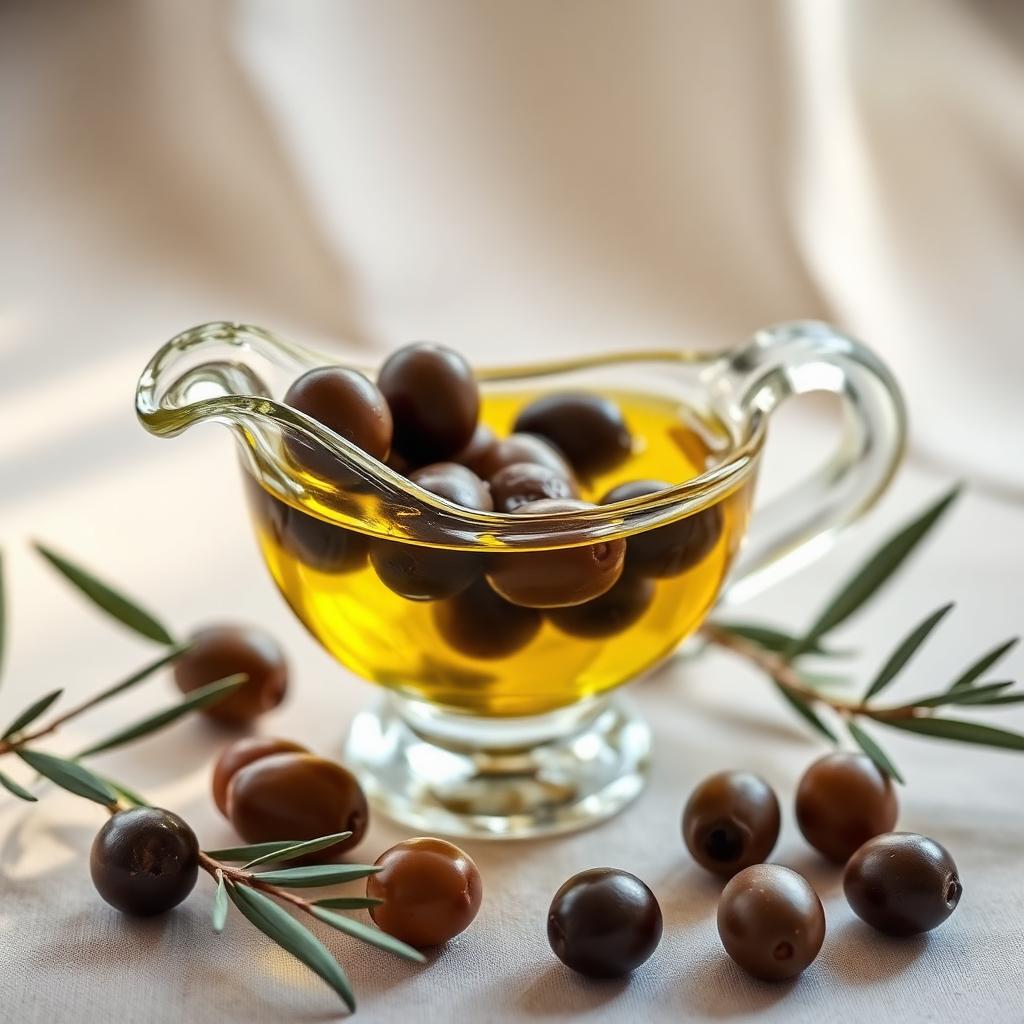
Olive Oil — The Quiet Foundation of the Mediterranean–Persian Plate
If one food explains the longevity of the Mediterranean and northern Persian table, it is extra-virgin olive oil. Daily, generous, unhurried — drizzled over salads, stirred into stews, the last step of almost every meal.
- English
- Extra-virgin olive oil
- Family
- Oleaceae
- Also known as
- Rūghan-e zeytūn, EVOO
What this may support
Lower LDL cholesterol, better HDL function, and more elastic arteries.
A possible protective effect against cognitive decline.
Lower levels of systemic inflammation markers (CRP).
Patterns described in research and tradition — not a treatment claim.
A little background
- Olive cultivation in northern Iran — Gilan, Mazandaran, Manjil — goes back at least three thousand years, and the Roodbar region still makes some of the world's most distinctive oils.
- Avicenna prescribed olive oil taken internally for digestion, and applied externally for skin, joints, and wounds.
- The Mediterranean diet pyramid — the most thoroughly validated longevity diet there is — puts olive oil at its base.
What tradition has long understood
- In Persian kitchens, olive oil is used generously at the end of cooking — drizzled over chickpea stew, lentils, herbs, or rice — so its perfume and polyphenols stay intact.
- In northern Iran, a small spoon of olive oil with bread and herbs is a traditional way to start the morning.
What the research now shows
- In the PREDIMED trial, a Mediterranean diet rich in extra-virgin olive oil reduced major cardiovascular events by ~30% over five years.
- In the Nurses' Health and Health Professionals cohorts, people who consumed more olive oil had a lower risk of death from any cause, dementia, and cardiovascular death.
- Swapping the same calories of butter, margarine, mayo, or dairy fat for olive oil is linked to meaningfully lower mortality.
Evidence-based benefits
- Lower LDL cholesterol, better HDL function, and more elastic arteries.
- Lower levels of systemic inflammation markers (CRP).
- Lower risk of stroke, heart attack, and cardiovascular death.
- A possible protective effect against cognitive decline.
A nutritional snapshot
- About 120 kcal per tablespoon, almost entirely from monounsaturated fat (oleic acid).
- Extra-virgin olive oil contains hundreds of polyphenols — most prominently oleocanthal, oleuropein, and hydroxytyrosol.
- Oleocanthal produces the peppery throat-burn of a fresh, high-quality EVOO; it has documented anti-inflammatory activity similar to a low dose of ibuprofen.
Preparation methods
- For raw use — salads, drizzling, dipping bread — pick a fresh, peppery extra-virgin oil.
- For everyday cooking, olive oil's smoke point (~200°C / 390°F for EVOO) sits well above normal sautéing temperatures, and the polyphenols cushion it against oxidation.
- Keep it in a dark bottle away from heat, and use it within a year of harvest.
Typical culinary use
- Drizzled at the end of cooking — over lentils, beans, soup, or rice.
- Salad dressings with lemon, sumac, and herbs.
- A small puddle with bread, salt, and herbs at the start of a meal.
Best food combinations
- Olive oil + tomatoes — heat and oil release lycopene into a usable form.
- Olive oil + leafy greens — fat-soluble vitamins (K, A) need it to be absorbed.
- Olive oil + lemon — a Persian and Mediterranean staple; lemon's vitamin C complements the polyphenols.
Foods that quietly help
- Tomatoes
- Leafy greens
- Lentils
- Whole-grain bread
- Walnuts
Gentle cautions
- No meaningful safety concerns in normal culinary amounts.
- Gallbladder disease: discuss large doses with a clinician.
- Many supermarket 'extra-virgin' oils are blended or oxidized; quality matters more than brand.
A few honest answers
How much olive oil per day?
The Mediterranean longevity trials used about 4 tablespoons (60 ml) a day across all uses. Two to four tablespoons is a reasonable daily target for most adults.
Is it safe to cook with?
Yes. EVOO is more stable under heat than its reputation suggests — the polyphenols actually protect the fat. Save the freshest, most peppery bottle for raw use.
How do I judge quality?
Fresh EVOO smells grassy and slightly bitter, with a peppery throat-burn from oleocanthal. Oils that taste flat and buttery are usually older or refined.
Real questions, honest answers
How much olive oil a day?
Extra-virgin or 'pure'?
Can I cook with extra-virgin?
How do I know if my olive oil is real?
In plain language
A few ideas worth understanding clearly. Tap to read each one explained as Hakim would — quietly, without jargon.
Polyphenols
Explain this simply. Plant compounds that quietly fight oxidation in the body.
Why it matters. They're the reason extra-virgin olive oil is treated as medicine, not just calories.
Mediterranean diet
Explain this simply. A daily plate built around olive oil, vegetables, legumes, fish, and only small amounts of red wine.
Why it matters. It's the only dietary pattern with mortality-reducing evidence from large randomized trials.
Practical scenarios — where to begin
LDL up, statins on the table, you want to try food first.
- Replace butter and corn oil with extra-virgin olive oil, every day.
- Build meals around vegetables and legumes, finished with olive oil.
- Recheck your lipids at 12 weeks — most people see real change.
Healthy person, lots of salads, but everything fried in canola.
- Switch all of your cooking to extra-virgin olive oil.
- Finish every dish with a slow raw drizzle.
- Buy smaller bottles more often — freshness matters more than savings.
Three to four tablespoons of good olive oil, every day, mostly raw
Not a prescription — a quiet example of how the foundations can fit an ordinary week. Adapt freely.
| Day | Morning | Afternoon | Evening |
|---|---|---|---|
| Mon–Sun | EVOO on toast or eggs | Salad with EVOO + lemon | Cooked dish finished with raw EVOO |
Where to wander next
These are the next quiet places to explore — each chosen because it deepens what you just read, not because it is merely related.
Why this. Olive oil is the foundation; the rest of the plate is built around it.
ContinueWhy this. The clearest evidence for olive oil is for the heart.
ContinueWhy this. The other half of the PREDIMED pair.
ContinueConnects to Nutrition · Heart.
Feeds: Olive oil on breakfast · Raw drizzle to finish dinner.
Shapes: Heart · Nutrition.
"An ordinary green bottle, opened daily, can quietly outwork most medicines of its century."
Tomorrow, finish one dish — soup, salad, or rice — with a slow drizzle of good extra-virgin olive oil, off the heat.
"Help me make extra-virgin olive oil the default fat in my kitchen."
Ask Hakim, Your Personal AIWhere this comes from
- Estruch R et al., NEJM 2018 — PREDIMED.
- Guasch-Ferré M et al., J Am Coll Cardiol 2022 — olive-oil consumption and mortality.
Questions worth asking
Tomorrow, finish one dish — soup, salad, or rice — with a slow drizzle of good extra-virgin olive oil, off the heat.
Hakim's Thoughts on Olive Oil — The Quiet Foundation of the Mediterranean–Persian Plate
"Some medicines arrive in glass bottles with serious labels. Others arrive in green tins and quiet kitchens, used daily without ceremony. Olive oil belongs to the second kind — and the second kind, in the long run, is usually the more powerful."
— Hakim
One thoughtful next step
If this resonated, the mediterranean–persian plate is a gentle next step. A natural next read is "The Mediterranean–Persian Plate" — it carries the same thread from a different angle. Take what feels right; leave the rest for another season.
The Mediterranean–Persian Plate Ask Hakim, Your Personal AIYou may also enjoy…
Persia is the walnut's original home — the species name literally means 'royal Jovian nut.' A small handful a day is one of the few foods…
ContinueFew fruits carry more story than the pomegranate. At Yalda — the longest Persian night — families gather around a table crowned with anār…
ContinueA bright, sour crimson powder shaken over kebab and salads from Tehran to Beirut to Istanbul. Long before its taste was studied, it was u…
ContinueA deep-ruby, tart tea poured hot in Persian winters and iced through Egyptian summers — and one of the few herbal teas with serious, repe…
ContinueContinue the thread with Hakim in a calm daily ritual.
Continue