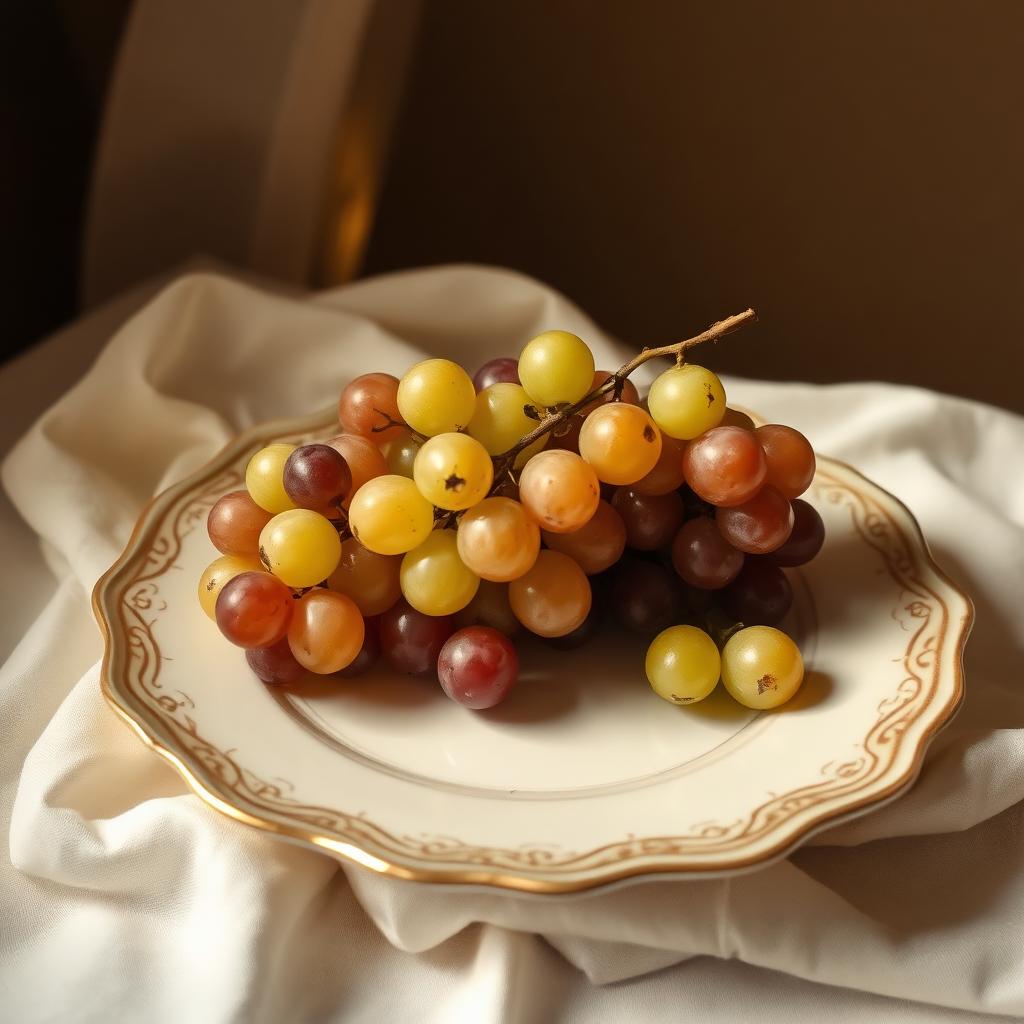
Grapes — Persia's Vineyard Fruit of Polyphenols and Patience
The fruit Persia's Shiraz region cultivated for thousands of years — sweet, polyphenol-rich, eaten fresh in summer and as keshmesh (raisins) year-round.
- English
- Grapes
- Also known as
- Angoor, Keshmesh (raisins)
What this may support
Supports blood pressure and vascular function.
Polyphenols protect cells from oxidative stress.
Polyphenols protect cells from oxidative stress.
Whole grapes, skin and all, carry resveratrol, anthocyanins, and proanthocyanidins — the compounds that help blood vessels stay relaxed and flexible.
Patterns described in research and tradition — not a treatment claim.
A little background
- Grape cultivation in Persia dates back over 7,000 years; the city of Shiraz lent its name to the global Shiraz grape variety.
- Raisins (keshmesh) are a Persian pantry staple — in rice dishes, sweets, and tea.
- Grape leaves (dolmeh) are eaten across the Mediterranean and Persia.
What tradition has long understood
- Warm and moist — strengthening, restorative, balancing.
- Raisins eaten with walnut for energy and warmth in winter.
What the research now shows
- Whole grapes, skin and all, carry resveratrol, anthocyanins, and proanthocyanidins — the compounds that help blood vessels stay relaxed and flexible.
- In trials, 1.5 cups of grapes a day for 4 weeks improved measures of blood-vessel health and how the body handles sugar.
- Raisins as a snack bring blood pressure down moderately compared to processed snacks with the same calories.
Evidence-based benefits
- Supports blood pressure and vascular function.
- Polyphenols protect cells from oxidative stress.
- A whole-food alternative to processed snacks.
A nutritional snapshot
- 1 cup grapes: ~104 calories, 1.4 g fiber, vitamin K, polyphenols.
- Raisins are concentrated — ¼ cup = 1 cup grapes in sugar.
What to actually do this week
- A small bunch with cheese in the afternoon.
- Raisins with walnut as a snack.
- Add to rice or salads.
Preparation methods
- Eat fresh with skin and seeds (if available).
- Dry in the sun for keshmesh.
- Freeze for a summer treat.
Typical culinary use
- Persian rice with raisins and barberries
- Dolmeh (stuffed grape leaves)
- Compote
- Salads
Best food combinations
- Grapes + cheese + walnut
- Raisins + walnut
- Grape leaves + lamb + rice (dolmeh)
Foods that quietly help
- Walnut
- Cheese
- Almond
Gentle cautions
- Raisins are sugar-dense — small handfuls only for diabetics.
- Whole grapes are a choking risk for young children — quarter them.
Medication interactions to know
- Some grape products may interact with warfarin; whole grapes are usually fine in moderate amounts.
Pregnancy & breastfeeding
- Excellent in pregnancy — wash thoroughly, eat in moderation.
A few honest answers
Is resveratrol the whole story?
No. Resveratrol gets headlines but most of the benefit comes from the broader polyphenol mix in skin and seeds. Whole grapes > supplements.
Wine or grapes?
Grapes. The cardiovascular benefits attributed to wine are largely from the grape; the alcohol is a separate, complicated calculation.
Real questions, honest answers
Should I take resveratrol pills?
Are raisins too sugary?
In plain language
A few ideas worth understanding clearly. Tap to read each one explained as Hakim would — quietly, without jargon.
Polyphenols
Explain this simply. Aromatic plant compounds in colorful skins and seeds.
Why it matters. They are the why behind nearly every benefit grapes, berries, pomegranate, and tea carry.
Practical scenarios — where to begin
Reconsidering alcohol.
- Eat the grapes instead.
- If you drink, keep it small and infrequent.
- Read the cardiovascular section in the Heart guide.
Cooling the afternoon.
- Frozen grapes from the freezer.
- With walnut and tea.
- Repeat through August.
A week with grapes and raisins woven through, replacing processed snacks
Not a prescription — a quiet example of how the foundations can fit an ordinary week. Adapt freely.
| Day | Morning | Afternoon | Evening |
|---|---|---|---|
| Mon | Tea + bread + feta | Grapes + walnut | Soup + bread |
| Tue | Yogurt + raisins | Lentil soup | Walk |
| Wed | Oats + raisins | Hummus + vegetables + grapes | Fish + greens |
| Thu | Eggs + sabzi | Grapes + cheese | Khoresh + rice + raisins |
| Fri | Sangak + feta + grapes | Dolmeh | Tea + walnut |
Where to wander next
These are the next quiet places to explore — each chosen because it deepens what you just read, not because it is merely related.
Connects to Nutrition · Heart.
Feeds: Afternoon snack · Persian rice.
Shapes: Heart · Blood sugar.
"The best snacks are the ones the trees grew first."
This week, swap one processed snack a day for a small handful of grapes (or raisins + walnut).
"Help me use grapes and raisins instead of processed snacks."
Ask Hakim, Your Personal AIWhere this comes from
- Blesso CN et al., Adv Nutr 2019 — grapes and cardiovascular health, review.
- Anderson JW et al., Postgrad Med 2014 — raisins and blood pressure, RCT.
Questions worth asking
This week, swap one processed snack a day for a small handful of grapes (or raisins + walnut).
Hakim's Thoughts on Grapes — Persia's Vineyard Fruit of Polyphenols and Patience
"Grapes are one of the quieter inheritances of Persian agriculture — small, sweet, and serious in the body for a long time after."
— Hakim
One thoughtful next step
If this resonated, eggplant — the velvet vegetable of the persian stew is a gentle next step. A natural next read is "Eggplant — The Velvet Vegetable of the Persian Stew" — it carries the same thread from a different angle. Take what feels right; leave the rest for another season.
Eggplant — The Velvet Vegetable of the Persian Stew Ask Hakim, Your Personal AIYou may also enjoy…
The silken vegetable Persian kitchens have built whole dishes around — khoresh-e bademjan, kashk-e bademjan, mirza ghasemi — and a quiet …
ContinueIf one food explains the longevity of the Mediterranean and northern Persian table, it is extra-virgin olive oil. Daily, generous, unhurr…
ContinueThe fermented bowl at almost every Persian meal — a small daily dose of protein, calcium, and live cultures that quietly supports the gut…
ContinueThe small brown disc at the center of adas polo, ash, and the legume pots of every Blue Zone — and one of the most studied foods on earth…
ContinueContinue the thread with Hakim in a calm daily ritual.
Continue