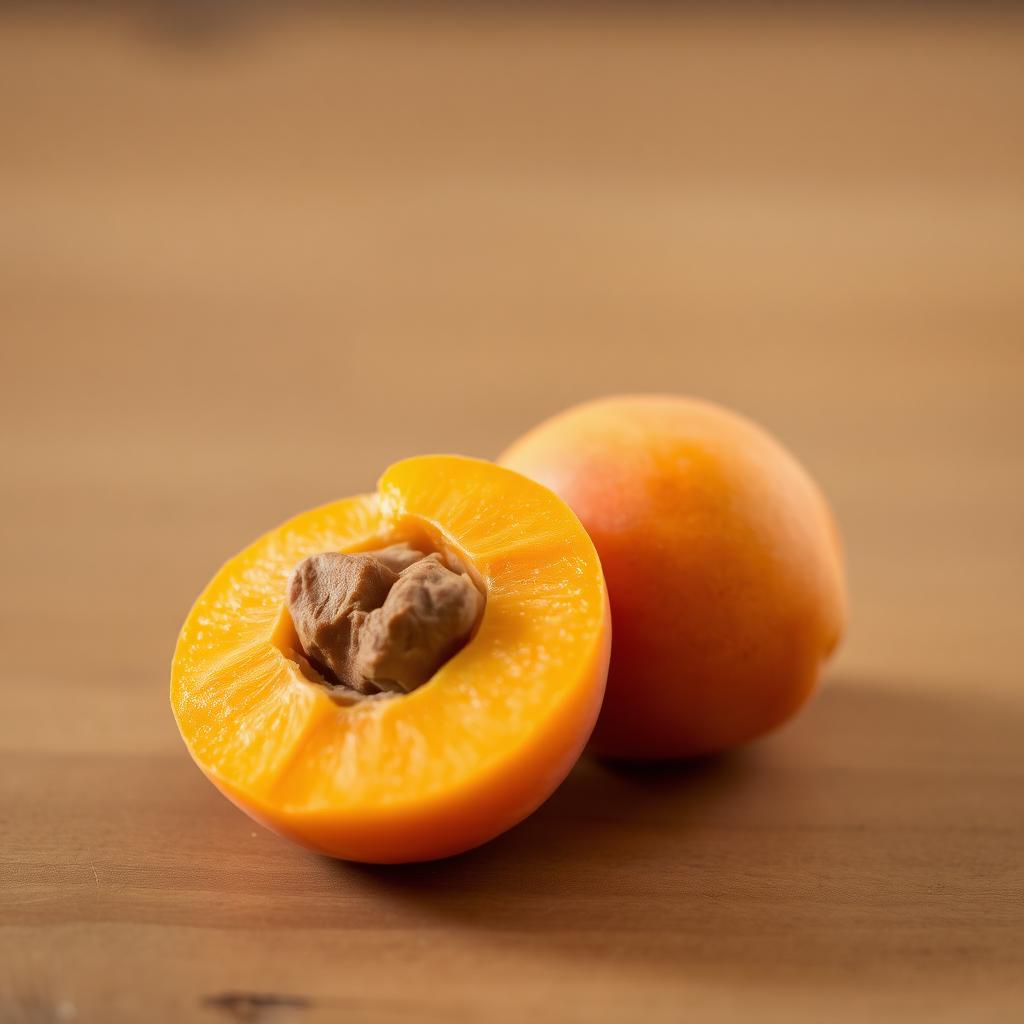
Apricot — The Golden Summer Fruit of the Silk Road
The golden, honeyed fruit of Persian and central Asian summers — fresh in June, dried year-round, and one of the best whole-food sources of beta-carotene and potassium.
- English
- Apricot
- Also known as
- Zardaloo, Mishmish, Qaisi
What this may support
Potassium for blood pressure.
Its polyphenols are linked to lower signs of oxidative stress in the body.
Its polyphenols are linked to lower signs of oxidative stress in the body.
Supports eye and skin health via beta-carotene.
Patterns described in research and tradition — not a treatment claim.
A little background
- Cultivated in Persia and central Asia for over 4,000 years; the scientific name 'armeniaca' traces its westward spread.
- Dried apricots (qaisi, zardaloo khoshk) sustained silk road travelers and remain a Persian pantry staple.
- Hunza Valley apricots are part of the famous longevity diet of that region.
What tradition has long understood
- Warm and moist — gentle to the stomach, refreshing in summer, sustaining when dried.
- Eaten with walnut or yogurt to balance sweetness.
What the research now shows
- Among the best whole-food sources of beta-carotene — good news for eyes and skin.
- Plenty of potassium, which helps keep blood pressure in a healthy range.
- In trials, dried apricots kept people as regular as prunes did.
- Its polyphenols are linked to lower signs of oxidative stress in the body.
Evidence-based benefits
- Supports eye and skin health via beta-carotene.
- Gentle laxative effect for regularity.
- Potassium for blood pressure.
- A natural travel snack.
A nutritional snapshot
- 2 fresh apricots: ~34 calories, 1.5 g fiber, vitamin A, vitamin C, potassium.
- Dried: 5 halves ~80 calories, 2 g fiber — concentrated.
What to actually do this week
- Fresh in June and July, ripe to the point of dripping.
- 5–7 dried halves with walnut as a snack.
- Cooked into khoresh-e zardaloo with lamb.
Preparation methods
- Eat fresh ripe; dried with or without sulfur (unsulfured turns brown but is more natural).
- Soak dried apricots overnight for a softer texture and digestive benefit.
Typical culinary use
- Khoresh-e zardaloo (lamb-apricot stew)
- Persian rice with apricots and barberries
- Snacks
- Compote
Best food combinations
- Apricot + walnut
- Apricot + lamb + saffron
- Apricot + yogurt
Foods that quietly help
- Walnut
- Almond
- Yogurt
- Saffron
Gentle cautions
- Apricot kernels (inside the pit) contain amygdalin — do not eat in quantity.
- Sulfured dried apricots can trigger asthma in sensitive people.
Medication interactions to know
- High potassium — caution with potassium-sparing medications or advanced kidney disease.
Pregnancy & breastfeeding
- Excellent in pregnancy — vitamin A from beta-carotene (safe), folate, potassium, fiber.
A few honest answers
Fresh or dried — which is better?
Different roles. Fresh in season is unmatched; dried gives concentrated minerals and fiber year-round. Both belong.
Sulfured or unsulfured?
Unsulfured (darker) is more natural and safer for asthmatics; sulfured (bright orange) keeps color but adds sulfites.
Real questions, honest answers
I'm constipated.
My blood pressure is borderline.
In plain language
A few ideas worth understanding clearly. Tap to read each one explained as Hakim would — quietly, without jargon.
Beta-carotene
Explain this simply. An orange plant pigment your body turns into vitamin A as needed.
Why it matters. Unlike high-dose vitamin A pills, the food form is safe in pregnancy and never overdoses.
Practical scenarios — where to begin
Returning to a heritage fruit.
- Buy fresh in June, ripe to bursting.
- Dried Persian zardaloo for the pantry.
- Pair with walnut and tea.
Common pregnancy issue.
- 5 soaked dried apricots in the morning.
- Walk for 20 minutes.
- Add yogurt and water.
A week where apricots — fresh or dried — anchor the snack
Not a prescription — a quiet example of how the foundations can fit an ordinary week. Adapt freely.
| Day | Morning | Afternoon | Evening |
|---|---|---|---|
| Mon | Tea + bread + feta | Dried apricots + walnut | Soup + bread |
| Tue | Yogurt + apricots | Lentil soup | Walk |
| Wed | Oats + cinnamon + apricots | Hummus + vegetables | Fish + greens |
| Thu | Eggs + sabzi | Apricots + tea | Khoresh-e zardaloo + small rice |
| Fri | Sangak + feta + apricots | Family lunch | Tea + walnut |
Where to wander next
These are the next quiet places to explore — each chosen because it deepens what you just read, not because it is merely related.
Connects to Nutrition · Digestion.
Feeds: Afternoon snack · Soaked apricot morning.
Shapes: Digestion · Blood pressure.
"The fruit that fed silk road travelers still travels well, in the pocket and across the day."
Tonight, soak five dried apricots in a small glass of water. Eat them, with the water, when you wake up.
"Help me bring apricots — fresh and dried — back into my week."
Ask Hakim, Your Personal AIWhere this comes from
- Erdman JW et al., J Nutr 2012 — carotenoids in eye and skin health, review.
- Attaluri A et al., Aliment Pharmacol Ther 2011 — dried fruits and constipation, RCT.
Questions worth asking
Tonight, soak five dried apricots in a small glass of water. Eat them, with the water, when you wake up.
Hakim's Thoughts on Apricot — The Golden Summer Fruit of the Silk Road
"Apricot is one of the great honeyed gifts of the Persian summer — gold in June, gold all year when dried."
— Hakim
One thoughtful next step
If this resonated, persimmon — the autumn fruit of heart and eyes is a gentle next step. A natural next read is "Persimmon — The Autumn Fruit of Heart and Eyes" — it carries the same thread from a different angle. Take what feels right; leave the rest for another season.
Persimmon — The Autumn Fruit of Heart and Eyes Ask Hakim, Your Personal AIYou may also enjoy…
The golden, honeyed autumn fruit beloved in Persia and East Asia — one of the highest fruit sources of carotenoids and tannins for heart …
ContinueThe Persian and Arabian desert's oldest sweet — a whole-food sugar wrapped in fiber, potassium, and polyphenols, eaten for millennia with…
ContinueThe fragrant, hard, golden fruit Persian grandmothers slice into khoresh-e beh and simmer into jam — high in soluble fiber, pectin, and g…
ContinueOne of the oldest cultivated fruits — soft, honeyed, rich in fiber and calcium, and the centerpiece of Persia's Estahban fig orchards.
ContinueContinue the thread with Hakim in a calm daily ritual.
Continue