Walnuts: The Nut Persian Cooks Never Ran Out Of
A handful a day, a bowl of gerdoo in salt water, and the ground base of fesenjan.
Walnuts are the one common nut rich in plant omega-3s — and a Persian kitchen staple. What the research actually tested, and how walnuts are really eaten.
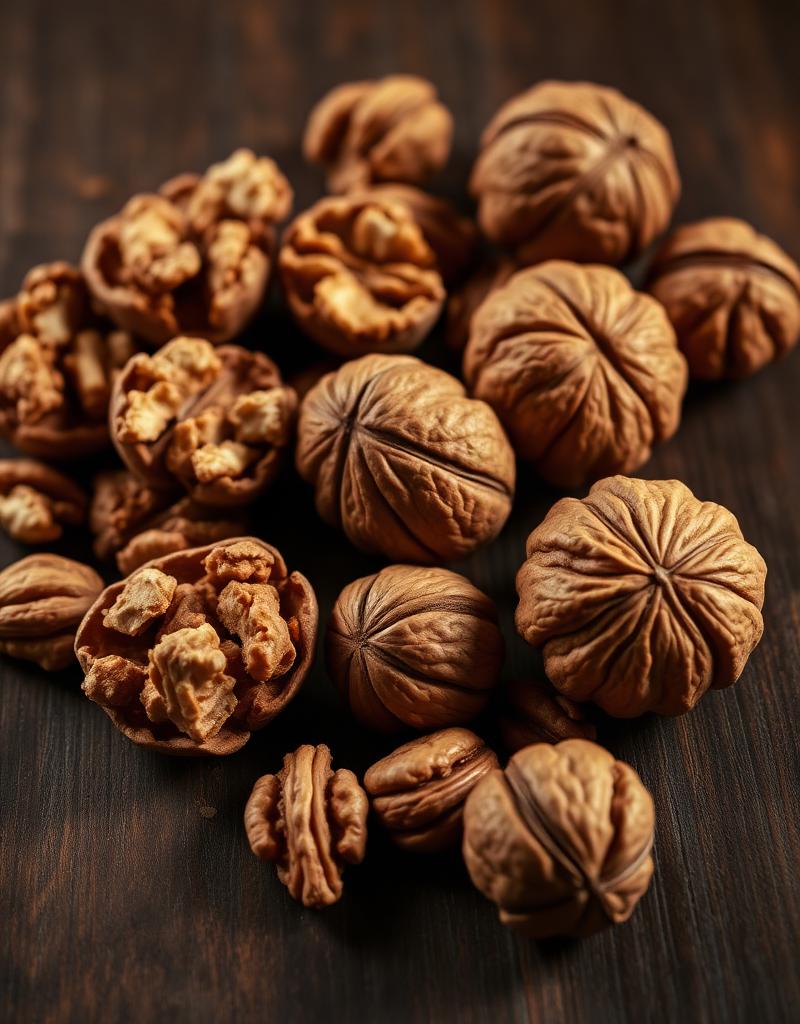
Most nuts are mainly monounsaturated fat. The walnut is the odd one out: it is unusually high in alpha-linolenic acid (ALA), the plant form of omega-3, which is also why it goes rancid faster than an almond and why a stale walnut tastes so unmistakably bitter.
Gerdoo, in Persian kitchens
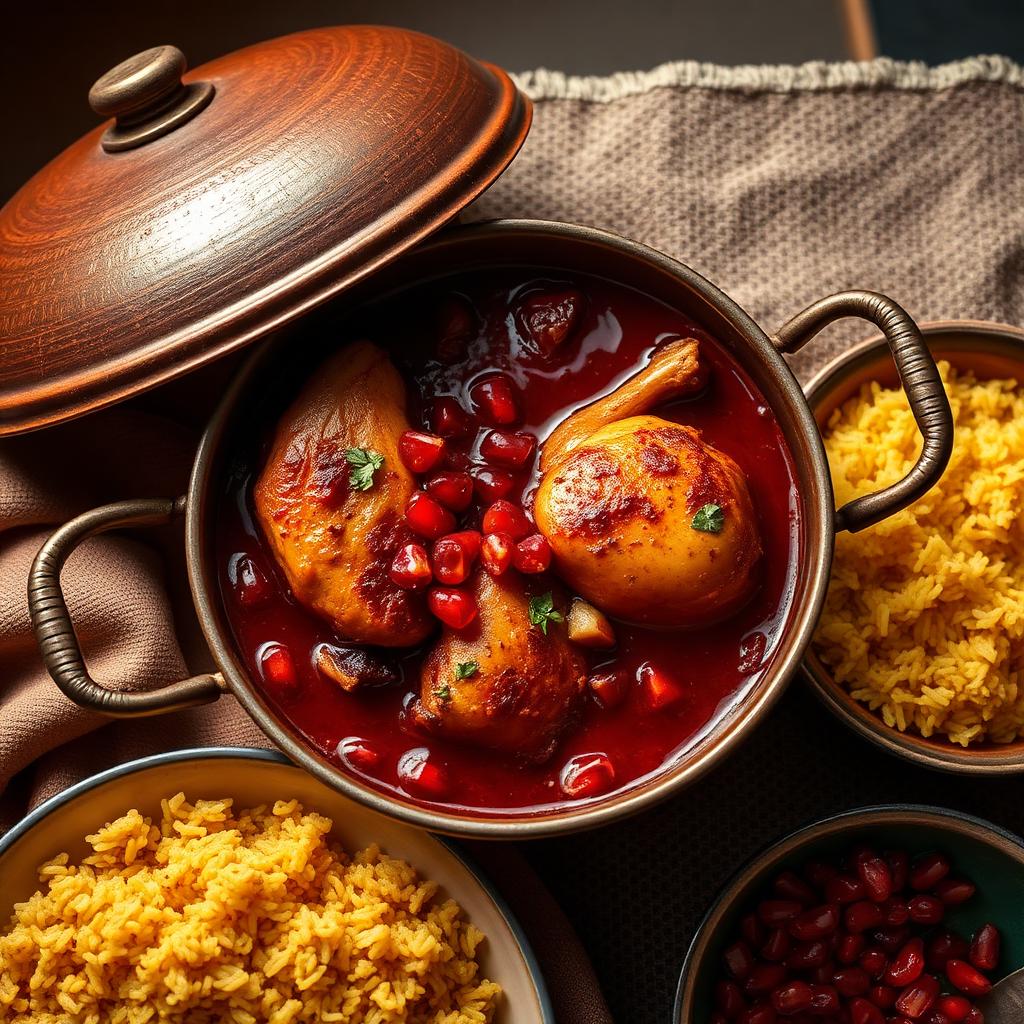
In Iran walnuts are gerdoo, and they are not a health-food purchase. Ground fine and simmered for hours with pomegranate molasses, they become fesenjan — a dish whose whole body comes from nut oil breaking down into the sauce.
In summer, shelled fresh walnuts are sold soaking in salted water, kept pale and crisp and eaten by the handful. Dried walnuts sit in the ajil bowl with pistachios and dried mulberries, get pounded into herb stuffings and kuku, and are scattered with feta and herbs at the start of a meal.
Traditional Persian Medicine reads walnut as warming and rich: welcome in cold weather, heavy if you overdo it, and best balanced by something cool alongside — which is exactly how the ajil bowl and the winter table are put together.
What is actually in one
An ounce — roughly seven halves — carries about 2.5 g of ALA, more than any other common nut, along with vitamin E, magnesium, fibre and polyphenols. Your body converts only a small fraction of ALA into the long-chain omega-3s found in oily fish, so a walnut is not a substitute for salmon; it is a different source of a related fat.
The heart evidence, described accurately
The most-cited trial here is PREDIMED, which added 30 g of mixed nuts a day — walnuts, almonds and hazelnuts — to a Mediterranean diet and followed thousands of people at cardiovascular risk for years. Fewer cardiovascular events occurred in the nut group.
That result belongs to mixed nuts inside a whole dietary pattern, not to walnuts on their own. Shorter feeding trials of walnuts specifically have measured cholesterol, and the direction has generally been favourable — a marker moving, over weeks, in small groups.
A little more detail
Two different kinds of study are often quoted as one: a long outcome trial of a diet, and short trials of a single food measuring blood markers. Both are real; they answer different questions.
Brain, and the shape myth
Walnuts look like a brain, and that resemblance has been sold hard. The honest version: observational studies have linked regular nut eating with better cognitive test scores in older adults, and a two-year trial in older adults found no clear overall benefit — with a possible signal in the more disadvantaged participants.
Interesting, unfinished, and not a reason to eat them or to stop.
How to actually eat them
About a small handful most days is the amount that shows up in the research and it is also a sane amount of food. Toast them dry and briefly if you want flavour; heavy roasting and long storage are what oxidise the oil.
Keep them in the fridge or freezer, especially shelled. Chop into herb salads, yogurt, or a bowl of oats; pair with pomegranate the way Persian cooks do; put them in a stuffing rather than treating them as a supplement.
Rancid walnuts are the real reason people think they dislike walnuts.
Worth knowing
Tree-nut allergy is serious and walnut is a common trigger. Otherwise the practical cautions are ordinary: they are calorie-dense, and a large daily bowl is a different food decision than a handful.
Frequently asked questions
+Are walnuts fattening?
Despite being calorie-dense, regular nut consumption is associated with better — not worse — body weight in long-term studies.
+Raw or roasted?
Raw walnuts retain the most ALA. Light, dry-toasted walnuts deepen flavor with minimal loss; deep-fried or sugared walnuts lose much of the benefit.
+Do walnut oil or supplements do the same thing?
Not necessarily. The trials fed whole nuts. Oil carries the fat without the fibre, protein or polyphenols, and capsules are a different product again.
Sources & references
Claim-supporting sources
- “The most-cited trial here is PREDIMED, which added 30 g of mixed nuts a day — walnuts, almonds and hazelnuts — to a Mediterranean diet and followed thousands of people at cardiovascular risk for years. Fewer cardiovascular events occurred in the nut group.”Primary Prevention of Cardiovascular Disease with a Mediterranean Diet Supplemented with Extra-Virgin Olive Oil or Nuts (PREDIMED) Clinical trial evidence (humans)The 2018 re-analysis and republication after randomisation irregularities were corrected. The nut arm was 30 g/day of MIXED nuts (15 g walnuts, 7.5 g almonds, 7.5 g hazelnuts) inside a Mediterranean diet — not walnuts alone.
- “Shorter feeding trials of walnuts specifically have measured cholesterol, and the direction has generally been favourable — a marker moving, over weeks, in small groups.”Effects of walnut consumption on blood lipids and other cardiovascular risk factors: an updated meta-analysis and systematic review of controlled trials Systematic review / meta-analysisWalnut-specific controlled feeding trials; lipid markers, not clinical events.
- “a two-year trial in older adults found no clear overall benefit — with a possible signal in the more disadvantaged participants”Effect of a 2-year diet intervention with walnuts on cognitive decline. The Walnuts And Healthy Aging (WAHA) study: a randomized controlled trial Clinical trial evidence (humans)Primary cognitive outcome null. A post-hoc subgroup signal was reported in the Loma Linda participants; it must not be strengthened into a benefit claim.
- “Your body converts only a small fraction of ALA into the long-chain omega-3s found in oily fish, so a walnut is not a substitute for salmon; it is a different source of a related fat.”Conversion of alpha-linolenic acid to longer-chain polyunsaturated fatty acids in human adults Expert review of human researchHuman tracer studies: limited conversion of ALA to EPA and very limited conversion to DHA.
Background reading
- The Nutrition Source — Harvard T.H. Chan School of Public Health
- Office of Dietary Supplements — Fact Sheets — US NIH