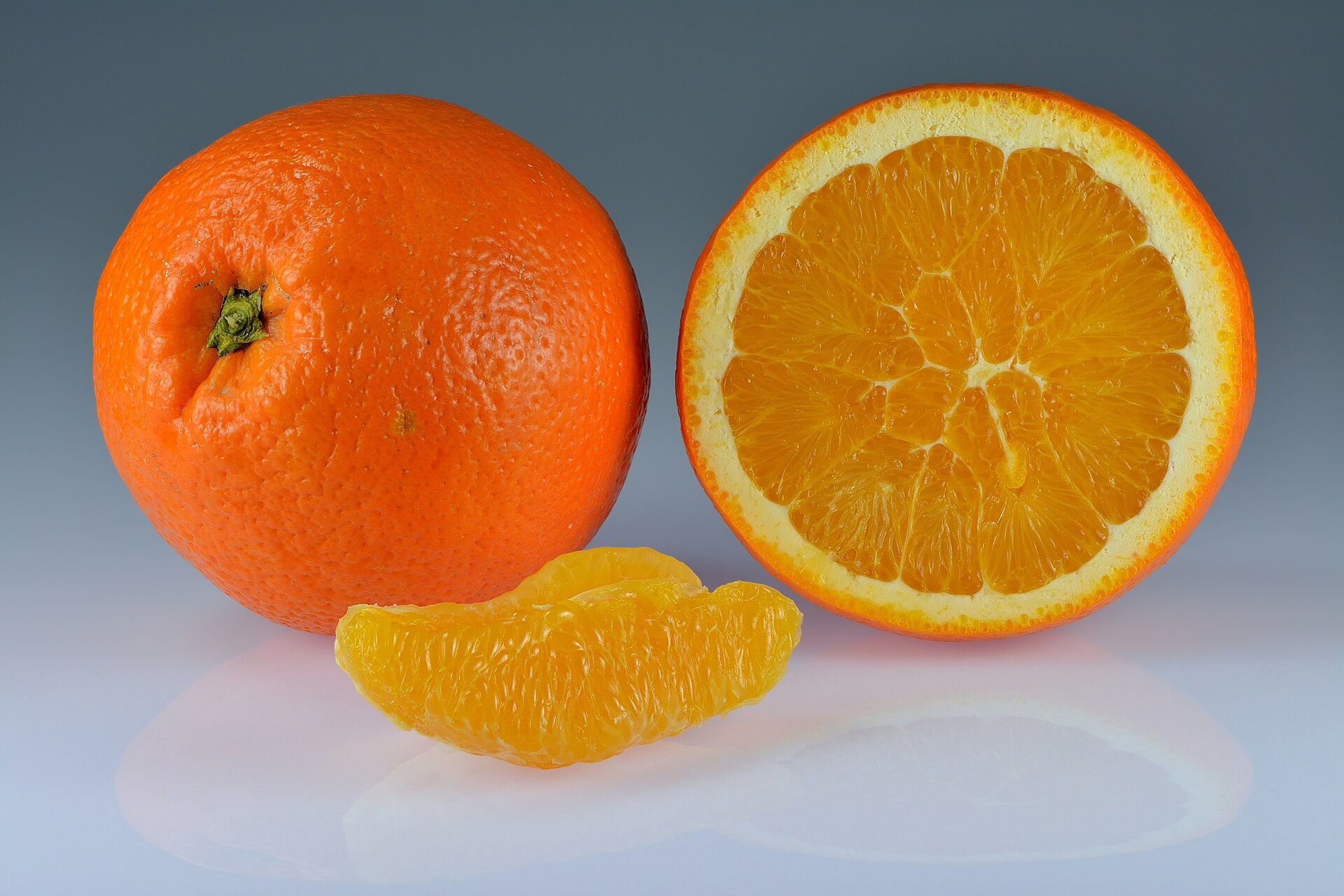
Orange
Vitamin-C powerhouse with flavonoids that support immunity, heart health, and skin.
Traditional wisdom and modern evidence—clearly explained.
“Before we go deeper into Orange, step through — even people who have known it all their lives rarely notice these small things.”
A curiosity cabinet. Open each drawer.
6 small things about Orange that quietly surprise most people.
Vitamin C supports immunity and collagen
Hesperidin and naringenin support blood vessels
Soluble fiber (whole fruit) supports cholesterol and gut
Hydrating with natural electrolytes
Orange-blossom water (bahar narenj) is one of Persia's prized distillates, sprinkled into sweets and stirred…
“People have practiced this quietly for centuries — long before we had a science to explain why it worked.”
How Persian physicians understood orange
Persian medicine considers orange cool and moist — refreshing the heart, lifting mood, and supporting the lungs in winter.
Traditional Persian physicians developed these observations over centuries. The next section explores which of these ideas have been investigated by modern scientific research.
Sweet oranges arrive in Iranian and Mediterranean kitchens through the winter — eaten in slices, juiced fresh, or blossom-distilled into bahar narenj for nerves and sleep. Beyond vitamin C they deliver flavonoids like hesperidin that support blood vessels.
Orange — before the words, before the science, simply this.
“And in their own careful language, the modern laboratories have been quietly agreeing.”
What tradition and modern nutrition agree on.
A plain-English read of the research. Each line says what was studied and what was found — links go to the original source. The tag on the right notes how strong the evidence is today, and what still remains uncertain.
Vitamin C supports immunity and collagen
Traditional and editorial synthesisHesperidin and naringenin support blood vessels
Traditional and editorial synthesisSoluble fiber (whole fruit) supports cholesterol and gut
Traditional and editorial synthesisHydrating with natural electrolytes
Traditional and editorial synthesis
“Knowing all this, one small question remains — are you preparing Orange the way it deserves? Most people are not.”
How to prepare orange, step by step.
Most people prepare Orange incorrectly. Can you guess how?
- Eat the whole fruit for fiber, instead of relying on juice
A traditional preparation of orange.
- Drink fresh juice within minutes
vitamin C degrades quickly with air
- Add zest to dressings and rice for hesperidin-rich flavor
A traditional preparation of orange.
- Eat with the white pith
it holds much of the flavonoid content
Come, let us be friends —
make life a little easier for one another.
“This shifts the moment you bring Orange into your own kitchen. Here are two gentle ways to begin.”
A gentle word of care.
“So — if you were to sit across from me and ask quietly what to do, this is what I would say.”
Dear friend,
Orange earns a place in a healthy-aging routine because it combines vitamin c supports immunity and collagen with hesperidin and naringenin support blood vessels — a rare combination that supports the cardiovascular, metabolic, and cellular systems that drive how we age.
Warmly,
One more note —
Vitamin C is one of the most studied nutrients for healthy aging — supporting immunity, collagen, and antioxidant defenses. Whole oranges deliver vitamin C alongside hesperidin, a flavonoid linked to vascular health. A daily orange is a quietly powerful aging-well habit, especially in winter when fresh produce is limited.
— With warmth, Hakim
A tea shared is stronger than a tea taken alone.
“Before you leave, one small thread to pull — Orange rarely travels alone.”