Saffron and Mood: What the Research Actually Shows
The most expensive spice in the world has been put through mood trials. Here is what they tested.
Saffron in Persian cooking and Persian medicine, and what mood research has actually studied — standardized extract capsules, not the pinch in your rice.
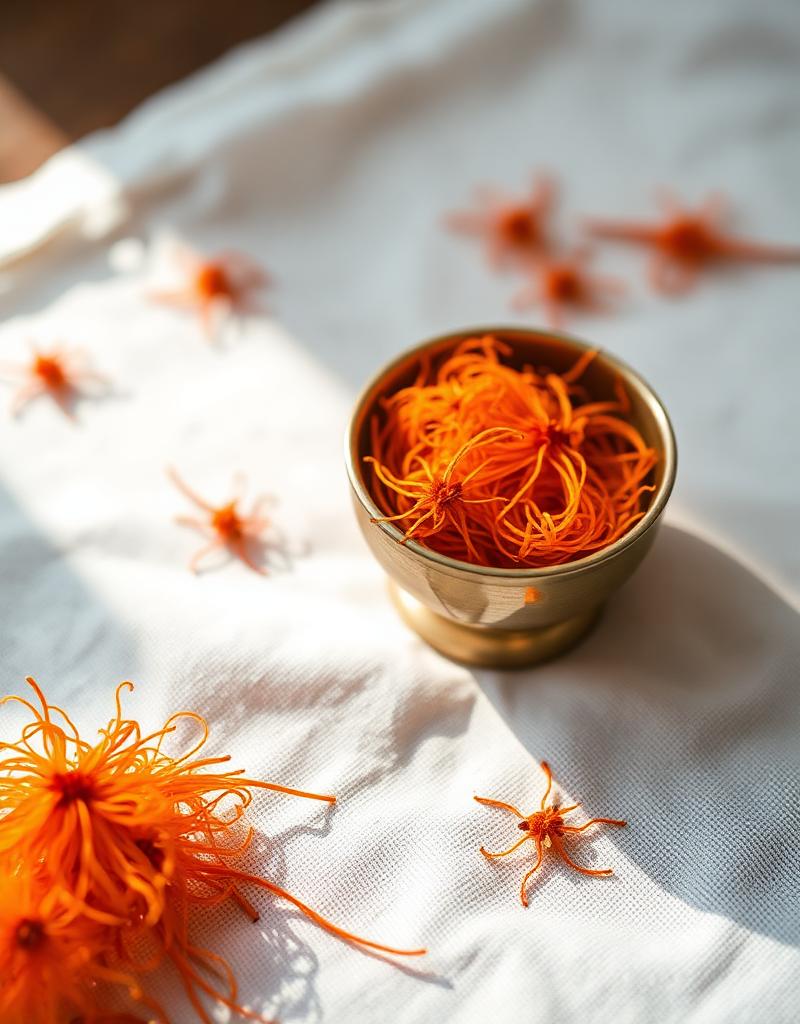
Saffron is the dried red stigma of Crocus sativus, picked by hand at dawn from flowers that open for a few days each autumn. It takes an enormous number of flowers to make a single gram, which is why it has always been sold by the gram and why it has always been faked.
Not all saffron is the same thing
Whole stigmas. What you cook with — bloomed in a little warm water first, never sprinkled dry.
Saffron in the Persian kitchen
In Iran saffron is a daily flavour rather than a rare one. A pinch is ground with a sugar cube, bloomed in hot water until the liquid turns deep orange, then spooned over rice to make the saffron crown of a chelow, folded into tahchin, stirred into sholeh zard, or churned into bastani with rosewater and pistachio.
Most of the world's saffron still comes from Khorasan in eastern Iran, and the autumn picking is a family and village event rather than an industrial one.
Classical Persian medicine treats saffron as warm and dry, and lists it among the mofarreh — the exhilarants, a class of remedies held to strengthen the heart's spirit and lift sadness. Avicenna, Jorjani and later compilers all name saffron in that class, and the same idea survives in the kitchen: a few threads bloomed in hot water, stirred into rice or tea, for a table that should feel generous.
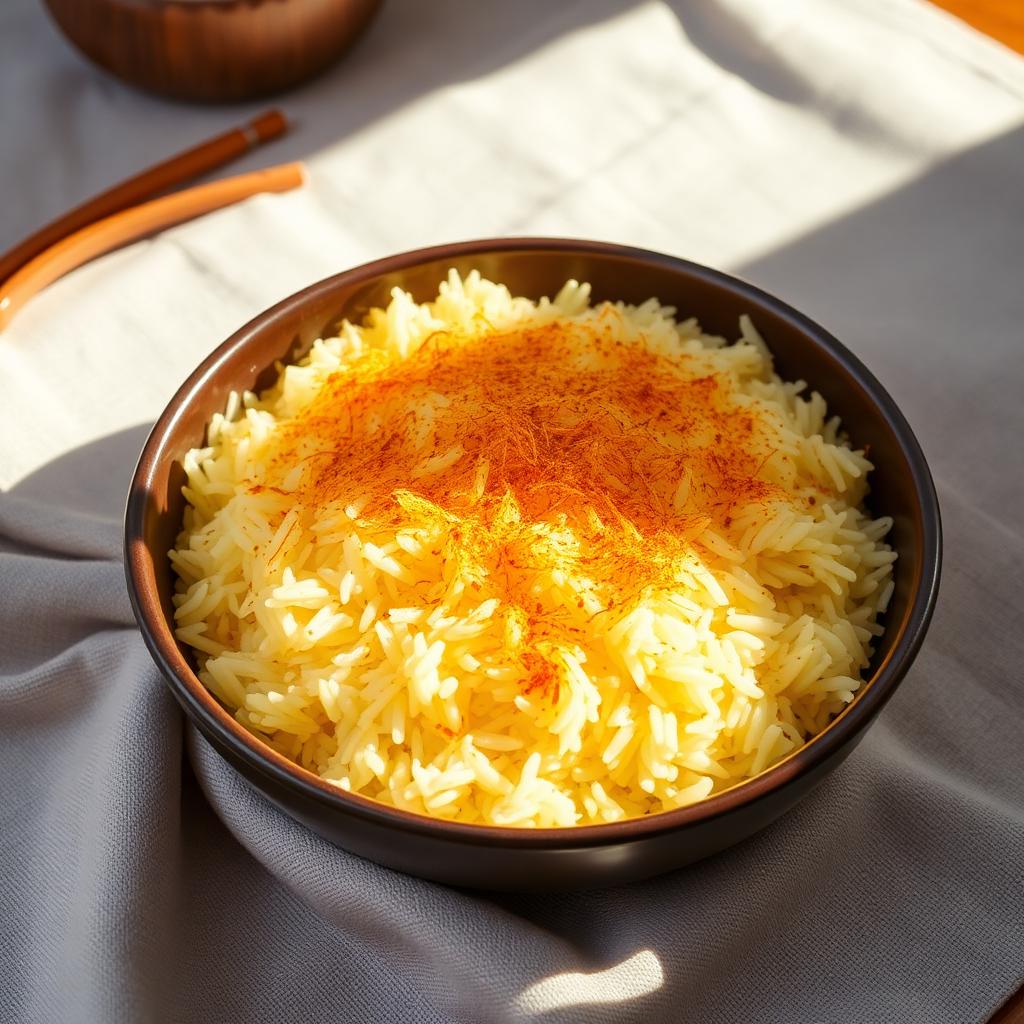
Bloom it, never sprinkle it: dry threads on hot rice give colour to three grains and nothing else.
What the mood trials tested
Saffron is one of the few culinary plants that has been put through randomized trials for low mood. In most of them, adults with mild to moderate depression took a standardized saffron extract — commonly around 30 mg a day — for six to eight weeks, compared with a placebo or with a low dose of a prescription antidepressant. Reviews pooling those trials report improvement in depression scores.
The limits matter as much as the result. The trials are small, they run for weeks rather than years, most were conducted in one region, several were run by groups with a commercial interest, and comparisons against antidepressants used low doses over short periods. That is a genuinely interesting body of early research, not an established treatment.
A little more detail
All of this was measured with a capsule of standardized extract. The pinch of saffron in a pot of rice is a much smaller amount in a completely different form, and it has not been tested for mood.
If you are being treated for depression
Depression is a condition that responds to treatment, and untreated depression is dangerous. A supplement studied in short trials is not a substitute for care.
Do not stop, reduce or replace prescribed medication or therapy because of research on a spice. If you want to try a saffron supplement, tell the clinician managing your treatment first — saffron has been studied alongside antidepressants and combining serotonergic products is a decision for the person prescribing them.
Saffron supplements are not for use in pregnancy: high doses have historically been used to provoke uterine activity, and supplement-strength saffron should be avoided while pregnant or breastfeeding. Culinary amounts in food are a separate matter. If low mood is severe, persistent, or includes thoughts of self-harm, seek clinical help now rather than a supplement.
Why researchers keep looking at it
Saffron's colour comes from crocins, its aroma from safranal, and both have been studied in laboratory and animal work for effects on serotonin signalling and oxidative stress. That is a plausible reason to run trials — it is not evidence of an effect in people.
Buying and using it well
Buy threads rather than powder, and expect deep red stigmas with a little orange at the tip, a strong hay-and-honey smell, and a price that reflects hand-picking. Real saffron colours water slowly and turns it golden-orange; dye runs instantly and stains red.
Grind a pinch with sugar or salt, steep in two tablespoons of hot — not boiling — water for ten minutes, then use the liquid. Store it dry, dark and sealed; it fades rather than spoils. A gram used this way lasts most kitchens months.
Frequently asked questions
+Does cooking with saffron improve mood?
That has not been tested. The mood research used standardized extract capsules at doses far above what a pinch in rice provides. Cook with saffron because it is delicious.
+How much saffron is too much?
Culinary use is measured in pinches and is not a concern. Very high doses of saffron are toxic, which is one more reason not to improvise with supplements.
+Is expensive saffron always better?
Not always, but suspiciously cheap saffron is almost always adulterated or old. Judge by colour, aroma and how slowly it releases colour in water.
Sources & references
Claim-supporting sources
- “Classical Persian medicine treats saffron as warm and dry, and lists it among the mofarreh — the exhilarants, a class of remedies held to strengthen the heart's spirit and lift sadness.”A Survey on Saffron in Major Islamic Traditional Medicine Books Traditional knowledgeA survey of thirteen major classical texts, including Avicenna's Canon and Jorjani's Zakhireh. It documents how saffron was classified — not that it treats anything.
- “In most of them, adults with mild to moderate depression took a standardized saffron extract — commonly around 30 mg a day — for six to eight weeks, compared with a placebo or with a low dose of a prescription antidepressant.”Hydro-alcoholic extract of Crocus sativus L. versus fluoxetine in the treatment of mild to moderate depression: a double-blind, randomized pilot trial Clinical trial evidence (humans)The trial that set the pattern: 30 mg/day standardized extract, six weeks, mild-to-moderate depression, active comparator fluoxetine 20 mg/day. Small pilot, single centre, Iran.
- “Reviews pooling those trials report improvement in depression scores.”Saffron (Crocus sativus L.) and major depressive disorder: a meta-analysis of randomized clinical trials Systematic review / meta-analysisPooled a small number of short Iranian trials. A later meta-analysis (Neuropsychiatr Dis Treat 2018, pubmed.ncbi.nlm.nih.gov/29849461/) reaches the same direction with the same limits.
- “The trials are small, they run for weeks rather than years, most were conducted in one region, several were run by groups with a commercial interest, and comparisons against antidepressants used low doses over short periods.”Comparative efficacy and safety of Crocus sativus L. for treating mild to moderate major depressive disorder in adults: a meta-analysis Systematic review / meta-analysisSupports the stated limitations: short duration, small samples, geographic concentration, low-dose active comparators.
- “Saffron's colour comes from crocins, its aroma from safranal, and both have been studied in laboratory and animal work for effects on serotonin signalling and oxidative stress.”Saffron in the treatment of depression, anxiety and other mental disorders: current evidence and potential mechanisms of action Laboratory / mechanistic researchReviews the crocin/safranal mechanistic and animal literature. Mechanism only — not evidence of an effect in people.
Background reading
- Health Topics A–Z — US NIH National Center for Complementary and Integrative Health