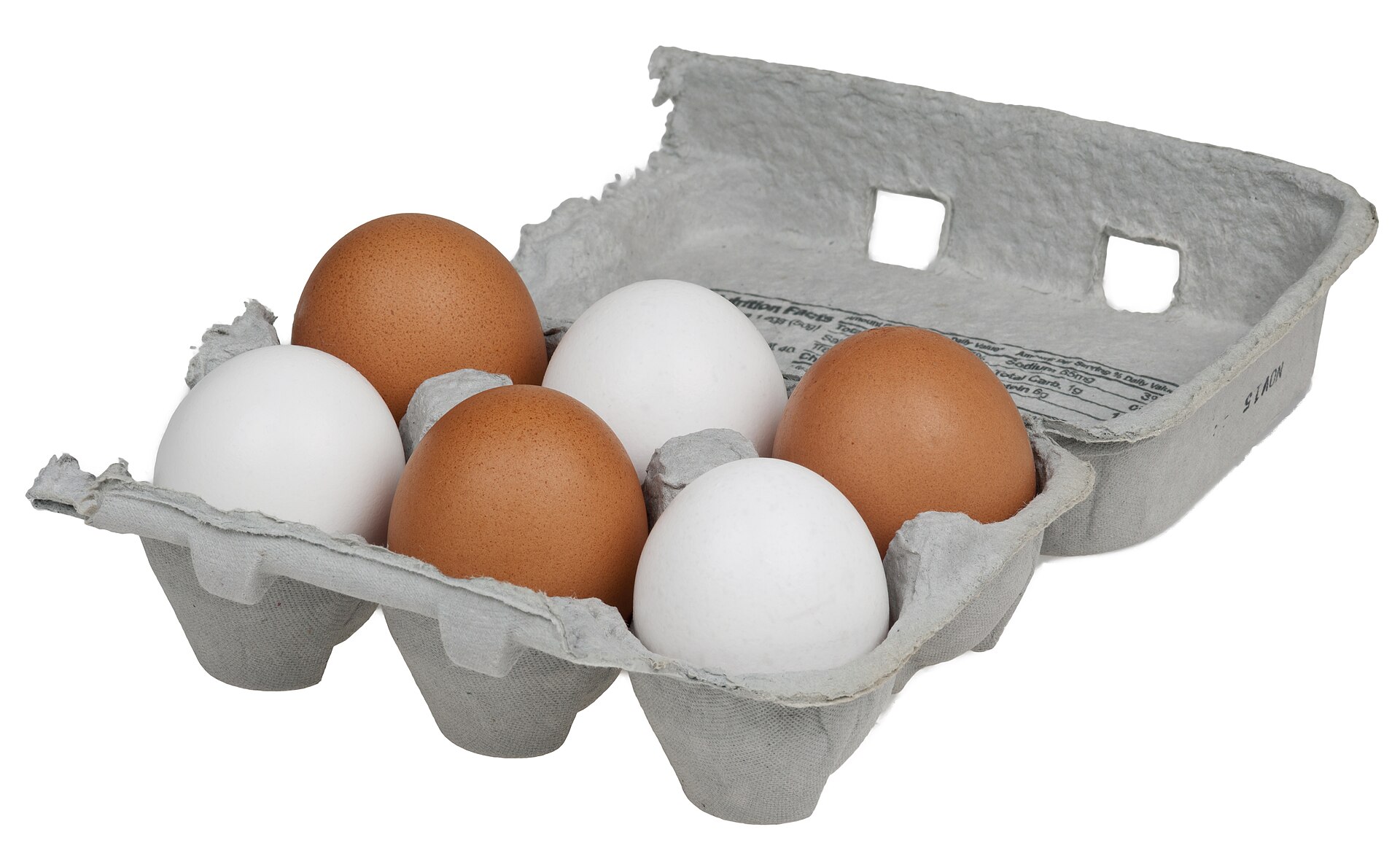
Eggs — The Quiet Daily Protein, Rehabilitated
One of the most complete, affordable protein foods on earth — and, after decades of unfair suspicion, now firmly back in the long-life kitchen. The base of kuku, omelets, nimroo, and the small daily anchor of a steady morning.
- English
- Eggs
- Also known as
- Tokhme morgh, Whole egg
What this may support
In the big long-term studies — including a pooled analysis of >1.7 million people — eggs at up to 1/day show no significant association with cardiovascular disease or all-cause mortality in most adults.
Supports brain health through choline and B12.
And recent trials have repeatedly found that adults with type 2 diabetes can include 1 egg/day without adverse cardiometabolic effects — an old fear the evidence didn't support.
Egg protein is the most usable protein ever measured (PDCAAS = 1.0) — a quiet anchor for muscle and bone, especially after 50.
Patterns described in research and tradition — not a treatment claim.
A little background
- Domesticated chickens reached Persia ~3,000 years ago; eggs have been a daily staple ever since.
- Persian kuku — herb-and-egg cakes — are among the oldest documented egg dishes still cooked today.
- Mid-20th-century cholesterol panic led to decades of unjust avoidance, now reversed by better evidence.
What tradition has long understood
- Warm and moist — strengthening, fertility-supporting, considered ideal food for the young, the old, and the ill.
- Eaten daily in most Persian households as nimroo (fried egg with tomato), kuku, or boiled with sabzi.
- Avicenna recommended a soft-boiled egg in convalescence and in winter.
What the research now shows
- In the big long-term studies — including a pooled analysis of >1.7 million people — eggs at up to 1/day show no significant association with cardiovascular disease or all-cause mortality in most adults.
- Egg protein is the most usable protein ever measured (PDCAAS = 1.0) — a quiet anchor for muscle and bone, especially after 50.
- One large egg gives you ~6 g of complete protein, ~147 mg of choline (your brain and liver lean on it), and the lutein and zeaxanthin your eyes quietly collect.
- And recent trials have repeatedly found that adults with type 2 diabetes can include 1 egg/day without adverse cardiometabolic effects — an old fear the evidence didn't support.
Evidence-based benefits
- Anchors a high-quality protein breakfast.
- Supports brain health through choline and B12.
- Protects long-term eye health through lutein and zeaxanthin.
- Cheap, complete, and endlessly versatile.
A nutritional snapshot
- 1 large egg: 70 cal, 6 g protein, 5 g fat (2 g saturated), 186 mg cholesterol.
- 147 mg choline (~27% daily value).
- Lutein, zeaxanthin, vitamin D, B12, selenium.
- Most pasture-raised and omega-3 eggs offer more omega-3s and slightly more vitamin D.
What to actually do this week
- Nimroo: 2 eggs cracked into hot olive oil with sliced tomato and turmeric.
- Kuku sabzi: a Persian herb omelet packed with greens and walnut.
- Soft-boiled egg + flatbread + feta + sabzi — classic Persian breakfast.
- Hard-boiled eggs as a portable afternoon snack.
Preparation methods
- Soft-boiled (6 min) and poached preserve the most nutrients with the gentlest cook.
- Cook over moderate heat — high heat oxidizes cholesterol and toughens the white.
- Add fat-soluble nutrients (olive oil, butter) and pair with greens to absorb fat-soluble vitamins.
Typical culinary use
- Persian kuku sabzi, kuku kadoo, nimroo.
- Mediterranean shakshuka, frittata, Greek avgolemono.
- Egg drop soup, quiche, custards.
Best food combinations
- Eggs + sabzi + walnut — Persian kuku trio.
- Eggs + tomato + olive oil + turmeric — nimroo or shakshuka.
- Eggs + flatbread + feta + cucumber + sabzi — Persian breakfast.
Foods that quietly help
- Olive oil
- Sabzi
- Flatbread
- Feta
- Walnut
Gentle cautions
- Very well tolerated as a daily food for most adults.
- True egg allergy is real and requires strict avoidance.
- Cook through if pregnant, immunocompromised, or very young/old to reduce salmonella risk.
Medication interactions to know
- Eggs can mildly affect absorption of certain medications taken with breakfast — separate by 1 hour if your clinician advises.
- Choline in eggs may slightly raise TMAO in some individuals — clinical significance is debated.
Pregnancy & breastfeeding
- Excellent during pregnancy — choline is critical for fetal brain development.
- Cook eggs fully; avoid raw-egg dishes (homemade mayonnaise, raw cookie dough).
A few honest answers
How many eggs per day is safe?
For most healthy adults, up to 1 egg/day is associated with no increase in cardiovascular risk. People with familial hypercholesterolemia or unusually high cholesterol response may want to cap lower — discuss with a clinician.
Whole egg or whites only?
Whole eggs. Most of the choline, vitamins, and flavor are in the yolk. Whites-only is a 1990s artifact, not a modern recommendation.
Are pasture-raised really better?
Modestly — more omega-3, more vitamin D, often kinder welfare. Worth the cost if you can; not worth losing sleep over if you can't.
Real questions, honest answers
But my doctor told me to avoid eggs.
Are eggs okay with high cholesterol?
What about cooking oil?
In plain language
A few ideas worth understanding clearly. Tap to read each one explained as Hakim would — quietly, without jargon.
Choline
Explain this simply. An essential nutrient your brain and liver need to function.
Why it matters. Eggs are the richest common food source; daily eggs make hitting the choline target effortless.
Bioavailable protein
Explain this simply. Protein your body can actually absorb and use, not just protein on the label.
Why it matters. Egg protein is the gold standard — the reference all other proteins are measured against.
Practical scenarios — where to begin
Sarcopenia risk; need more daily protein.
- 2 eggs at breakfast, daily.
- Pair with yogurt and walnuts.
- Add strength training twice a week.
Looking for high-impact food choices.
- 1–2 eggs daily — cooked through.
- Pair with leafy greens and walnuts.
- Take prenatal vitamin as directed.
Cereal/toast mornings leave you ragged by 10.
- Replace cereal with 2 eggs + tomato + sabzi.
- Notice the difference in the morning energy curve.
- Pair with a short walk.
A week where eggs anchor most mornings — quietly, completely
Not a prescription — a quiet example of how the foundations can fit an ordinary week. Adapt freely.
| Day | Morning | Afternoon | Evening |
|---|---|---|---|
| Mon | 2 eggs + tomato + sabzi | Lentil soup | Salad |
| Tue | Yogurt + walnut | Kuku sabzi + flatbread | Walk after dinner |
| Wed | Soft-boiled egg + bread + feta | Salad | Soup-and-bread |
| Thu | Oats + cinnamon | Hard-boiled egg snack | Fish + greens |
| Fri | Nimroo + flatbread | Hummus + vegetables | Family dinner |
Where to wander next
These are the next quiet places to explore — each chosen because it deepens what you just read, not because it is merely related.
Why this. Where the daily egg becomes a foundational muscle-and-bone anchor.
ContinueWhy this. Their natural breakfast partner — kuku sabzi, omelets, shakshuka.
ContinueWhy this. The plate where eggs are a daily yes, not an occasional indulgence.
ContinueConnects to Nutrition · Brain · Bone.
Feeds: Egg breakfast · Weekly kuku.
Shapes: Protein · Cognition · Bone.
"Some foods you have to defend. Eggs no longer need defending — eat them, and listen to the steady morning that follows."
Tomorrow morning, cook two eggs with tomato, turmeric, and olive oil — and eat them slowly without screens.
"Help me build a steady, egg-based breakfast for my week."
Ask Hakim, Your Personal AIWhere this comes from
- Drouin-Chartier JP et al., BMJ 2020 — egg consumption and cardiovascular disease, pooled analysis (>1.7M people).
- Fuller NR et al., Am J Clin Nutr 2018 — eggs and cardiometabolic risk in type 2 diabetes, RCT.
Questions worth asking
Tomorrow morning, cook two eggs with tomato, turmeric, and olive oil — and eat them slowly without screens.
Hakim's Thoughts on Eggs — The Quiet Daily Protein, Rehabilitated
"Eggs are one of the great rehabilitated foods of our lifetime. The Persian kitchen never doubted them, and the evidence has come home."
— Hakim
One thoughtful next step
If this resonated, lentils — the humble pulse of a long life is a gentle next step. A natural next read is "Lentils — The Humble Pulse of a Long Life" — it carries the same thread from a different angle. Take what feels right; leave the rest for another season.
Lentils — The Humble Pulse of a Long Life Ask Hakim, Your Personal AIYou may also enjoy…
The small brown disc at the center of adas polo, ash, and the legume pots of every Blue Zone — and one of the most studied foods on earth…
ContinueThe round golden bean of abgoosht, hummus, and roasted nokhod-e berenji — a daily plant protein with serious evidence for blood sugar, ch…
ContinueSomewhere around fifty, the body gets less efficient at building and keeping muscle. The research answer is refreshingly simple: gently r…
ContinueBone is living tissue, built and rebuilt across a lifetime by a small chorus of nutrients and the load of regular movement. And most adul…
ContinueContinue the thread with Hakim in a calm daily ritual.
Continue