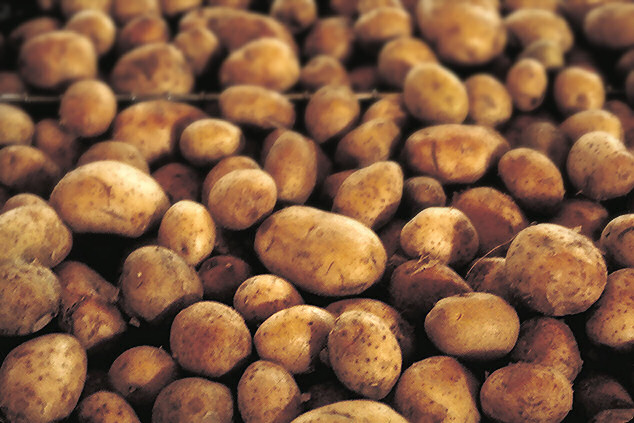
Potato
Sib-zamini — the tahdig and gheymeh garnish staple; a starchy source of potassium and vitamin C.
Traditional wisdom and modern evidence—clearly explained.
- Evidence
- Traditional
“Before we go deeper into Potato, step through — even people who have known it all their lives rarely notice these small things.”
A curiosity cabinet. Open each drawer.
5 small things about Potato that quietly surprise most people.
Good source of potassium
Provides vitamin C and vitamin B6
Skin-on potatoes add useful fibre
Potato tahdig is, for many Iranian families, the piece everyone reaches for first
“People have practiced this quietly for centuries — long before we had a science to explain why it worked.”
How Persian physicians understood potato
Not part of the classical Persian materia medica, since it reached Iran only in the modern era. Later Persian writers generally treat it as cool and moist and heavy.
Traditional Persian physicians developed these observations over centuries. The next section explores which of these ideas have been investigated by modern scientific research.
The potato arrived late in Persian cooking and settled in completely. It lines the bottom of a rice pot for a golden tahdig, it is fried into matchsticks over gheymeh, and it is mashed into the goosht-kubideh of abgoosht.
Potato — before the words, before the science, simply this.
“And in their own careful language, the modern laboratories have been quietly agreeing.”
What tradition and modern nutrition agree on.
A plain-English read of the research. Each line says what was studied and what was found — links go to the original source. The tag on the right notes how strong the evidence is today, and what still remains uncertain.
Good source of potassium — more per serving than a banana
CompositionTraditional and editorial synthesisProvides vitamin C and vitamin B6
CompositionTraditional and editorial synthesisSkin-on potatoes add useful fibre
Traditional and editorial synthesis
Composition, preparation and glycaemic notes reflect standard nutrition science; no disease-treatment claim is made.
“Knowing all this, one small question remains — are you preparing Potato the way it deserves? Most people are not.”
How to prepare potato, step by step.
Most people prepare Potato incorrectly. Can you guess how?
- Slice thin and oil the pot base for potato tahdig
A traditional preparation of potato.
- Cut into matchsticks and fry as the gheymeh garnish
A traditional preparation of potato.
- Boil and mash with the meat for abgoosht
A traditional preparation of potato.
The pomegranate opens
and shows the sky its rubies.
“This shifts the moment you bring Potato into your own kitchen. Here are two gentle ways to begin.”
A gentle word of care.
“So — if you were to sit across from me and ask quietly what to do, this is what I would say.”
Dear friend,
How you cook a potato changes what it does nutritionally: boiled and cooled, it is a modest, potassium-rich staple; deep-fried, it is mostly a fat-and-starch garnish.
Warmly,
One more note —
In a healthy-aging context, potato bridges tradition and science: not part of the classical Persian materia medica, since it reached Iran only in the modern era. Later Persian writers generally treat it as cool and moist and heavy, while modern research highlights its role in the same pathways — inflammation, vascular health, and cellular resilience — that compound over decades to shape how we feel in our 60s, 70s, and beyond.
— With warmth, Hakim
Small habits, well kept, outlast every great intention.
“Before you leave, one small thread to pull — Potato rarely travels alone.”