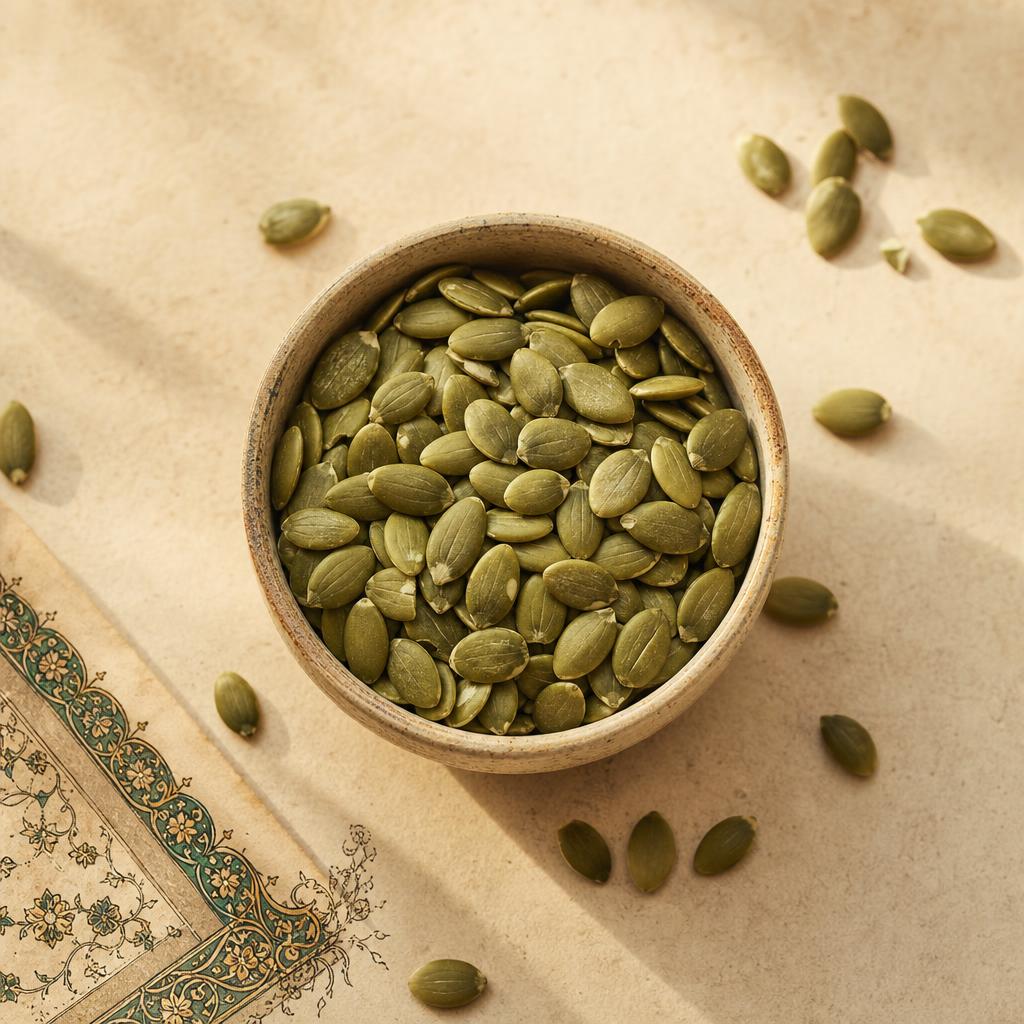
Overview
Pumpkin seeds — pepitas in Spanish, تخمه کدو in Persian — are one of the most magnesium-dense plant foods. Their cooling, slightly green character makes them a favorite summer ājeel snack and a staple of contemporary plant-based diets.
Traditional perspective
Persian tradition classifies pumpkin seeds as cool and moist — soothing for urinary heat, gentle on the bladder, and balancing for warm constitutions.
Magnesium supports sleep, mood, and muscle relaxation · Zinc contributes to immune and prostate health · Traditionally supportive of the urinary system
Pumpkin seeds are roasted with salt and served alongside tea in Iranian homes and at family gatherings — a quiet ritual of conversation and shared snacking.
Modern scientific evidence
Benefits supported by contemporary research — informational only, not medical advice
- Magnesium supports sleep, mood, and muscle relaxation
- Zinc contributes to immune and prostate health
- Traditionally supportive of the urinary system
- Plant iron with vitamin C boosts absorption
- Tryptophan is a precursor to serotonin and melatonin
Nutritional profile
- Vitamin K
- Vitamin E
- Folate
- Magnesium
- Zinc
- Iron
- Phosphorus
- Manganese
- Carotenoids
- Vitamin E forms
- Polyunsaturated fats
- Omega-6 linoleic acid
- Tryptophan
- Phytosterols
How it's commonly used
- Roast with sea salt and enjoy as ājeel
- Sprinkle on salads, soups, and oatmeal
- Blend into pumpkin-seed pesto with basil and lemon
- Stir into trail mix with raisins and dried fruit
Cautions & considerations
- Seed allergies (rare)
- Salted varieties add sodium
Ask Holistic Health AI about Pumpkin Seed
Personalized, evidence-informed guidance from your AI Wellness Coach.
Related in the library
Related articles
Frequently asked questions
+Do pumpkin seeds really help sleep?
They are rich in magnesium and tryptophan — two nutrients involved in melatonin and serotonin synthesis. A small evening handful is a long-loved sleep ally.
Sources & references
- Office of Dietary Supplements — Nuts & Seeds — US National Institutes of Health (NIH)
- FoodData Central — US Department of Agriculture