Overview
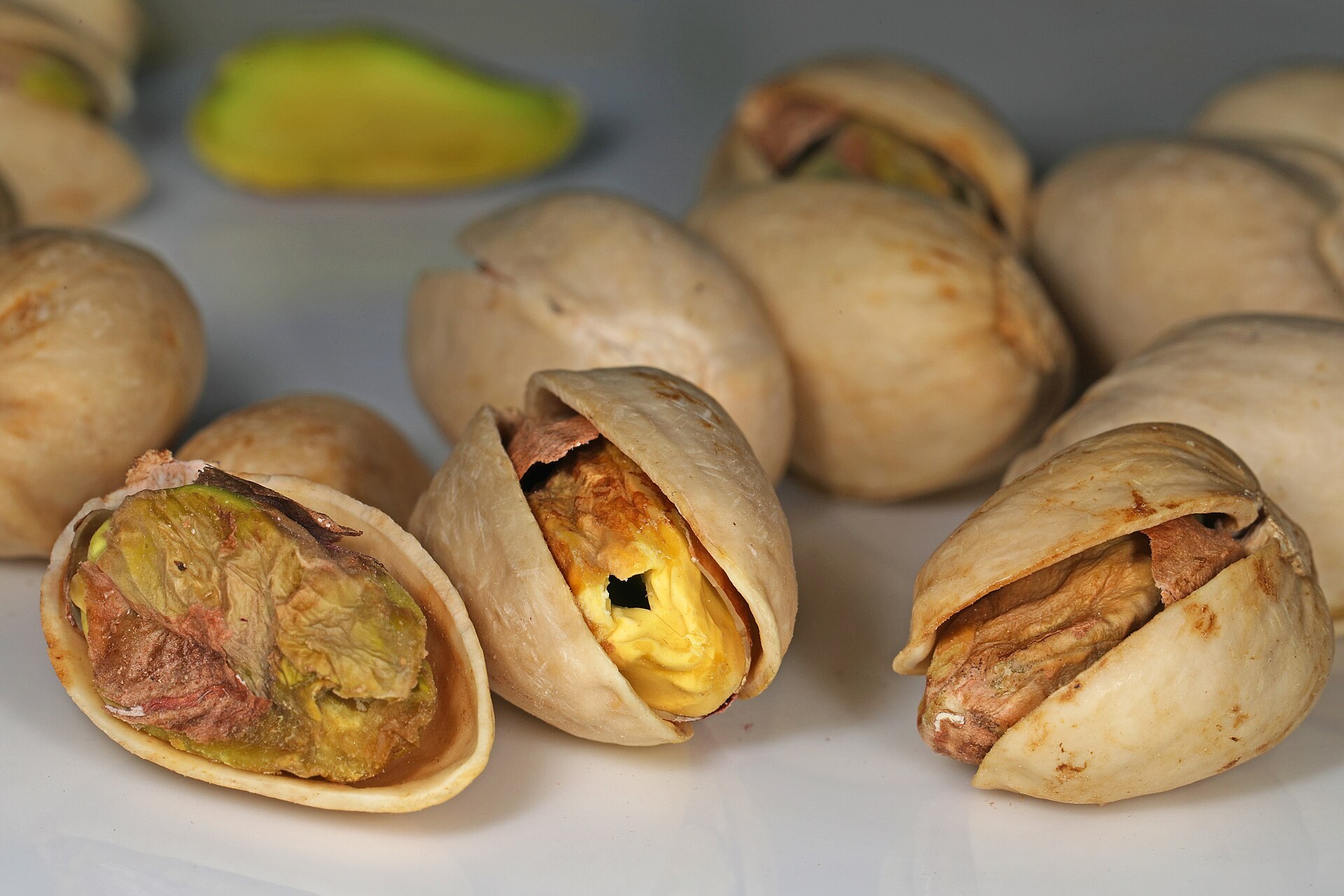
Native to the high deserts of Iran, the pistachio has been cultivated for at least 9,000 years. Its vivid green kernel signals chlorophyll and carotenoids — lutein and zeaxanthin — that the eye uses to filter blue light. Pistachios offer more protein per calorie than most nuts and a satisfying crunch that has flavored Persian sweets for millennia.
Traditional perspective
Persian tradition considers pistachios warming, strengthening for the liver, and uplifting for the heart. They were prescribed to aid digestion of rich foods and to restore vitality after illness.
Supports healthy cholesterol when replacing refined snacks · Lutein and zeaxanthin contribute to eye-health pathways · Plant protein and fiber promote satiety
Pistachios crown baklava, baste themselves into bastani saffron ice cream, and fill the centerpiece bowl on every Yalda night and wedding table across Iran.
Healthy aging relevance
Pistachios are unique among nuts for delivering lutein and zeaxanthin — the same carotenoids that concentrate in the macula of the eye and support age-related vision. Combined with protein, fiber, and potassium, a daily handful supports heart, eye, and metabolic aging at once.
Modern scientific evidence
Benefits supported by contemporary research — informational only, not medical advice
- Supports healthy cholesterol when replacing refined snacks
- Lutein and zeaxanthin contribute to eye-health pathways
- Plant protein and fiber promote satiety
- Lower in calories than many tree nuts
- Source of potassium that supports normal blood pressure
Nutritional profile
- Vitamin B6
- Vitamin E
- Thiamin (B1)
- Vitamin K
- Potassium
- Phosphorus
- Magnesium
- Copper
- Lutein
- Zeaxanthin
- Gamma-tocopherol
- Monounsaturated fats
- Linoleic acid
- Plant sterols
- Phytochemical chlorophyll
Traditional Persian medicine uses
- Ājeel of pistachios + walnuts + raisins at Yalda and Nowruz
- Crushed pistachios on saffron ice cream (bastani) and faloodeh
- Pistachios with mulberries as a Persian energy snack
- Pistachio paste in baklava and noql wedding sweets
How it's commonly used
- 1 oz (~49 kernels) daily — buy in-shell to slow snacking
- Sprinkle on yogurt with rosewater and honey
- Crush over rice, salads, or roasted carrots
- Stir into Persian sweets like baklava and bastani
Cautions & considerations
- Tree-nut or seed allergies are common — avoid if affected.
- Salted varieties add sodium — choose unsalted for daily use
- Energy-dense — measure portions
Traditional preparation methods
- 1 oz (~49 kernels) per day — the heart-study amount
- Buy shell-on to naturally slow snacking
- Toast lightly and crush over yogurt, salads, and rice
- Blend with rose petals into a Persian dessert paste
Related conditions
Traditionally associated — not a treatment claim
- Elevated LDL cholesterol and triglycerides
- Blood-sugar swings between meals
- Eye health concerns (lutein/zeaxanthin)
- Hunger and overeating later in the day
Ask Holistic Health AI about Pistachio
Personalized, evidence-informed guidance from your AI Wellness Coach.
Related in the library
Related articles
- Heart Health12 Foods That Genuinely Support Heart Health
A clear, evidence-based food list for protecting your heart — drawn from Mediterranean and traditional dietary patterns.
- TraditionPersian Medicine 101: The Wisdom Behind Mizaj
A short introduction to the four temperaments and how traditional Persian medicine still influences kitchens today.
- EnergyFoods for Natural, Steady Energy (No Crashes)
How to eat for steady energy through the day — without coffee dependence or sugar crashes.
Frequently asked questions
+Are pistachios good for weight management?
Despite being energy-dense, pistachios are consistently linked with better — not worse — weight regulation, likely thanks to their fiber, protein, and satiety effect.
Sources & references
- Office of Dietary Supplements — Nuts & Seeds — US National Institutes of Health (NIH)
- FoodData Central — US Department of Agriculture