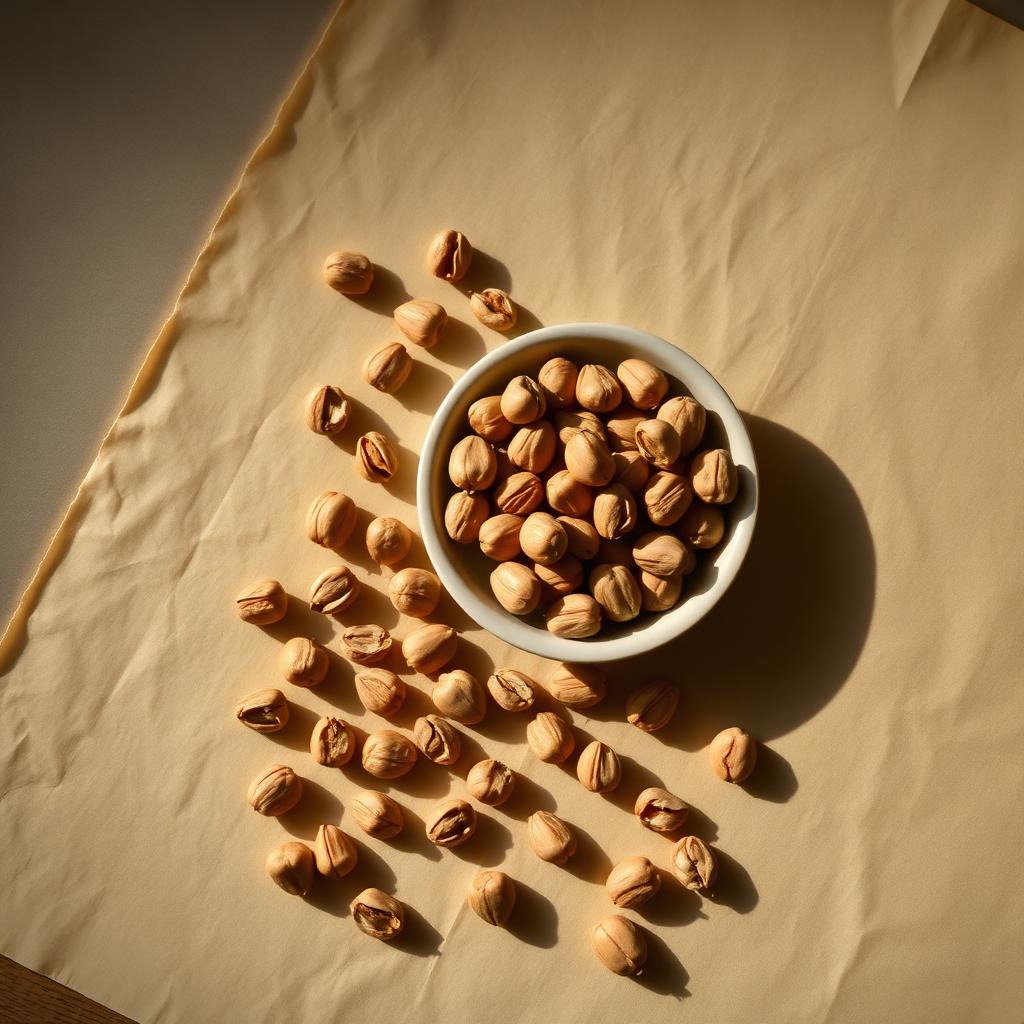
Overview
Pine nuts are the tender seeds harvested from inside pine cones — a labor-intensive food that has graced Mediterranean, Persian, and Asian tables since antiquity. They deliver a unique fat profile (including pinolenic acid), magnesium, and zinc in a small but mighty package.
Traditional perspective
Persian and Greek physicians considered pine nuts warm and moist — restorative for stamina, strengthening for the lungs, and tonic for the reproductive system. They were a recovery food after illness or long exertion.
Pinolenic acid is studied for satiety signaling · Magnesium supports muscles and the nervous system · Zinc contributes to immune balance and skin
Pine nuts top Persian rice pilafs, blend into Italian pesto, and appear in classical Arab desserts like ma'amoul and baklava.
Modern scientific evidence
Benefits supported by contemporary research — informational only, not medical advice
- Pinolenic acid is studied for satiety signaling
- Magnesium supports muscles and the nervous system
- Zinc contributes to immune balance and skin
- Traditional tonic for stamina and respiratory comfort
- Vitamin K supports bone and vascular health
Nutritional profile
- Vitamin E
- Vitamin K
- Thiamin (B1)
- Niacin (B3)
- Magnesium
- Zinc
- Manganese
- Iron
- Vitamin E tocopherols
- Lutein
- Pinolenic acid
- Monounsaturated fats
How it's commonly used
- Toast gently and sprinkle over rice, salads, or pasta
- Blend into pesto with basil, olive oil, and garlic
- Stir into stuffed grape leaves (dolma) and pilafs
- Crush onto labneh or yogurt with honey
Cautions & considerations
- Tree-nut or seed allergies are common — avoid if affected.
- Rare 'pine-mouth' bitter taste days after eating — temporary and harmless
Ask Holistic Health AI about Pine Nut
Personalized, evidence-informed guidance from your AI Wellness Coach.
Related in the library
Related articles
Frequently asked questions
+Why are pine nuts so expensive?
Each cone yields only a small handful of seeds, harvested by hand. Their depth of flavor — and tradition — earn the cost.
Sources & references
- Office of Dietary Supplements — Nuts & Seeds — US National Institutes of Health (NIH)
- FoodData Central — US Department of Agriculture