Nuts & Seeds Library
Hazelnut
فندق

Hazelnut

Corylus avellana
Warm · Dry

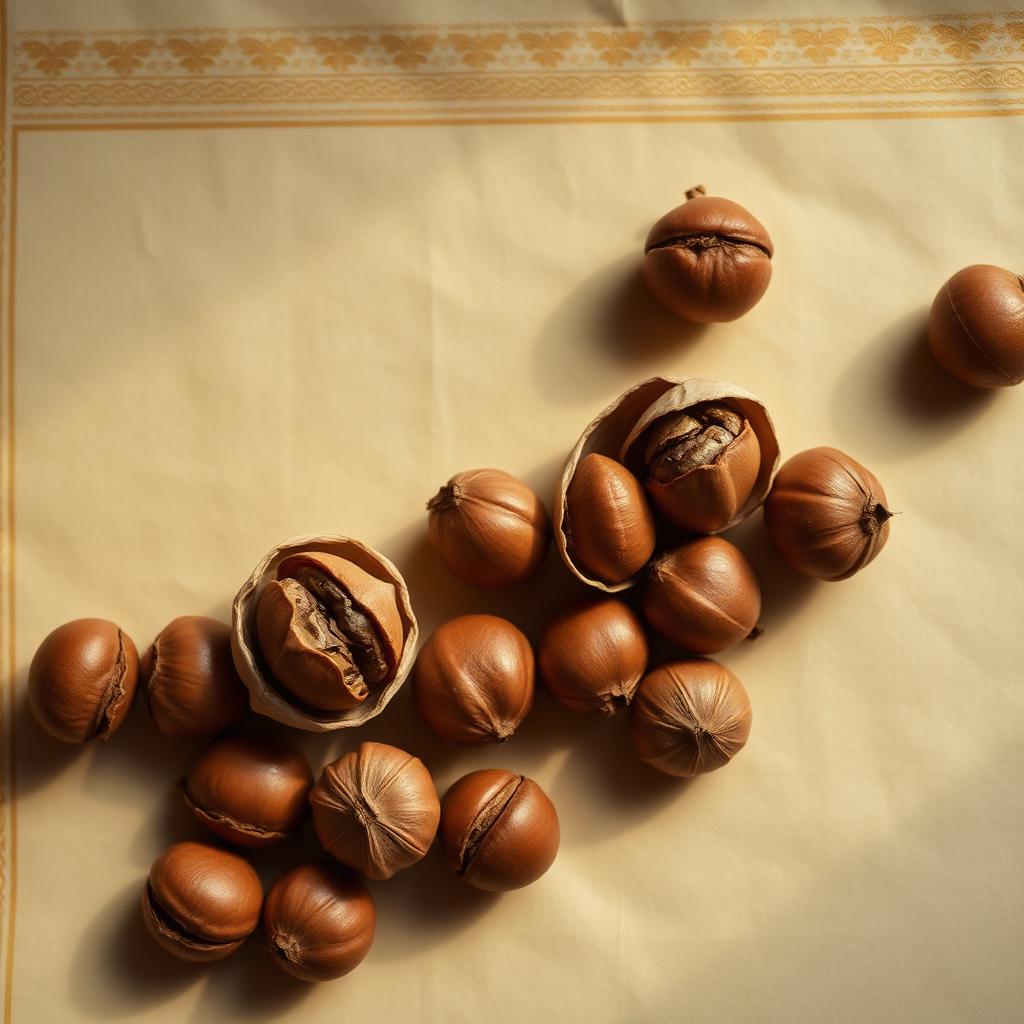
Hazelnut — sweet, vitamin-E-rich nut traditionally linked to focus and cold-weather vitality.

Overview

Hazelnuts have been gathered in Caucasus and Mediterranean forests for over 9,000 years. They are dense in vitamin E, monounsaturated fats, and folate, with a buttery flavor that pairs naturally with chocolate, coffee, and honey.

Traditional perspective

Historical use

Classical Persian and Galenic medicine consider hazelnuts warm and dry — fortifying the kidneys, sharpening the senses, and helping the body resist cold winters.

Traditional applications

High vitamin E supports antioxidant defenses and skin · Monounsaturated fats contribute to heart-health patterns · Manganese and copper support enzyme function

Cultural significance

Hazelnuts add depth to Persian halva, are stirred into Anatolian morning spreads, and feature in the rich gianduja of northern Italy.

Modern scientific evidence

Benefits supported by contemporary research — informational only, not medical advice

  • High vitamin E supports antioxidant defenses and skin
  • Monounsaturated fats contribute to heart-health patterns
  • Manganese and copper support enzyme function
  • Folate supports cardiovascular markers
  • B vitamins help energy metabolism

Nutritional profile

Protein~4 g per 1 ozFiber~3 g per 1 oz
Vitamins
  • Vitamin E
  • Folate (B9)
  • Thiamin (B1)
  • Vitamin B6
Minerals
  • Manganese
  • Copper
  • Magnesium
  • Iron
Antioxidants
  • Proanthocyanidins
  • Phenolic acids
Healthy fats
  • Monounsaturated (oleic) fats
Other notable nutrients
  • Plant sterols

How it's commonly used

  • Snack on a small handful (~21 nuts, 1 oz)
  • Toast and crush over yogurt, salads, or roasted squash
  • Blend into homemade hazelnut–cacao spread
  • Stir into Persian-style halva with sesame and honey

Cautions & considerations

  • Tree-nut or seed allergies are common — avoid if affected.
  • Cross-reactive with birch pollen for some people

Ask Holistic Health AI about Hazelnut

Personalized, evidence-informed guidance from your AI Wellness Coach.

Open AI Wellness Coach

Related in the library

Related articles

Frequently asked questions

+Hazelnuts vs almonds for vitamin E?

Hazelnuts are even higher in vitamin E per ounce than almonds. Rotating both gives variety in fats and minerals.

Sources & references

Reviewed by Holistic Health AI Editorial Team Last updated Reviewed for educational accuracy