Overview
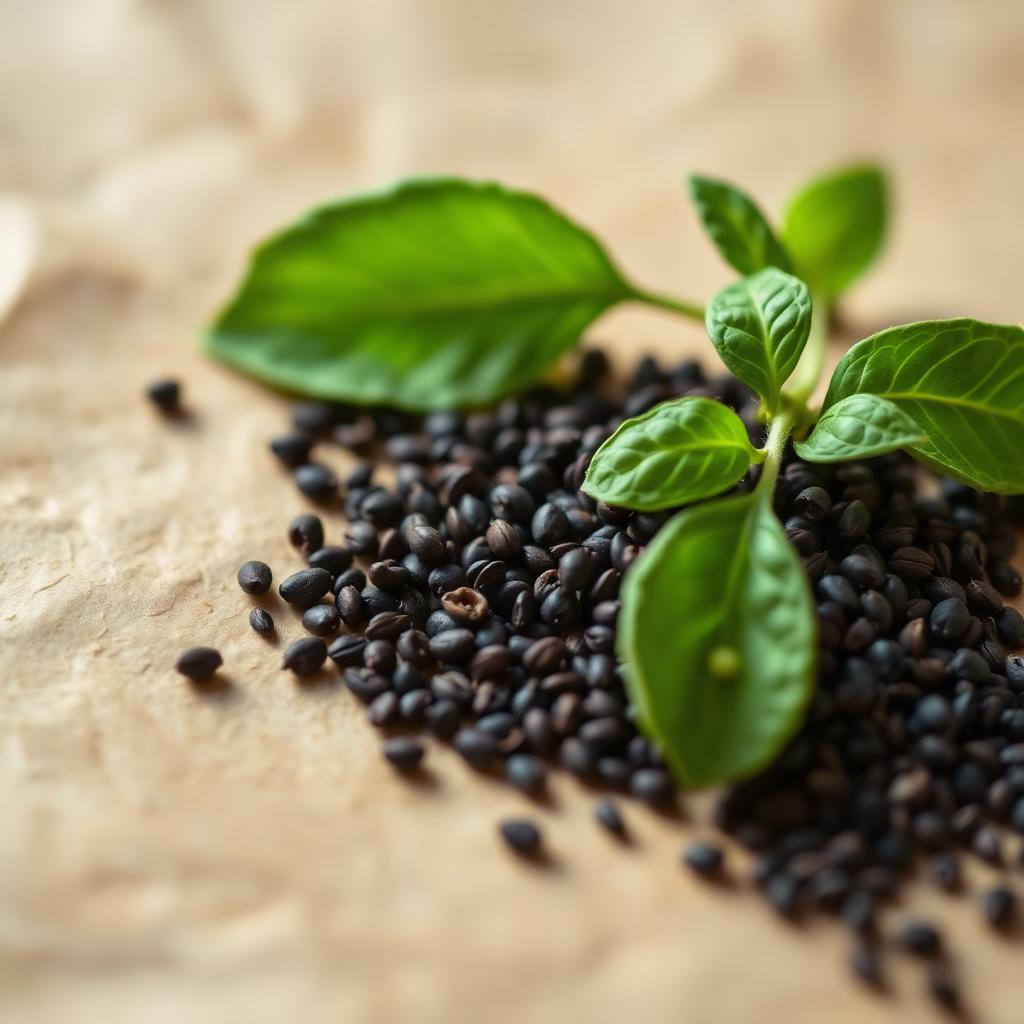
Basil seeds — تخم شربتی — swell into a gel-like jelly when soaked, the secret behind Persian summer sharbat. Beyond their playful texture, they pack soluble fiber, plant protein, and minerals into a near-zero-calorie sip.
Traditional perspective
Persian medicine considers basil seeds deeply cooling and moist — a remedy for summer heat, dry mouth, and inflammation, and a gentle support for digestion.
Soluble fiber supports gut regularity and satiety · Cooling and hydrating in warm weather · Plant-based omega-3 (ALA)
Soaked tokhmeh sharbati floats in rosewater, lemon, and ice — a glass of Persian summer in a single sip.
Modern scientific evidence
Benefits supported by contemporary research — informational only, not medical advice
- Soluble fiber supports gut regularity and satiety
- Cooling and hydrating in warm weather
- Plant-based omega-3 (ALA)
- Iron and magnesium contribute to energy and muscle function
- Polyphenols offer antioxidant support
Nutritional profile
- Iron
- Magnesium
- Calcium
- Polyphenols
- Flavonoids
- Omega-3 ALA
- Mucilage (forms cooling gel)
How it's commonly used
- Soak 1 tsp in 1 cup water for 10 min — seeds will gel
- Stir into rosewater + lemon sharbat with ice
- Top falooda and Persian desserts
- Blend into smoothies for fiber
Cautions & considerations
- Always soak before eating — dry seeds can be a choking risk
- Whole nuts and seeds are a choking hazard for young children.
Ask Holistic Health AI about Basil Seed
Personalized, evidence-informed guidance from your AI Wellness Coach.
Related in the library
Related articles
- DigestionFoods That Help (and Hurt) Digestion
Practical guidance for a comfortable gut — fiber, fermentation, herbs, and eating habits.
- TraditionPersian Medicine 101: The Wisdom Behind Mizaj
A short introduction to the four temperaments and how traditional Persian medicine still influences kitchens today.
Frequently asked questions
+Are basil seeds the same as chia?
They look similar when soaked but come from different plants. Basil seeds gel faster and are higher in fiber per gram.
Sources & references
- Office of Dietary Supplements — Nuts & Seeds — US National Institutes of Health (NIH)
- FoodData Central — US Department of Agriculture