Herb Library
Savory
مرزه

Savory

Satureja hortensis
Hot · Dry

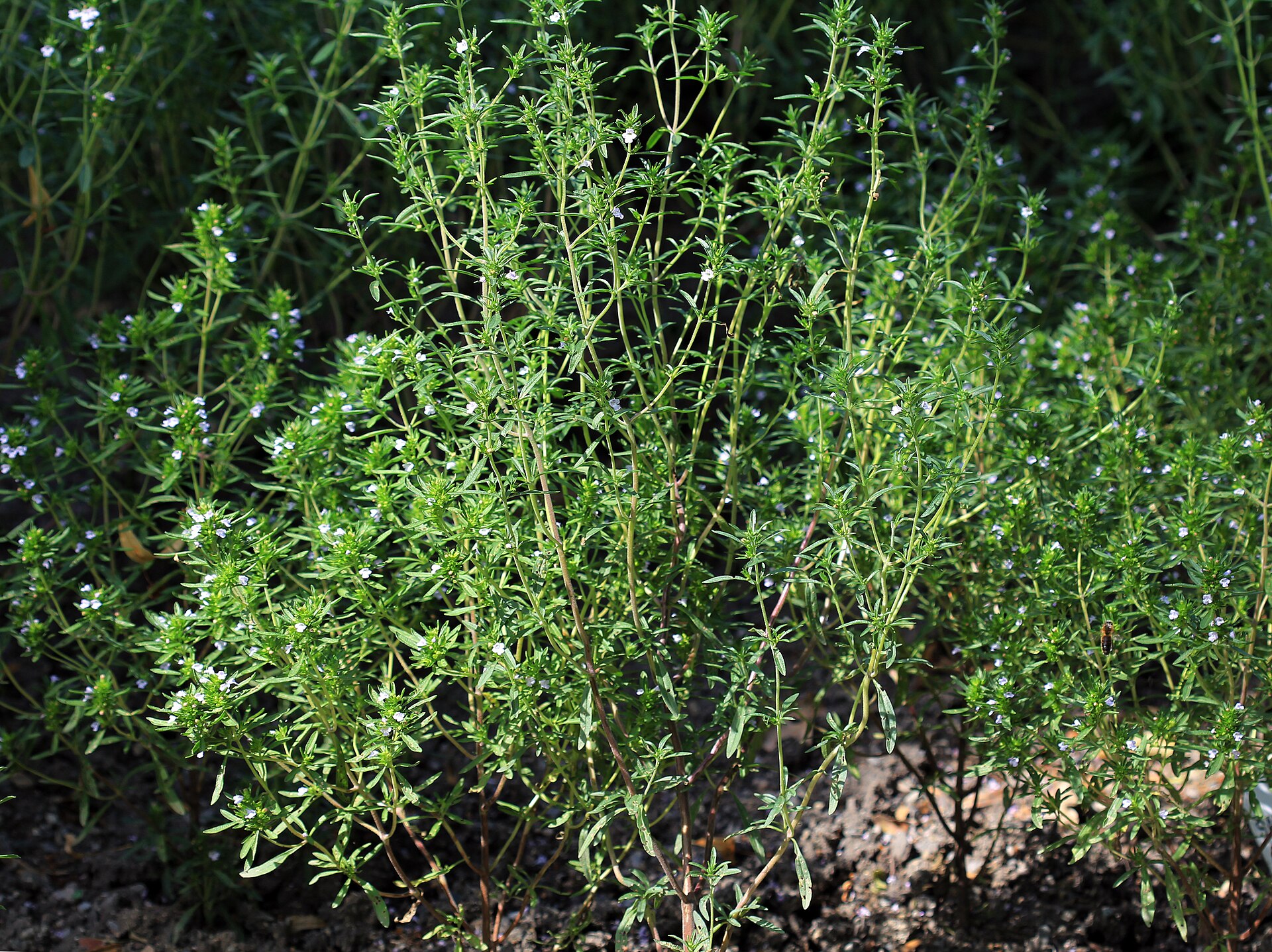
Savory — Persian marzeh (مرزه). Peppery mountain herb that kindles digestion, supports the chest, and stars in Persian sabzi-khordan plates.

Overview

Marzeh is one of the seven foundational herbs in the Persian sabzi-khordan (fresh-herb plate) and a beloved seasoning across Iran, the Caucasus, and the Mediterranean. Traditional Persian medicine treats it as a warming, drying carminative for sluggish, cold-type digestion. Its essential oil is rich in carvacrol — the same compound that gives oregano and thyme their well-known antimicrobial activity.

Scientific name
Satureja hortensis
Plant family
Lamiaceae (mint family)

Botanical descriptionCompact aromatic annual 20–40 cm tall with narrow opposite leaves and small lilac-white flowers. Highly aromatic, similar in scent to thyme with a peppery edge.

Key Takeaways

What to know in 30 seconds

  • Carvacrol and thymol show broad antimicrobial activity in lab studies
  • Traditional carminative — eases gas, bloating, and post-meal heaviness
  • Rosmarinic acid provides antioxidant support
  • Warming, dispersing action for cold-damp digestion
Why It Matters

Why this matters for everyday wellness

Savory earns a place in a healthy-aging routine because it combines carvacrol and thymol show broad antimicrobial activity in lab studies with traditional carminative — eases gas, bloating, and post-meal heaviness — a rare combination that supports the cardiovascular, metabolic, and cellular systems that drive how we age.

Practical Everyday Uses

Practical everyday uses

  • Add 3–5 fresh sprigs to every Persian meal as part of sabzi-khordan
  • Sprinkle dried marzeh over bean and lentil dishes to ease gas
  • Tea after heavy meals: 1 tsp dried herb in 1 cup hot water, 8 min
Source: Traditional Persian Wisdom

Traditional Persian perspective

Historical & cultural knowledge passed down through generations — not a medical claim.

Historical use

Persian medicine classifies savory as hot and dry (گرم و خشک) to the third degree — strongly warming, dispersing, and digestive. Avicenna recommends it after heavy or cold-natured meals, and it is one of the herbs traditionally chewed by mountain shepherds for stamina and chest warmth.

Traditional applications

Carvacrol and thymol show broad antimicrobial activity in lab studies · Traditional carminative — eases gas, bloating, and post-meal heaviness · Rosmarinic acid provides antioxidant support

Cultural significance

Used across household wellness traditions as a culinary herb with daily-life relevance.

Healthy Aging

Healthy aging relevance

In a healthy-aging context, savory bridges tradition and science: persian medicine classifies savory as hot and dry (گرم و خشک) to the third degree — strongly warming, dispersing, and digestive. Avicenna recommends it after heavy or cold-natured meals, and it is one of the herbs traditionally chewed by mountain shepherds for stamina and chest warmth, while modern research highlights its role in the same pathways — inflammation, vascular health, and cellular resilience — that compound over decades to shape how we feel in our 60s, 70s, and beyond.

Source: Modern Scientific Research

Modern scientific evidence

Benefits supported by peer-reviewed studies & contemporary nutrition science — informational only, not medical advice.

  • Carvacrol and thymol show broad antimicrobial activity in lab studies
  • Traditional carminative — eases gas, bloating, and post-meal heaviness
  • Rosmarinic acid provides antioxidant support
  • Warming, dispersing action for cold-damp digestion

Nutritional profile

Vitamins
  • Vitamin A
  • Vitamin C
  • B6
Minerals
  • Iron
  • Calcium
  • Manganese
  • Magnesium
Antioxidants
  • Rosmarinic acid
  • Carvacrol
  • Thymol
Other notable nutrients
  • Phenolic volatile oils
Historical Uses

Historical uses across cultures

From classical Persian, Greek, and Islamic-Golden-Age sources.

  • Daily fresh herb on the sabzi-khordan plate to ease digestion of bread and dairy
  • Warm infusion after fatty meals for bloating and heaviness
  • Steam inhalation for cold-type chest congestion
  • Topical wash for fungal skin complaints
Internal Uses

Taken internally

  • Fresh leaves on the herb plate (3–5 sprigs per meal)
  • Damkardeh: 1 tsp dried herb per cup, 8 min, after meals
  • Pinch of dried marzeh in lentil soup and bean stews to ease gas
External Uses

Applied externally

  • Steam inhalation: 1 Tbsp dried herb in hot water, breathe under a towel 5 min
  • Diluted essential oil (1%) in olive oil for warming chest rub
  • Mouthwash from cooled strong infusion for gingivitis
Traditional Formulas

Named traditional formulas

  • Sabzi Khordanسبزی خوردن

    The classic Persian fresh-herb plate — savory, mint, basil, tarragon, radish, scallion, walnut, and feta — eaten at every meal to aid digestion.

  • Marzeh Digestive Teaدمنوش مرزه

    1 tsp dried savory + ½ tsp fennel seed steeped 10 min, sipped after rich meals.

Contraindications

Who should avoid this — and known interactions

  • Pregnancy — avoid concentrated essential oil and medicinal-dose teas
  • Infants and young children — essential oil
  • Known Lamiaceae allergy
Everyday Use

How it's commonly used

  • Add 3–5 fresh sprigs to every Persian meal as part of sabzi-khordan
  • Sprinkle dried marzeh over bean and lentil dishes to ease gas
  • Tea after heavy meals: 1 tsp dried herb in 1 cup hot water, 8 min
Safety

Safety & cautions

  • Generally very safe in culinary amounts
  • Concentrated essential oil is potent — never ingest neat
  • Pregnancy: keep to culinary amounts only

Ask Holistic Health AI about Savory

Personalized, evidence-informed guidance from your AI Wellness Coach.

Open AI Wellness Coach

Related Herbs

Related articles

Frequently asked questions

+How is savory traditionally used?

Persian medicine classifies savory as hot and dry (گرم و خشک) to the third degree — strongly warming, dispersing, and digestive. Avicenna recommends it after heavy or cold-natured meals, and it is one of the herbs traditionally chewed by mountain shepherds for stamina and chest warmth.

+How do people commonly use Savory?

Add 3–5 fresh sprigs to every Persian meal as part of sabzi-khordan Sprinkle dried marzeh over bean and lentil dishes to ease gas Tea after heavy meals: 1 tsp dried herb in 1 cup hot water, 8 min

References

Sources & references

Reviewed by Holistic Health AI Editorial Team Last updated Traditional wisdom + modern evidence Educational, not medical advice