Overview
Marjoram has perfumed Mediterranean kitchens and Persian apothecaries for over two millennia. Dioscorides and Avicenna both wrote about its warming, calming nature. Modern research has explored its antioxidant volatile oil (terpinen-4-ol, sabinene hydrate) for blood pressure, anxiety, and digestive comfort.
- Scientific name
- Origanum majorana
- Plant family
- Lamiaceae (mint family)
- Marzanjush
- مرزنجوش
- Sweet marjoram
- Knotted marjoram
- Bardaqush
- بردقوش
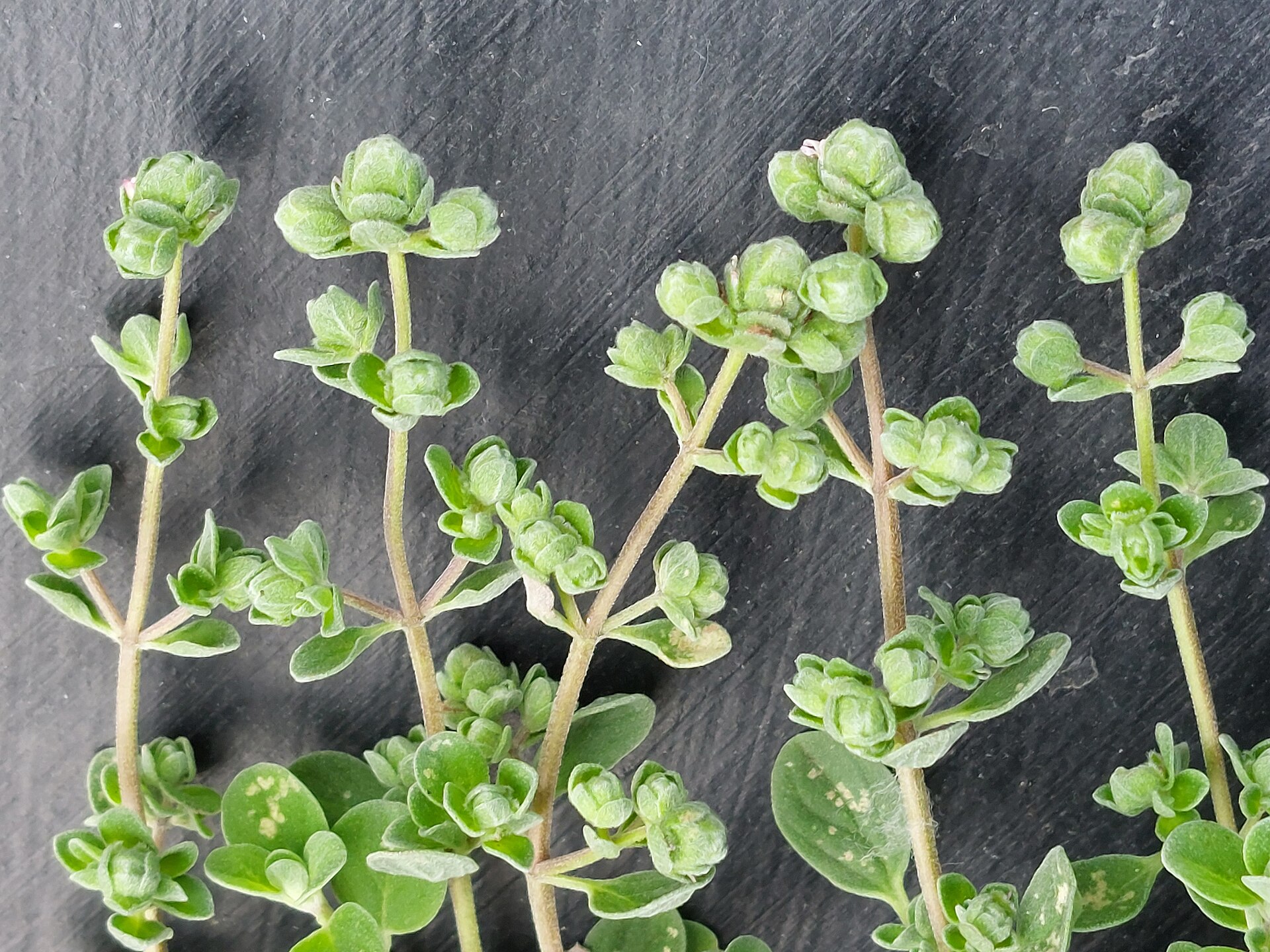
Botanical descriptionSweet marjoram is a tender perennial 30–60 cm tall with slender stems, small oval gray-green leaves covered in fine hairs, and tiny white-to-pink flowers grouped in knot-like clusters (hence the folk name 'knotted marjoram'). The leaves and flowering tops are the medicinal parts.
What to know in 30 seconds
- Sweet, calming mint-family herb at home in tea and food.
- Traditionally used for headaches, anxious nerves, and gas.
- Often confused with oregano — marjoram is softer, sweeter, more aromatic.
- Generally very safe in culinary amounts; ease back the essential oil in pregnancy.
Why this matters for everyday wellness
Tense shoulders, low-grade headaches, restless evenings, and post-meal heaviness rarely show up alone — they show up together. Marjoram's combination of warming aromatic oils and relaxing flavonoids is one of the gentlest household herbs to address that whole-body 'tight and tired' pattern.
Practical everyday uses
- Brew 1 tsp dried herb per cup, covered 8 min, in the evening.
- Add to slow-cooked beans, lamb, and tomato sauces.
- Sprinkle on roasted vegetables and eggs.
- Diluted essential oil (1%) in carrier oil for tense-shoulder massage.
Traditional Persian perspective
Historical & cultural knowledge passed down through generations — not a medical claim.
Persian medicine views marjoram (مرزنجوش) as warm and dry in the third degree — gladdening the heart, easing the cold, tight kind of headache, dispersing gas, warming a sluggish stomach, and bringing on delayed menses with cold-damp patterns.
Calming for anxious nerves and tension · Antioxidant volatile oils (terpinen-4-ol, carvacrol) · Carminative — eases gas and bloating
Marjoram has been called 'the herb of happiness' since antiquity — woven into Greek wedding crowns, brewed in monastic gardens, and steeped as a calming tea in Lebanese and Persian households.
Healthy aging relevance
Daily low-grade stress, tense muscles, and post-meal sluggishness compound over decades into elevated blood pressure, poor sleep, and reduced digestion. Marjoram's mild evening tea and topical oil are exactly the kind of small, repeatable habits that lower that whole pattern without medication.
Modern scientific evidence
Benefits supported by peer-reviewed studies & contemporary nutrition science — informational only, not medical advice.
- Calming for anxious nerves and tension
- Antioxidant volatile oils (terpinen-4-ol, carvacrol)
- Carminative — eases gas and bloating
- Traditional menstrual support for cold-pattern cramps
Nutritional profile
- Vitamin K
- Vitamin A
- Vitamin C
- Iron
- Calcium
- Manganese
- Rosmarinic acid
- Carvacrol
- Terpinen-4-ol
- Aromatic volatile oils
Traditional Persian medicine uses
- Cold-type headaches and migraines
- Anxious nerves and restlessness
- Sluggish, gassy digestion
- Menstrual cramps with cold pattern
- Tight, tired shoulders and necks (topical oil)
Historical uses across cultures
From classical Persian, Greek, and Islamic-Golden-Age sources.
- Called amaracus by the Greeks — woven into wedding crowns as a symbol of happiness and love.
- Dioscorides and Avicenna recommended marjoram for headaches, nervous tension, and cold-pattern menstrual cramps.
- A staple of medieval European 'strewing herbs' for floors and a perfume in monastery gardens.
- Long used in Lebanese and Persian households as a calming evening tea, often blended with linden or chamomile.
Named traditional formulas
- Damkardeh-ye marzanjūshدمکرده مرزنجوش
Classical Persian covered infusion of dried marjoram flowering tops, taken in the evening for nervous tension.
- Three-calming blend
Marjoram + chamomile + lemon balm in equal parts as a before-bed tea for restless sleep.
- Rūghan-e marzanjūshروغن مرزنجوش
Marjoram-infused olive oil for tense shoulders, jaw, and lower back.
Who should avoid this — and known interactions
- Pregnancy (medicinal/extract doses)
- Active bleeding disorders or surgery within 2 weeks
- Lamiaceae (mint family) allergy
How it's commonly used
- Tea: 1 tsp dried herb per cup, covered 8 min, evenings
- Cook with beans, tomato sauce, lamb, and roasted vegetables
- Topical: 1% diluted essential oil in carrier oil for tense muscles
Safety & cautions
- Avoid medicinal doses and concentrated essential oil in pregnancy (uterine stimulant)
- May lower blood sugar and blood pressure modestly — caution with diabetes or hypotension medication
- Mild blood-thinning effect at high doses — pause before surgery
Traditional preparation methods
- Damkardeh — 1 tsp dried flowering tops per cup, covered 8 min
- Marjoram-infused olive oil — gentle warm infusion 2 weeks; massage into tight muscles
- Bath — handful of dried herb tied in cloth in a warm bath for tension
- Marjoram honey — sprigs steeped in raw honey for a calming evening spoonful
Traditional remedies
- Evening calming tea — 1 tsp dried flowering tops per cup, covered 8 min, sweetened lightly with honey.
- Tension-shoulder massage oil — 5 drops marjoram essential oil in 1 Tbsp warm olive oil.
- Calming bath — handful of dried herb tied in muslin under running warm water.
- Marjoram honey — sprigs steeped in raw honey 2 weeks, a daily teaspoon for nerves and digestion.
Related conditions
Traditionally associated — not a treatment claim
Ask Holistic Health AI about Marjoram
Personalized, evidence-informed guidance from your AI Wellness Coach.
Related Foods
Related articles
- StressNatural Ways to Support Your Stress Response
Adaptogenic herbs, food, breath, and ritual — a calm, evidence-based toolkit for daily stress.
- SleepWhat to Eat (and Drink) for Better Sleep
The connection between food, timing, and sleep — plus a Persian evening ritual that actually works.
- TraditionPersian Medicine 101: The Wisdom Behind Mizaj
A short introduction to the four temperaments and how traditional Persian medicine still influences kitchens today.
Frequently asked questions
+Marjoram vs oregano — what's the difference?
Both are Origanum species. Sweet marjoram (O. majorana) is milder, sweeter, and more aromatic — better for tea and delicate dishes. Oregano (O. vulgare) is more pungent, sharper, more antimicrobial — better for tomato sauces and roasts. They are not interchangeable in herbal practice.
+Is marjoram safe in pregnancy?
Culinary use in food is generally considered safe. Medicinal doses (strong tea daily, capsules) and concentrated essential oil should be avoided in pregnancy because marjoram is a traditional emmenagogue.
+How does marjoram tea taste?
Soft, slightly sweet, with notes of pine and citrus — much gentler than oregano. It blends beautifully with chamomile, linden, and lemon balm.
Sources & references
- Origanum majorana L. — A phytochemical and pharmacological review — Journal of Ethnopharmacology (PubMed)
- Marjoram — Drugs and Lactation Database (LactMed) — US National Library of Medicine
- Sad Giah Hezar Darman (صد گیاه و هزار درمان) — One Hundred Plants and One Thousand Remedies — Dr. Hossein Erfani, 4th edition (1375 / 1996–1997). Primary traditional Persian herbal reference cited throughout this platform; presented as traditional knowledge, not as modern medical proof.
- Office of Dietary Supplements — Fact Sheets — US National Institutes of Health (NIH)
- Herbal Database — Memorial Sloan Kettering Cancer Center
- Herbs at a Glance — US NIH National Center for Complementary and Integrative Health (NCCIH)
- FoodData Central — searchable nutrient database — US Department of Agriculture (USDA)
- The Nutrition Source — Harvard T.H. Chan School of Public Health
- PubMed — peer-reviewed biomedical literature — US National Library of Medicine
Where Marjoram fits in the bigger picture
Cornerstone topic hubs where Marjoram appears as a featured ingredient.
Brain Health
Persian physicians considered the brain (dimāgh) the workshop of perception, memory, and imagination — to be protected from cold drafts, broken sleep, heavy late meals, and clouded emotion. Avicenna prescribed walnut (whose folded shape mirrors the brain), saffron, rosemary, sage, and dawn walks for clarity. Modern neuroscience agrees: up to 40% of dementia risk is shaped by daily habits.
Explore brain healthImmune Support
Persian medicine has always understood resilience as the result of a balanced mizāj, bright digestion, protected innate heat, and unhurried daily rhythm — not a single tonic taken in panic. Avicenna and Razi prescribed warming aromatics (garlic, ginger, thyme, black seed), honey, broths, rest, and steam at the first sign of weakness, and reserved heroic measures for when prevention failed.
Explore immune supportJoint & Pain Relief
Joint comfort, ease of movement, and a calm inflammatory tone shape how vibrantly you age. Persian wellness has cared for joints for millennia with warming oils, aromatic spices, and gentle daily movement; modern research adds polyphenol-rich foods, omega-3s, strength training, and restorative sleep. This hub is educational — not a treatment for any specific condition.
Explore joint & pain relief