Overview
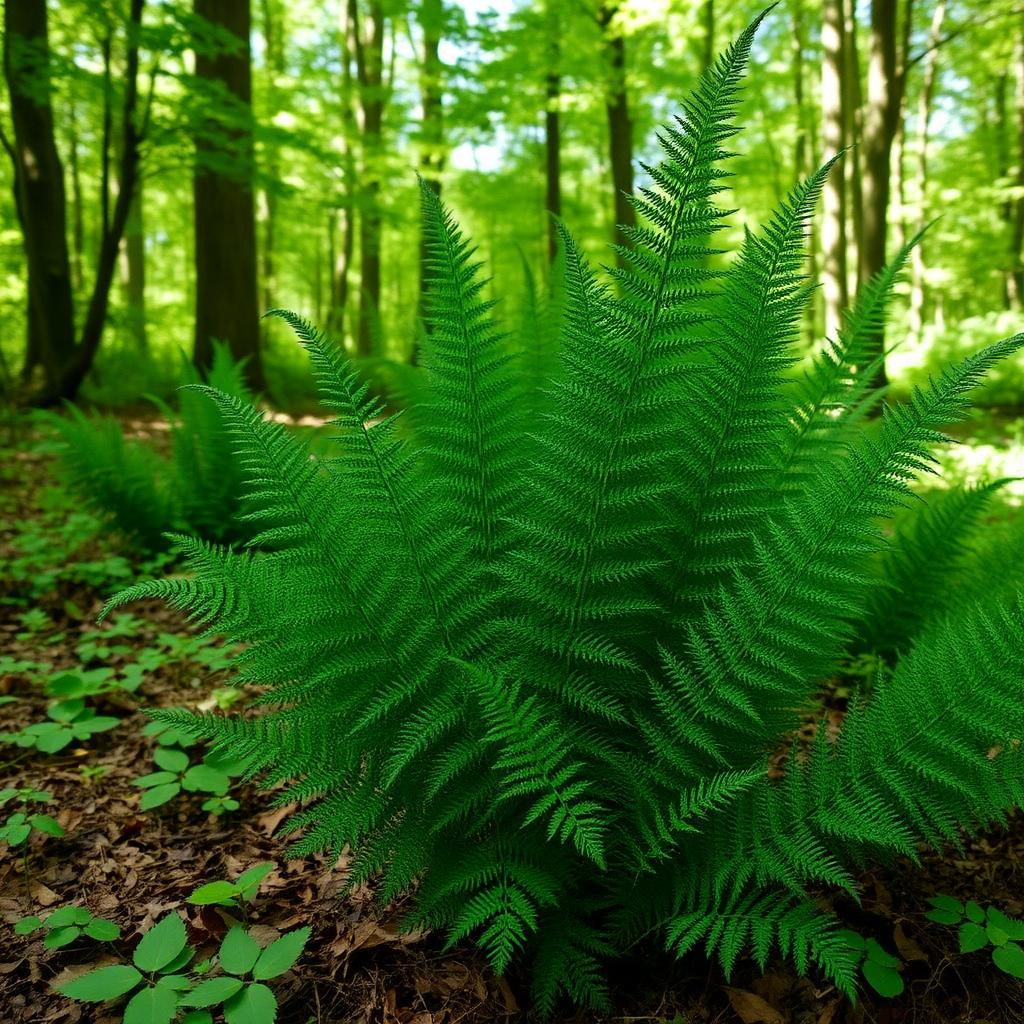
Male fern (Dryopteris filix-mas) is a tall, upright woodland fern whose rhizome was, for centuries, one of the most reliable plant medicines in the world for expelling intestinal tapeworms. It appears in Avicenna's Canon, the Greek Materia Medica of Dioscorides, and the British Pharmacopoeia well into the 20th century. Today, safer pharmaceutical anthelmintics have replaced internal medicinal use almost everywhere, and male fern is taught primarily as a piece of historical and ethnobotanical knowledge.
What to know in 30 seconds
- One of the most historically significant anti-parasitic plants in world medicine.
- Modern internal use is rare and reserved for qualified clinicians.
- Contains filicin and related compounds that are potentially toxic in overdose.
- Included here for heritage and educational completeness — not as a self-care recommendation.
Why this matters for everyday wellness
Understanding the Persian Heritage Library means honoring the herbs that shaped medicine — including those whose role is now mostly historical. Male fern is a reminder that traditional pharmacology was real pharmacology, with real potency and real risks. Knowing what was once used, why, and why it changed is part of a mature relationship with plant medicine.
Practical everyday uses
- Educational and historical study — not for self-administration.
- Decorative woodland fern in shaded gardens.
- Reference for understanding how classical Persian sources distinguished 'male' vs 'female' ferns.
Traditional Persian perspective
Historical & cultural knowledge passed down through generations — not a medical claim.
Persian and Greco-Arabic medicine classified male fern (سرخس نر) as warm and dry, and used the rhizome powder — almost exclusively — as a powerful anthelmintic (دافع کرم) to expel tapeworms. Avicenna's Canon specifies a careful preparation: an overnight fast, the powdered root taken with honey at dawn, followed several hours later by a purgative such as castor oil to expel the worm before the active compounds could be absorbed. The treatment was respected precisely because it was understood to be powerful and not without risk.
Historical: highly effective at expelling tapeworms when correctly prepared and supervised · Educational: one of the clearest examples of evidence-based traditional pharmacology · Traditionally valued as part of a balanced wellness routine
In Persian and Caucasian folk tradition, the unfurling fiddleheads of large ferns were associated with the renewal of spring. The 'male' and 'female' fern naming convention — found in Pliny, Dioscorides, and later Persian sources — reflected the upright, robust form of Dryopteris versus the more delicate, lacy Athyrium, not their reproductive biology.
Healthy aging relevance
Male fern's primary lesson for healthy aging is conceptual rather than practical: traditional medicine recognized that some of the most effective remedies were also the most concentrated, and required careful dosing and timing. The same humility applies to modern supplements.
Modern scientific evidence
Benefits supported by peer-reviewed studies & contemporary nutrition science — informational only, not medical advice.
- Historical: highly effective at expelling tapeworms when correctly prepared and supervised
- Educational: one of the clearest examples of evidence-based traditional pharmacology
- Traditionally valued as part of a balanced wellness routine
Nutritional profile
- Filicin (filix-mas oleoresin)
- Aspidin
- Tannins
Traditional Persian medicine uses
- Intestinal tapeworm infection (historical, under strict supervision)
- Topical poultice for joint pain in some folk traditions
- Reference herb for studying classical Persian anthelmintic protocols
How it's commonly used
- For self-care: do not use internally. Consult a qualified clinician for any suspected parasitic infection.
- For learning: read primary sources (Avicenna's Canon, Book II) to study the protocol's logic.
- Use in small culinary amounts first, then personalize to taste and tolerance
Safety & cautions
- DO NOT self-administer male fern internally. Toxicity risks include nausea, vomiting, optic nerve damage, and (rarely) coma.
- Strictly contraindicated in pregnancy, lactation, children, and anyone with liver, kidney, heart, or eye disease.
- Modern pharmaceutical anthelmintics are safer and more effective; see a doctor for suspected parasites.
- Even external use should follow professional guidance.
Traditional preparation methods
- Historical: dried, powdered rhizome taken on an empty stomach, followed by a purgative (clinician supervision only)
- Modern: standardized extracts have been almost entirely replaced by safer pharmaceuticals
- External: traditional cold compress of fresh fronds for joint pain (limited use)
Traditional remedies
- Avicenna's tapeworm protocol: fast, powdered male fern with honey, followed by castor oil purgative (historical reference only)
Related conditions
Traditionally associated — not a treatment claim
Ask Holistic Health AI about Male Fern
Personalized, evidence-informed guidance from your AI Wellness Coach.
Related articles
Frequently asked questions
+Why include male fern if you don't recommend taking it?
Because the Persian Heritage Library is a knowledge base, not only a how-to guide. Understanding which herbs shaped historical medicine — and why some of them moved out of self-care — is part of a serious relationship with plant medicine.
+Can I safely use male fern for parasites?
No. The therapeutic and toxic doses are uncomfortably close, and modern pharmaceutical anthelmintics (e.g. praziquantel) are far safer and more reliable. See your doctor if you suspect a parasitic infection.
+How is male fern different from female fern?
They are different species in different genera (Dryopteris vs Athyrium). Male fern is more robust and upright, contains the anthelmintic filicin, and was historically a serious internal medicine. Female fern is more delicate and was used externally and far more gently.
Sources & references
- Dryopteris filix-mas — European Medicines Agency review — European Medicines Agency, Committee on Herbal Medicinal Products
- Avicenna's Canon of Medicine, Book II — Materia Medica (entry on Sarakhs) — Translation, Laleh Bakhtiar
- Dioscorides, De Materia Medica — Classical Greek pharmacopoeia, 1st century CE
- Office of Dietary Supplements — Fact Sheets — US National Institutes of Health (NIH)
- Herbal Database — Memorial Sloan Kettering Cancer Center
- Herbs at a Glance — US NIH National Center for Complementary and Integrative Health (NCCIH)
- FoodData Central — searchable nutrient database — US Department of Agriculture (USDA)
- The Nutrition Source — Harvard T.H. Chan School of Public Health
- PubMed — peer-reviewed biomedical literature — US National Library of Medicine