Herb Library
Linden
زیرفون

Linden

Tilia europaea
Cool · Moist

Linden — Persian zeyfoon (زیرفون). Fragrant, honey-scented blossom tea that calms the nervous system, eases sleep, opens the chest, and gently lowers blood pressure.

Overview

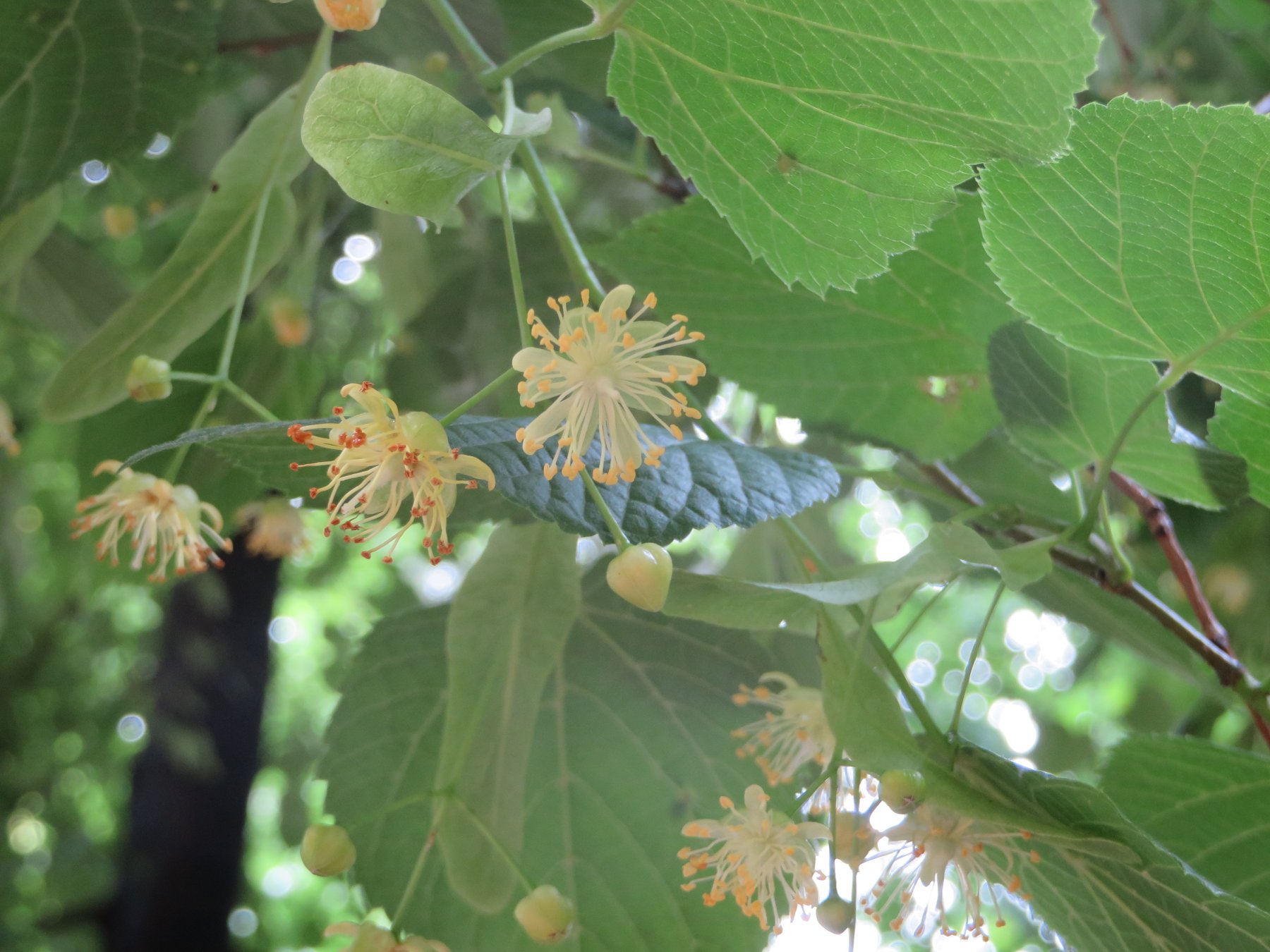
Linden flowers — gathered briefly in early summer from the towering Tilia tree — make one of the most-used calming teas across Europe, the Caucasus, and Persia. In Persian households the dried blossom is called زیرفون (zeyfoon) and is brewed for nervous tension, restless sleep, head colds, and the early stages of fever. The aroma is honey-like and almost confectionery — a sweetness that traditional herbalists tied directly to its heart-gladdening reputation.

Key Takeaways

What to know in 30 seconds

  • Honey-scented blossom tea long used for sleep, anxiety, and head colds.
  • Mucilage soothes irritated throats and dry coughs.
  • Mild diaphoretic — supports the body in low-grade fever and chills.
  • Gentle enough for evening use; classically paired with chamomile or borage.
Why It Matters

Why this matters for everyday wellness

Sleep, calm, and an easy-breathing chest are foundations of healthy aging. Linden gives a slow, layered version of that calm — softer than valerian, more aromatic than chamomile, and one of the few traditional flowers with consistent modern research on anxiety and vascular tone.

Practical Everyday Uses

Practical everyday uses

  • Steep 1 Tbsp dried blossoms in just-boiled water for 8–10 minutes; sip warm 45 minutes before bed.
  • Combine with chamomile and a few rose petals for a Persian-style sleep tea.
  • Add honey only after the tea cools below 110°F to protect enzymes.
  • Inhale the steam from a covered cup for a stuffy head and tight chest.
Source: Traditional Persian Wisdom

Traditional Persian perspective

Historical & cultural knowledge passed down through generations — not a medical claim.

Historical use

Persian medicine considers linden cool and moist (سرد و تر) — calming for an overheated nervous temperament (mizāj-e safrāvī or damavī), gentle on a dry, irritated chest, and a classical mufarriḥ (heart-gladdener) used in the same family as borage (gol-e gāv-zabān) and damask rose. It is the herb a Persian grandmother reaches for when a child is anxious, feverish, or unable to sleep.

Traditional applications

Traditionally calming for the nervous system; small trials suggest mild anxiolytic effect · Mucilaginous flavonoids soothe dry, irritated throats and coughs · Diaphoretic — gently encourages the body's own response to mild fever

Cultural significance

Across northern Iran, the Caucasus, and Anatolia, dried zeyfoon is sold in apothecary jars beside borage and chamomile. A spoonful of nabāt (rock sugar) is dropped into the cup; the tea is shared in slow, conversational rituals — itself part of the medicine.

Healthy Aging

Healthy aging relevance

Calm sleep, low evening cortisol, and gentle vascular tone are three of the most underrated drivers of healthspan after 60. Linden tea is a low-cost, low-risk evening ritual that supports all three at once — and folds naturally into the kind of slow, social wind-down that traditional Persian wellness has always considered medicine.

Source: Modern Scientific Research

Modern scientific evidence

Benefits supported by peer-reviewed studies & contemporary nutrition science — informational only, not medical advice.

  • Traditionally calming for the nervous system; small trials suggest mild anxiolytic effect
  • Mucilaginous flavonoids soothe dry, irritated throats and coughs
  • Diaphoretic — gently encourages the body's own response to mild fever
  • Aromatic compounds may support healthy blood pressure within normal range
  • Polyphenols (tiliroside, quercetin, kaempferol) provide antioxidant activity

Nutritional profile

Antioxidants
  • Tiliroside
  • Quercetin
  • Kaempferol
  • Rutin
Other notable nutrients
  • Mucilage polysaccharides
  • Volatile aromatic oils (farnesol)
Traditional Persian Medicine

Traditional Persian medicine uses

  • Restless sleep, anxious children, and grief-tinged insomnia
  • Early stages of cold or low-grade fever (to encourage gentle sweating)
  • Dry, ticklish coughs and irritated throat
  • Heart palpitations from worry; nervous heart (qalb-e ʿaṣabī)
  • Tension headaches arising from sleeplessness
Everyday Use

How it's commonly used

  • Tea (damkardeh): 1 Tbsp dried blossoms in 1 cup just-boiled water, covered 8–10 min
  • Sleep blend: linden + chamomile + a pinch of dried rose petals
  • Steam: cover a bowl of hot water + flowers; breathe under a towel 5–10 min
  • Tincture: 2–4 mL up to 3× daily of a 1:5 dried flower tincture (follow product label)
Safety

Safety & cautions

  • Possible mild allergic reactions in those sensitive to other Tilia / lime tree pollen
  • Very high, long-term doses have been associated with heart strain in old herbals — keep daily use modest (1–3 cups)
  • May potentiate the effect of sedatives, blood-pressure, and diuretic medication — talk to your clinician if you take these
  • Avoid medicinal doses in pregnancy without practitioner guidance
Preparation

Traditional preparation methods

  • Damkardeh (infusion) — the standard preparation: 1 Tbsp flowers per cup, steeped covered 8–10 min
  • Steam inhalation — pour boiling water over a handful of flowers; tent a towel and breathe for 5–10 min
  • Gargle — cooled strong infusion for sore throat
  • Herbal bath — strong decoction added to warm bathwater for restless children
Persian Remedies

Traditional remedies

  • Linden + borage + a thread of saffron — Persian melancholy and grief tea
  • Linden + chamomile + a drop of rosewater — children's evening sleep tea
  • Linden + thyme + honey (added warm, not hot) — early-cold chest remedy

Related conditions

Traditionally associated — not a treatment claim

Ask Holistic Health AI about Linden

Personalized, evidence-informed guidance from your AI Wellness Coach.

Open AI Wellness Coach

Related Herbs

Related Foods

Related articles

Frequently asked questions

+What is zeyfoon (زیرفون)?

Zeyfoon is the Persian name for the dried blossoms of the linden / lime tree (Tilia europaea and related species). The same flower is called tilleul in French and 'linden flower tea' in English herbal traditions.

+How is linden different from chamomile?

Both are calming evening teas. Chamomile is more digestive and slightly bitter; linden is sweeter, more honey-scented, and traditionally chosen when there is also a tight chest, dry cough, head cold, or low-grade fever along with the restlessness.

+Can children drink linden tea?

A weak infusion has been used for centuries to settle anxious or feverish children. Use about half the adult strength, sweeten only with a touch of honey (over age 1), and watch for any allergic response.

+Does linden actually help blood pressure?

Small clinical studies and a long folk tradition suggest a mild, gentle effect on blood pressure and vascular tone — useful as part of a broader lifestyle plan, never as a substitute for prescribed medication.

References

Sources & references

Reviewed by Holistic Health AI Editorial Team Last updated Traditional wisdom + modern evidence Educational, not medical advice
Continue Exploring

Where Linden fits in the bigger picture

Cornerstone topic hubs where Linden appears as a featured ingredient.