Overview
Māmirān-e kabir has appeared in Persian, Greek, and European materia medica for over 2,000 years. Its bright orange sap was used topically to remove warts and calluses, while small internal doses of the dried herb were used as a bitter to stimulate bile flow. Modern hepatotoxicity reports have moved internal use into the strictly practitioner-supervised category — but the traditional knowledge and the topical applications remain valid and well documented.
- Scientific name
- Chelidonium majus
- Plant family
- Papaveraceae (poppy family)
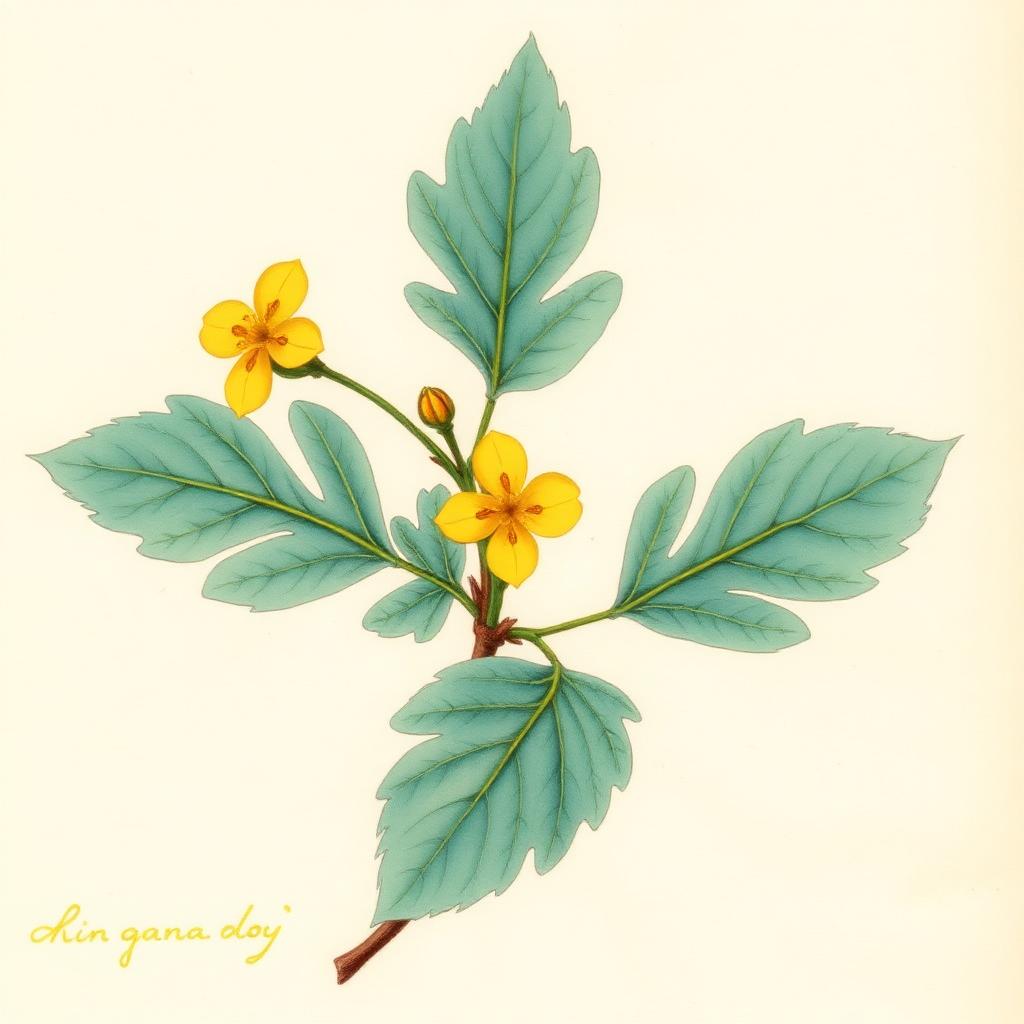
Botanical descriptionPerennial herb 30–90 cm tall with lobed, blue-green leaves and small four-petaled yellow flowers. The signature feature is a bright orange-yellow latex that flows from any broken stem or leaf — the source of both its traditional use and its risk.
What to know in 30 seconds
- Latex traditionally effective for common warts (lab studies confirm antiviral activity)
- Alkaloids (chelidonine, berberine, sanguinarine) show choleretic activity in animal studies
- Topical antimicrobial activity supported by small clinical reports
- Traditionally valued as part of a balanced wellness routine
Why this matters for everyday wellness
Greater Celandine earns a place in a healthy-aging routine because it combines latex traditionally effective for common warts (lab studies confirm antiviral activity) with alkaloids (chelidonine, berberine, sanguinarine) show choleretic activity in animal studies — a rare combination that supports the cardiovascular, metabolic, and cellular systems that drive how we age.
Practical everyday uses
- Topical wart treatment: fresh sap, one daily drop, protect surrounding skin with petroleum jelly
- Internal use: only under licensed herbalist or naturopath supervision
- Discontinue all internal use at the first sign of nausea or yellowing
Traditional Persian perspective
Historical & cultural knowledge passed down through generations — not a medical claim.
Persian medicine considers greater celandine warm and dry, with strong bitter and cleansing (mufattih) action — particularly on the liver and bile ducts. Avicenna and Razi describe it for jaundice, sluggish bile, and 'cold' liver conditions, always in small, measured doses combined with milder protective herbs.
Latex traditionally effective for common warts (lab studies confirm antiviral activity) · Alkaloids (chelidonine, berberine, sanguinarine) show choleretic activity in animal studies · Topical antimicrobial activity supported by small clinical reports
Used across household wellness traditions as a culinary herb with daily-life relevance.
Healthy aging relevance
In a healthy-aging context, greater celandine bridges tradition and science: persian medicine considers greater celandine warm and dry, with strong bitter and cleansing (mufattih) action — particularly on the liver and bile ducts. Avicenna and Razi describe it for jaundice, sluggish bile, and 'cold' liver conditions, always in small, measured doses combined with milder protective herbs, while modern research highlights its role in the same pathways — inflammation, vascular health, and cellular resilience — that compound over decades to shape how we feel in our 60s, 70s, and beyond.
Modern scientific evidence
Benefits supported by peer-reviewed studies & contemporary nutrition science — informational only, not medical advice.
- Latex traditionally effective for common warts (lab studies confirm antiviral activity)
- Alkaloids (chelidonine, berberine, sanguinarine) show choleretic activity in animal studies
- Topical antimicrobial activity supported by small clinical reports
- Traditionally valued as part of a balanced wellness routine
Nutritional profile
- Flavonoids
- Isoquinoline alkaloids: chelidonine, sanguinarine, berberine, coptisine
- Carotenoid pigments (yellow latex)
Historical uses across cultures
From classical Persian, Greek, and Islamic-Golden-Age sources.
- Topical fresh latex applied to warts, corns, and calluses
- Bitter tincture (drops only) for sluggish bile and digestive heaviness
- Folk treatment for jaundice and gallbladder complaints
- Wash for irritated skin and minor fungal patches
Taken internally
- PRACTITIONER ONLY: 1–2 mL of a 1:5 tincture in water, up to 2× daily
- Never use the fresh plant or raw sap internally
Applied externally
- A single drop of fresh yellow latex applied directly to a wart, once daily, 1–2 weeks
- Cooled decoction of dried herb as a compress for irritated skin
Who should avoid this — and known interactions
- Pregnancy and breastfeeding
- Pre-existing liver disease (any cause)
- Concurrent hepatotoxic drugs (acetaminophen at high dose, statins, methotrexate, etc.)
- Children under 18 — internally
- Glaucoma — the alkaloids may raise intraocular pressure
How it's commonly used
- Topical wart treatment: fresh sap, one daily drop, protect surrounding skin with petroleum jelly
- Internal use: only under licensed herbalist or naturopath supervision
- Discontinue all internal use at the first sign of nausea or yellowing
Safety & cautions
- Documented cases of acute hepatitis from internal preparations — internal use is NOT a self-care herb
- Avoid in pregnancy, breastfeeding, and in children
- Avoid with any liver disease, hepatitis, or hepatotoxic medication
Ask Holistic Health AI about Greater Celandine
Personalized, evidence-informed guidance from your AI Wellness Coach.
Related articles
- LiverSupporting Your Liver: What Actually Works
Beyond 'detox teas' — diet, lifestyle, and herbs with real evidence for liver support.
- TraditionPersian Medicine 101: The Wisdom Behind Mizaj
A short introduction to the four temperaments and how traditional Persian medicine still influences kitchens today.
Frequently asked questions
+How is greater celandine traditionally used?
Persian medicine considers greater celandine warm and dry, with strong bitter and cleansing (mufattih) action — particularly on the liver and bile ducts. Avicenna and Razi describe it for jaundice, sluggish bile, and 'cold' liver conditions, always in small, measured doses combined with milder protective herbs.
+How do people commonly use Greater Celandine?
Topical wart treatment: fresh sap, one daily drop, protect surrounding skin with petroleum jelly Internal use: only under licensed herbalist or naturopath supervision Discontinue all internal use at the first sign of nausea or yellowing
Sources & references
- Chelidonium majus — Hepatotoxicity case series — World Journal of Hepatology (NIH PMC)
- EMA HMPC Monograph — Chelidonium majus — European Medicines Agency, Committee on Herbal Medicinal Products
- Avicenna's Canon of Medicine, Book II — Translation, Laleh Bakhtiar
- Office of Dietary Supplements — Fact Sheets — US National Institutes of Health (NIH)
- Herbal Database — Memorial Sloan Kettering Cancer Center
- Herbs at a Glance — US NIH National Center for Complementary and Integrative Health (NCCIH)
- FoodData Central — searchable nutrient database — US Department of Agriculture (USDA)
- The Nutrition Source — Harvard T.H. Chan School of Public Health
- PubMed — peer-reviewed biomedical literature — US National Library of Medicine