Herb Library
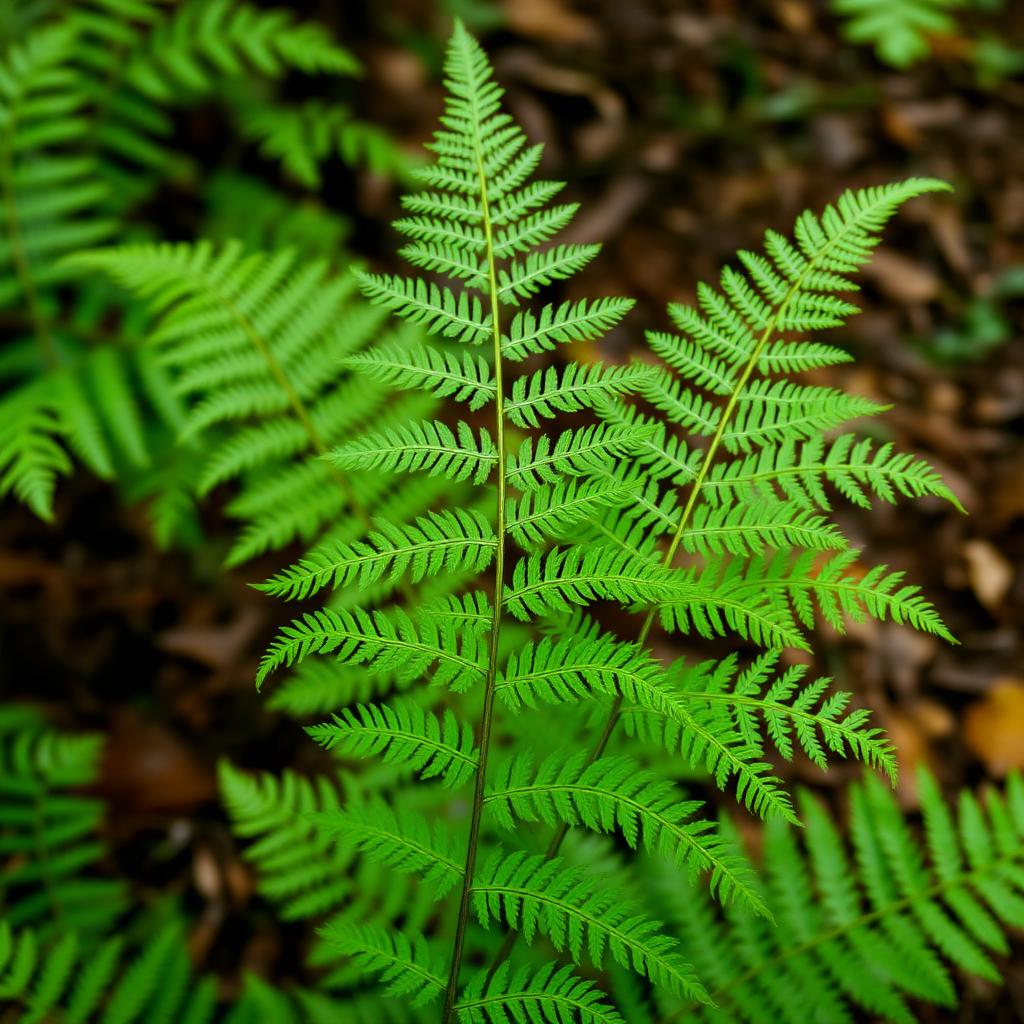
Female Fern
سرخس ماده

Female Fern

Athyrium filix-femina (Athyriaceae)
Cool · Moist

Female Fern — Persian sarkhas-e madeh (سرخس ماده). The gentler, more delicate companion to male fern, traditionally used externally for joint and respiratory complaints.

Overview

Lady fern (Athyrium filix-femina) is the slender, lacy woodland fern that classical Persian and Greek sources grouped opposite the robust 'male' fern (Dryopteris filix-mas). Unlike its potent counterpart, female fern was used primarily externally — in poultices for sore joints, in steam baths for tight chests, and in folk ritual baths for restless children. It remains a much milder, much safer plant.

Key Takeaways

What to know in 30 seconds

  • The gentle, external-use counterpart to male fern.
  • Traditionally used in poultices for joint and muscle pain.
  • Folk-medicine respiratory steam and calming bath ingredient.
  • Far less potent — and far safer — than male fern, but still not a casual internal herb.
Why It Matters

Why this matters for everyday wellness

Healthy aging means staying mobile and rested. Female fern is one of the small, local, external remedies traditional Persian culture used to keep aging joints loose and aging sleep deep — woven into bath, steam, and poultice rituals rather than swallowed as tea.

Practical Everyday Uses

Practical everyday uses

  • Crushed fresh fronds wrapped in cloth as a cool compress for sore joints.
  • Handful of dried fronds added to a warm evening bath for muscle stiffness.
  • Steam from fronds in just-boiled water inhaled for tight chest.
  • Decorative shade garden plant for biodiversity and tradition.
Source: Traditional Persian Wisdom

Traditional Persian perspective

Historical & cultural knowledge passed down through generations — not a medical claim.

Historical use

Persian medicine considered female fern cool and moist, useful externally for hot, inflamed joints, dry irritated chests, and overactive nervous tempers — the opposite indications of warm-dry male fern. Avicenna and later Persian herbalists used it in compresses for swollen knees and in steam baths for children with dry coughs. Internal use was rare and limited to very mild infusions for sluggish digestion in convalescents.

Traditional applications

Cooling, mildly astringent action well-suited to hot, inflamed joints · Soft mucilage in fresh fronds soothes irritated skin · Aromatic steam may ease dry respiratory irritation

Cultural significance

In Caspian and northern Iranian villages, lady-fern baths were a folk ritual for tired farmers and restless children — close cousin to the European tradition of 'fern beds' for travelers. The plant's grace and softness gave it the 'female' designation in the long shared Greek-Persian botanical tradition.

Healthy Aging

Healthy aging relevance

Most healthy-aging routines focus on what we swallow. Female fern is a reminder that traditional Persian wellness was just as much about what surrounded the body — baths, compresses, steams, and rituals that soften joints, calm the nervous system, and signal the body to rest.

Source: Modern Scientific Research

Modern scientific evidence

Benefits supported by peer-reviewed studies & contemporary nutrition science — informational only, not medical advice.

  • Cooling, mildly astringent action well-suited to hot, inflamed joints
  • Soft mucilage in fresh fronds soothes irritated skin
  • Aromatic steam may ease dry respiratory irritation
  • Gentle ritual herb that supports the slow-down of a calming evening routine

Nutritional profile

Other notable nutrients
  • Mild tannins
  • Trace polysaccharides
  • Aromatic volatile compounds
Traditional Persian Medicine

Traditional Persian medicine uses

  • External poultice for hot, swollen joints and bruises
  • Steam inhalation for dry, irritated coughs
  • Calming evening bath for restless children and overworked adults
  • Mild folk-tradition tonic for convalescent digestion (very rarely used today)
Everyday Use

How it's commonly used

  • External compress: bruise fresh fronds, wrap in cotton, apply 20 min
  • Evening bath: simmer a handful of dried fronds 10 min, add to warm bath
  • Steam: a handful of fronds in just-boiled water, towel-tent and breathe 5 min
  • Combine with chamomile or marshmallow for a complete soothing routine
Safety

Safety & cautions

  • Do not use internally without qualified guidance — even gentle ferns contain trace bioactive compounds
  • Avoid in pregnancy and breastfeeding
  • Do NOT confuse with bracken (Pteridium aquilinum), which is toxic and carcinogenic
  • Some people develop mild contact irritation — patch-test before bath use
Preparation

Traditional preparation methods

  • Cold poultice — fresh fronds bruised, wrapped in cloth, applied 20 min
  • Bath — handful of dried fronds simmered 10 min; strained into warm bathwater
  • Steam inhalation — fronds in a bowl of just-boiled water, breathed under a towel 5 min
  • Mild infusion (folk use only) — 1 tsp dried fronds steeped 5 min; not a recommended self-care tea today
Persian Remedies

Traditional remedies

  • Female fern + chamomile evening bath — Persian restless-child sleep ritual
  • Female fern + thyme steam — dry winter cough remedy
  • Female fern + marshmallow root compress — soothing poultice for hot, inflamed joints

Related conditions

Traditionally associated — not a treatment claim

Ask Holistic Health AI about Female Fern

Personalized, evidence-informed guidance from your AI Wellness Coach.

Open AI Wellness Coach

Related Herbs

Related articles

Frequently asked questions

+Is female fern safe?

Used externally — as a compress, bath, or steam — female fern has a long, gentle traditional safety record. Internal use is rare today and should only be undertaken with qualified guidance.

+How do I tell female fern from bracken?

Bracken (Pteridium aquilinum) is large, triangular, and grows in open hillsides; its fronds branch in three coarse divisions. Lady fern is finer, more lacy, grows in moist shaded woodland, and has a single delicate frond that tapers at both ends. Bracken is toxic — only use plants you can identify with certainty.

+Why pair it with chamomile or marshmallow?

Chamomile adds a calming nervous-system effect for evening baths; marshmallow root adds soft mucilage to compresses for very hot, inflamed joints. The combinations follow classical Persian polypharmacy: small doses of complementary herbs rather than large doses of one.

References

Sources & references

Reviewed by Holistic Health AI Editorial Team Last updated Traditional wisdom + modern evidence Educational, not medical advice