Overview
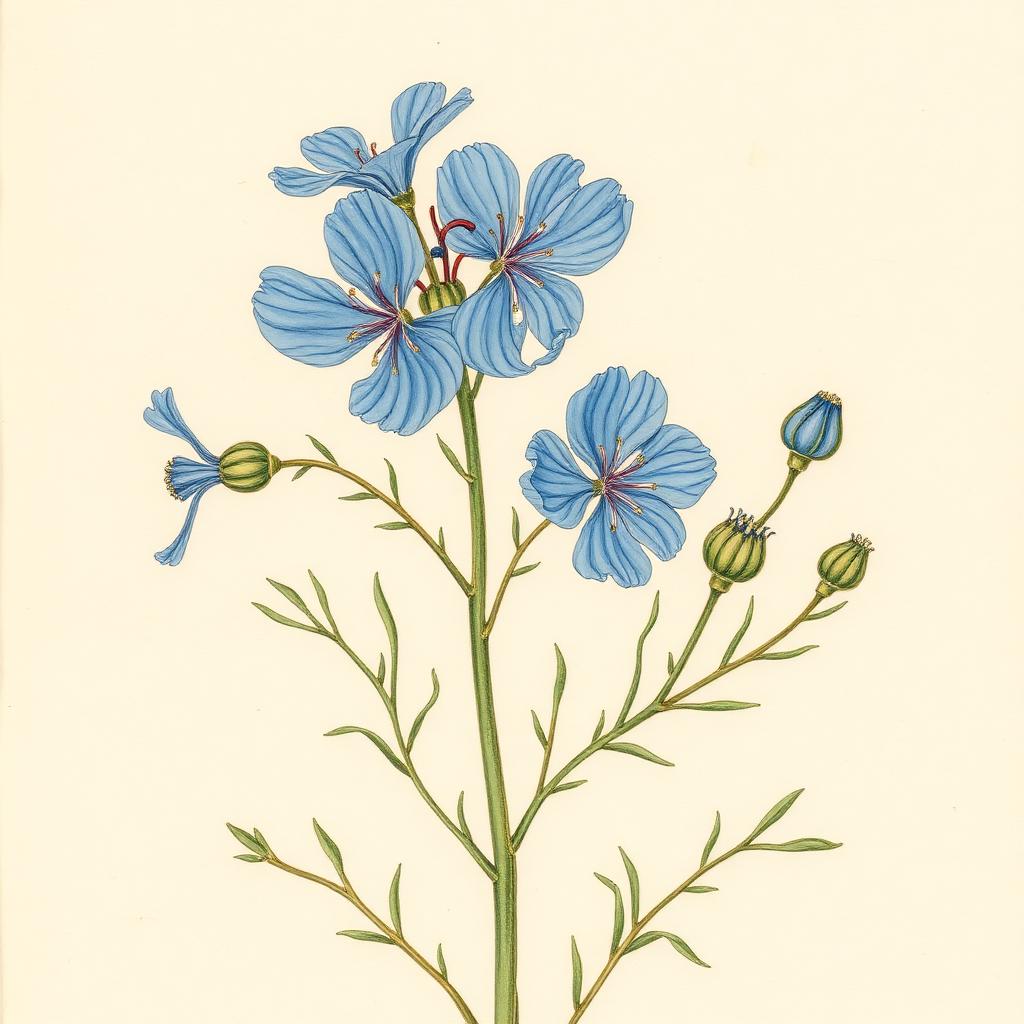
Cornflower grew wild among Persian wheat fields — hence its Persian name 'wheat flower.' The brilliant blue petals have been used in Persian, Anatolian, and European folk medicine for centuries, most famously as a compress and eye-wash for tired, irritated eyes. The plant is cool and slightly drying, mildly bitter, and a classical companion to chamomile and rose in calming eye and skin formulas.
- Scientific name
- Centaurea cyanus
- Plant family
- Asteraceae (daisy family)
Botanical descriptionSlender annual herb 30–90 cm tall with narrow grey-green leaves and brilliant azure-blue ray flowers blooming in early summer. The dried petals (gol-e gandom) are the part used; they retain their cobalt color when dried correctly.
What to know in 30 seconds
- Anthocyanin pigments traditionally cooling and anti-inflammatory for the eyes
- Mild astringent action soothes irritated mucous membranes
- Flavonoid antioxidants protect skin and capillaries
- Gentle bitter notes support digestion when taken before meals
Why this matters for everyday wellness
Cornflower earns a place in a healthy-aging routine because it combines anthocyanin pigments traditionally cooling and anti-inflammatory for the eyes with mild astringent action soothes irritated mucous membranes — a rare combination that supports the cardiovascular, metabolic, and cellular systems that drive how we age.
Practical everyday uses
- Tea: 1 tsp dried petals per cup, steep covered 8–10 min
- Eye compress: cool the strained tea, soak sterile pads, apply 10 min
- Add a pinch to herbal blends for color, gentle cooling, and visual beauty
Traditional Persian perspective
Historical & cultural knowledge passed down through generations — not a medical claim.
Persian medicine considers cornflower cool and dry (سرد و خشک) — cooling for an overheated liver, soothing for inflamed eyes (especially in summer), and balancing for hot mizāj. Listed in classical materia medica alongside borage and violet as a gentle 'cooler of the blood.'
Anthocyanin pigments traditionally cooling and anti-inflammatory for the eyes · Mild astringent action soothes irritated mucous membranes · Flavonoid antioxidants protect skin and capillaries
Used across household wellness traditions as a culinary herb with daily-life relevance.
Healthy aging relevance
In a healthy-aging context, cornflower bridges tradition and science: persian medicine considers cornflower cool and dry (سرد و خشک) — cooling for an overheated liver, soothing for inflamed eyes (especially in summer), and balancing for hot mizāj. Listed in classical materia medica alongside borage and violet as a gentle 'cooler of the blood.', while modern research highlights its role in the same pathways — inflammation, vascular health, and cellular resilience — that compound over decades to shape how we feel in our 60s, 70s, and beyond.
Modern scientific evidence
Benefits supported by peer-reviewed studies & contemporary nutrition science — informational only, not medical advice.
- Anthocyanin pigments traditionally cooling and anti-inflammatory for the eyes
- Mild astringent action soothes irritated mucous membranes
- Flavonoid antioxidants protect skin and capillaries
- Gentle bitter notes support digestion when taken before meals
Nutritional profile
- Anthocyanins (cyanidin)
- Flavonoids
- Polyacetylenes
- Bitter sesquiterpenes
Historical uses across cultures
From classical Persian, Greek, and Islamic-Golden-Age sources.
- Eye-wash and compress for tired, red, or inflamed eyes
- Cooling infusion for summer fevers and skin heat
- Mouth rinse for gum irritation and mild ulcers
- Cosmetic petal water for brightening the complexion
Taken internally
- Damkardeh (infusion): 1 tsp dried petals per cup, 8–10 min, as a cooling summer tea
- Petal-and-rose blend taken in the afternoon to settle heat-induced restlessness
Applied externally
- Cooled infusion as an eye compress with sterile cotton pads (10 min)
- Cornflower water as a gentle facial toner for sensitive, reactive skin
- Gargle for mild gum and throat irritation
Named traditional formulas
- Cornflower–Rose Eye Washشستشوی چشم با گل گندم و گل سرخ
Equal parts dried cornflower and rose petals steeped 10 min in just-boiled water, cooled, strained through fine cloth, applied as a cotton-pad compress.
- Summer Cooling Teaدمنوش خنک تابستانی
Cornflower + borage + a thread of rose, sweetened lightly with rock sugar (nabāt).
Who should avoid this — and known interactions
- Known Asteraceae allergy (chamomile, ragweed, marigold sensitivity)
- Eye compresses: only with sterile materials and freshly strained, cooled tea
How it's commonly used
- Tea: 1 tsp dried petals per cup, steep covered 8–10 min
- Eye compress: cool the strained tea, soak sterile pads, apply 10 min
- Add a pinch to herbal blends for color, gentle cooling, and visual beauty
Safety & cautions
- Use clean, organically grown petals
- Asteraceae-family allergy (ragweed, daisies) — patch test first
Ask Holistic Health AI about Cornflower
Personalized, evidence-informed guidance from your AI Wellness Coach.
Related articles
Frequently asked questions
+How is cornflower traditionally used?
Persian medicine considers cornflower cool and dry (سرد و خشک) — cooling for an overheated liver, soothing for inflamed eyes (especially in summer), and balancing for hot mizāj. Listed in classical materia medica alongside borage and violet as a gentle 'cooler of the blood.'
+How do people commonly use Cornflower?
Tea: 1 tsp dried petals per cup, steep covered 8–10 min Eye compress: cool the strained tea, soak sterile pads, apply 10 min Add a pinch to herbal blends for color, gentle cooling, and visual beauty
Sources & references
- Centaurea cyanus — phytochemistry and traditional uses — Journal of Ethnopharmacology (PubMed)
- Sad Giah Hezar Darman (صد گیاه و هزار درمان) — Persian herbal reference, Sekkeh Publications, Tehran
- Office of Dietary Supplements — Fact Sheets — US National Institutes of Health (NIH)
- Herbal Database — Memorial Sloan Kettering Cancer Center
- Herbs at a Glance — US NIH National Center for Complementary and Integrative Health (NCCIH)
- FoodData Central — searchable nutrient database — US Department of Agriculture (USDA)
- The Nutrition Source — Harvard T.H. Chan School of Public Health
- PubMed — peer-reviewed biomedical literature — US National Library of Medicine