Herb Library
Anise
انیسون

Anise

Pimpinella anisum
Also: Anisun · انیسون · Yansoon · ينسون · Sweet anise · Aniseed
Warm · Dry

Anise (ānisun) — sweet, aromatic Persian seed used for centuries to ease colic, soothe coughs, freshen breath, and gently warm digestion.

Overview

Anise seed has been cultivated around the Mediterranean and Persian plateau since antiquity. The Egyptian Ebers Papyrus and Avicenna's Canon both describe it as a warming digestive and respiratory aid. Its principal aromatic compound, trans-anethole, gives it the characteristic sweet, licorice-like flavor and underlies most of its modern pharmacology.

Scientific name
Pimpinella anisum
Plant family
Apiaceae (carrot / umbellifer family)
Also known as
  • Anisun
  • انیسون
  • Yansoon
  • ينسون
  • Sweet anise
  • Aniseed

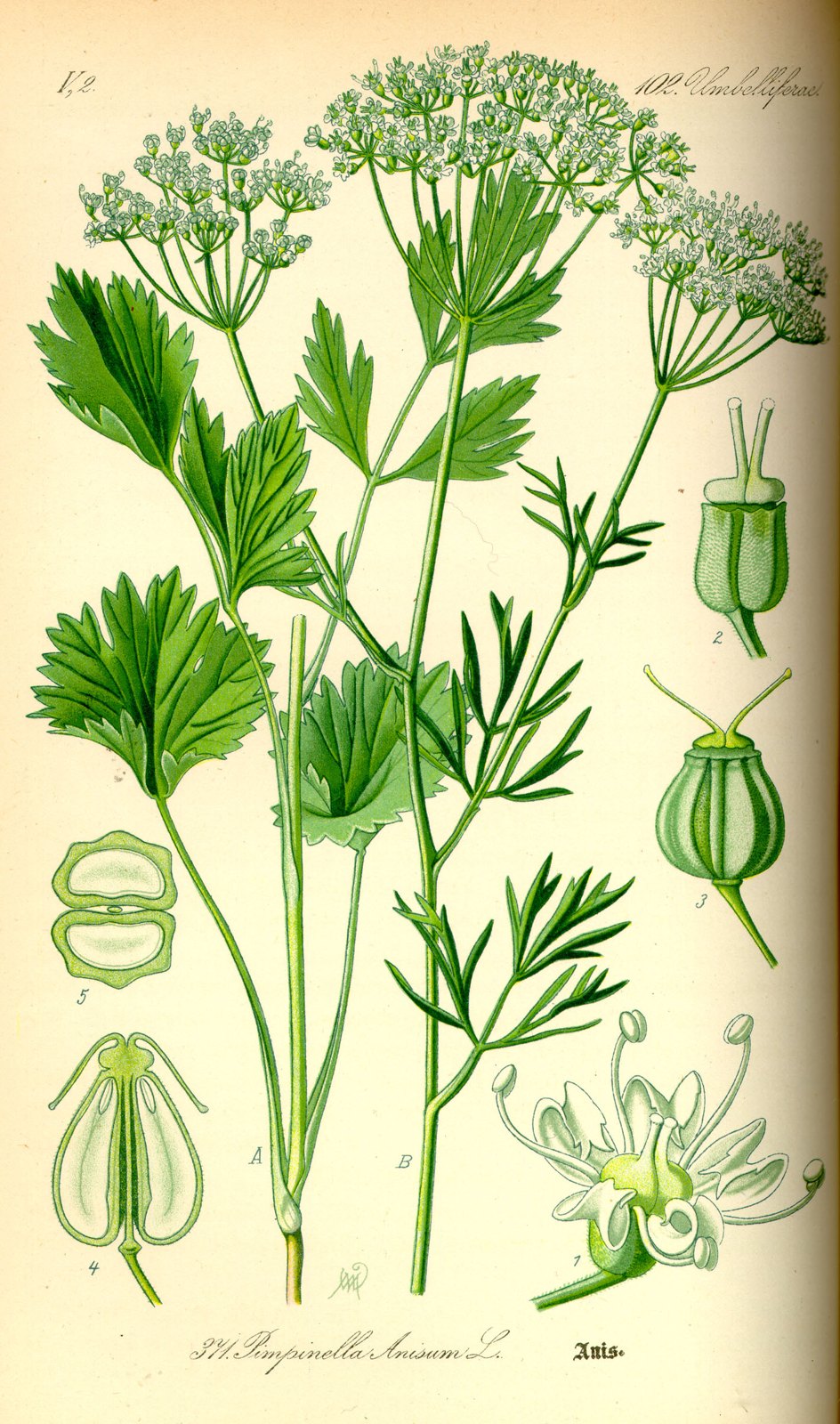
Botanical descriptionAnise is an annual herb growing 30–50 cm tall with feathery basal leaves, finely divided upper leaves, and umbels of small white flowers that ripen into ridged, fragrant gray-brown seeds. The seeds are the principal medicinal part.

Key Takeaways

What to know in 30 seconds

  • Sweet, licorice-scented seed traditionally used after meals.
  • Trans-anethole has documented carminative and mild expectorant effects.
  • Folk remedy across Persia, the Mediterranean, and the Levant for cough and colic.
  • Avoid concentrated essential oil in pregnancy and infants — use the seed.
Why It Matters

Why this matters for everyday wellness

Bloating, post-meal heaviness, and dry winter coughs are everyday friction points that erode quality of life. A pinch of anise seed in tea answers all three with one of the oldest, simplest, and safest aromatics on the Persian shelf.

Practical Everyday Uses

Practical everyday uses

  • Crush 1 tsp seeds; steep in 1 cup just-boiled water 10 min after meals.
  • Chew 1/4 tsp dry seeds for breath freshening.
  • Bake into shortbread, biscotti, and Persian shirini.
  • Combine with fennel + cumin (the classic Persian three-seed tea) for digestion.
Source: Traditional Persian Wisdom

Traditional Persian perspective

Historical & cultural knowledge passed down through generations — not a medical claim.

Historical use

Persian medicine considers anise (انیسون) warm and dry in the second degree — kindling the digestive fire, opening the chest, relieving spasms of the stomach and womb, and gently increasing milk in nursing mothers. Avicenna grouped it with the great carminatives alongside fennel, cumin, and caraway.

Traditional applications

Carminative — eases gas and bloating (trans-anethole) · Mild expectorant for dry, unproductive cough · Antispasmodic on digestive smooth muscle

Cultural significance

Anise seeds appear in Persian flatbreads, Greek ouzo, French pastis, Turkish raki, and the Middle Eastern after-meal tea known as yansoon — a household remedy for colicky infants and bloated grown-ups alike.

Healthy Aging

Healthy aging relevance

Gentle daily support for digestion and respiration matters more, not less, with age. A modest cup of anise tea after dinner is an effort-free Persian habit that lowers the bloat-anxiety-shallow-breath cycle that quietly undermines sleep and energy in the later decades.

Source: Modern Scientific Research

Modern scientific evidence

Benefits supported by peer-reviewed studies & contemporary nutrition science — informational only, not medical advice.

  • Carminative — eases gas and bloating (trans-anethole)
  • Mild expectorant for dry, unproductive cough
  • Antispasmodic on digestive smooth muscle
  • Traditional galactagogue — may modestly support milk supply

Nutritional profile

Minerals
  • Iron
  • Manganese
  • Calcium
  • Magnesium
Antioxidants
  • Trans-anethole
  • Polyphenols
  • Coumarins
Other notable nutrients
  • Volatile essential oils (anethole-rich)
Traditional Persian Medicine

Traditional Persian medicine uses

  • Bloating, gas, and slow digestion after heavy meals
  • Dry, irritating cough and bronchial tension
  • Colic and digestive cramping in adults
  • Menstrual cramps with cold-damp pattern
  • Supporting milk supply in nursing mothers (galactagogue)
Historical Uses

Historical uses across cultures

From classical Persian, Greek, and Islamic-Golden-Age sources.

  • Used in Egypt as early as 1500 BCE — recorded in the Ebers Papyrus as a digestive and respiratory remedy.
  • Avicenna placed it among the great carminatives in the Canon of Medicine, beside fennel and cumin.
  • Roman bakers folded anise into the mustaceum cake served after rich feasts — the ancestor of the modern after-dinner mint.
  • A foundational flavor of Mediterranean aniseed drinks (ouzo, raki, pastis, arak) and Persian shirini.
Traditional Formulas

Named traditional formulas

  • Sharbat-e anīsunشربت انیسون

    Anise-seed syrup diluted in warm water for indigestion and dry cough.

  • Mu'tadel digestive blend

    Anise + fennel + cumin in equal parts, the classic Persian post-meal damkardeh.

  • Lactation tea

    Anise + fennel + fenugreek in equal parts, 1 cup 2–3× daily to support breast-milk supply.

Contraindications

Who should avoid this — and known interactions

  • Known Apiaceae (carrot family) allergy
  • Estrogen-sensitive conditions — use only culinary amounts
  • Infants — never give concentrated essential oil
Everyday Use

How it's commonly used

  • Crush 1 tsp seeds; brew as tea 10 min after meals
  • Combine with fennel and cumin as a Persian digestive blend
  • Add to baked goods, syrups, and roasted root vegetables
Safety

Safety & cautions

  • Avoid concentrated anise essential oil in pregnancy and in infants
  • Possible allergic cross-reaction with celery, fennel, and dill
  • May enhance the effect of estrogenic or sedative medications in large doses
Preparation

Traditional preparation methods

  • Damkardeh (infusion) — 1 tsp crushed seeds per cup, covered 10 min
  • Three-seed digestive tea — equal parts anise + fennel + cumin, 1 tsp blend per cup
  • Anise honey — seeds steeped in raw honey 2 weeks for winter cough syrup
  • Steam inhalation — handful of seeds in hot water under a towel for chest tightness
Persian Remedies

Traditional remedies

  • Yansoon — Levantine bedtime tea of anise sweetened with honey, given to colicky babies (very dilute, with a clinician's blessing) and bloated adults.
  • Three-seed digestive blend — equal parts anise + fennel + cumin, 1 tsp per cup after meals.
  • Winter cough honey — 2 Tbsp anise seeds steeped in a jar of raw honey for 2 weeks, 1 tsp as needed.
  • Steam inhalation — handful of crushed seeds in just-boiled water under a towel for chest tightness.

Related conditions

Traditionally associated — not a treatment claim

Ask Holistic Health AI about Anise

Personalized, evidence-informed guidance from your AI Wellness Coach.

Open AI Wellness Coach

Related Herbs

Related Foods

Related articles

Frequently asked questions

+Is anise the same as star anise?

No. Anise (Pimpinella anisum) is a small umbellifer seed; star anise (Illicium verum) is the dried fruit of a Chinese evergreen tree. Both contain anethole and share the licorice aroma, but they are unrelated botanically.

+Is anise safe in pregnancy?

Culinary use of the seed in food and weak tea is generally considered safe. Concentrated essential oil and high-dose extracts should be avoided in pregnancy due to estrogenic activity.

+How is anise tea best prepared?

Lightly crush 1 tsp seeds to release the oils, pour over 1 cup just-boiled water, cover and steep 10 minutes. Covering matters — the active compounds are volatile and will escape with the steam if left open.

References

Sources & references

Reviewed by Holistic Health AI Editorial Team Last updated Traditional wisdom + modern evidence Educational, not medical advice
Continue Exploring

Where Anise fits in the bigger picture

Cornerstone topic hubs where Anise appears as a featured ingredient.

Explore further

Continue exploring Anise

Related herbs, foods, conditions, and Persian remedies across Holistic Health AI.

Foods that pair with this herb
Related conditions for Anise
Related Health Goal guides
Relevant Healthy Aging Blueprint pillars