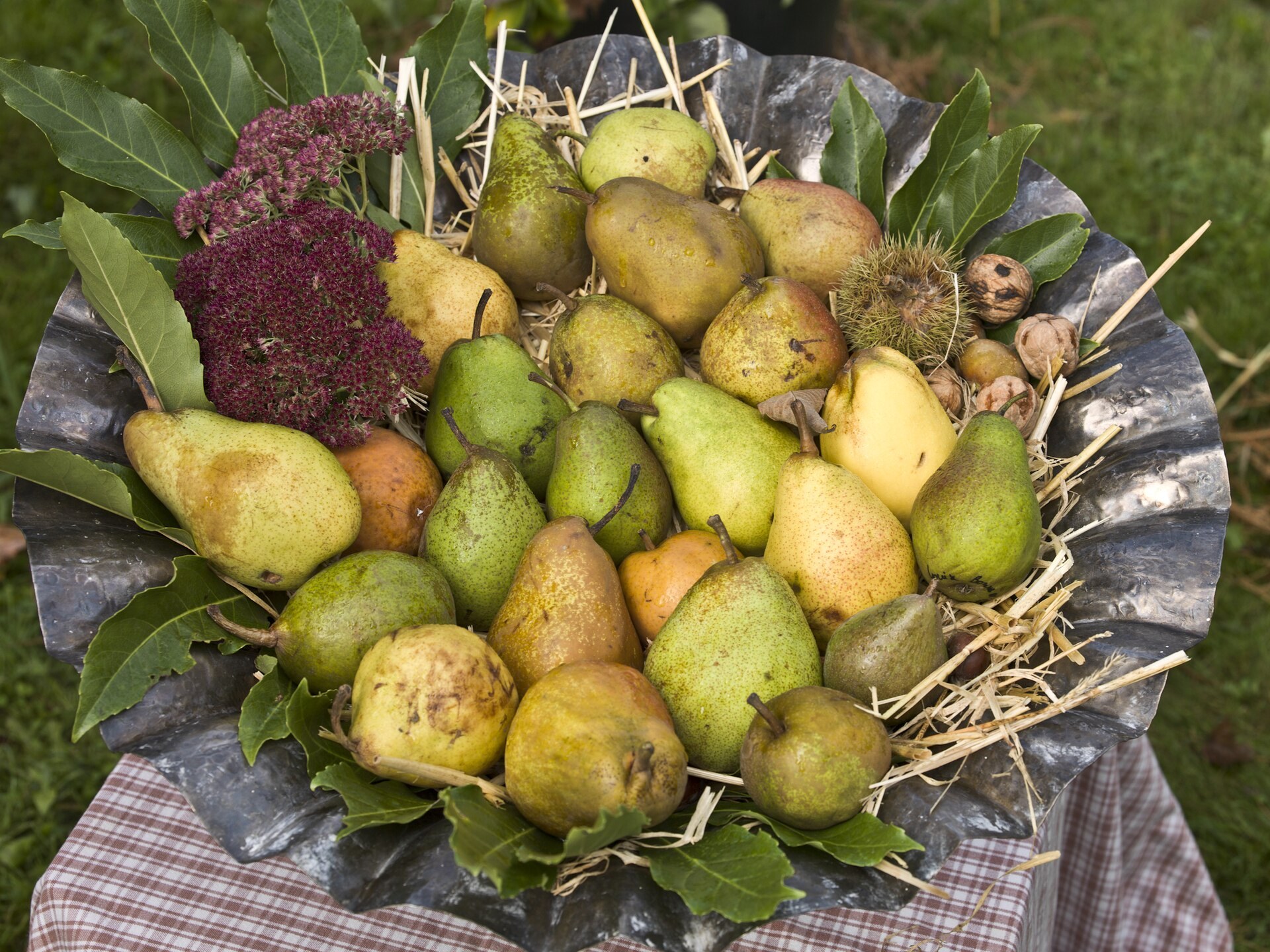
Fruit Library
Pear
گلابی

Pear

Pyrus communis
Cool · Moist

Pear (golabi) — hydrating, fiber-rich fruit that soothes the chest and supports gentle digestion.

Overview

Pears are among the gentlest fruits — high in soluble fiber, low in acid, and naturally hydrating. Persian medicine has long used poached pear with rock candy as a soothing remedy for dry cough and throat.

Key Takeaways

What to know in 30 seconds

  • Soluble fiber supports gut and cholesterol
  • Hydrating with potassium for blood pressure
  • Traditional soothing remedy for dry cough
  • Low acid — easy on a sensitive stomach
Why It Matters

Why this matters for everyday wellness

Pear earns a place in a healthy-aging routine because it combines soluble fiber supports gut and cholesterol with hydrating with potassium for blood pressure — a rare combination that supports the cardiovascular, metabolic, and cellular systems that drive how we age.

Practical Everyday Uses

Practical everyday uses

  • Eat ripe and fresh with the peel
  • Poach with rock candy and rosewater for a soothing dessert
  • Slice over yogurt with walnuts and honey
Source: Traditional Persian Wisdom

Traditional Persian perspective

Historical & cultural knowledge passed down through generations — not a medical claim.

Historical use

Persian medicine considers pear cool and moist — soothing for the chest, gentle on the stomach, and lubricating for dry tissues.

Traditional applications

Soluble fiber supports gut and cholesterol · Hydrating with potassium for blood pressure · Traditional soothing remedy for dry cough

Cultural significance

Poached pear with saffron and rosewater is a classic Persian dessert at the end of rich winter meals.

Healthy Aging

Healthy aging relevance

Pears combine high soluble fiber with a low glycemic load and gentle hydration — three qualities that age-friendly digestion needs daily. The traditional Persian poached pear is a model of an aging-well dessert: gently sweet, soothing, and supportive rather than burdensome.

Source: Modern Scientific Research

Modern scientific evidence

Benefits supported by peer-reviewed studies & contemporary nutrition science — informational only, not medical advice.

  • Soluble fiber supports gut and cholesterol
  • Hydrating with potassium for blood pressure
  • Traditional soothing remedy for dry cough
  • Low acid — easy on a sensitive stomach

Nutritional profile

Fiber~6 g per medium pear
Vitamins
  • Vitamin C
  • Vitamin K
  • Folate
Minerals
  • Potassium
  • Copper
  • Manganese
Antioxidants
  • Flavonoids
  • Anthocyanins (red varieties)
Traditional Persian Medicine

Traditional Persian medicine uses

  • Poached pear with rock candy as a Persian remedy for dry cough
  • Pear with honey and rosewater as a soothing winter dessert
  • Mashed cooked pear for infants beginning solid foods
  • Pear slices with walnut and cheese as a gentle afternoon snack
Everyday Use

How it's commonly used

  • Eat ripe and fresh with the peel
  • Poach with rock candy and rosewater for a soothing dessert
  • Slice over yogurt with walnuts and honey
Safety

Safety & cautions

  • FODMAP-sensitive individuals may react in larger amounts
  • Choose ripe but firm — overripe pears turn mushy and ferment quickly
Preparation

Traditional preparation methods

  • Eat ripe with the peel — most fiber and antioxidants are there
  • Poach gently in water with rock candy, saffron, and rosewater
  • Choose firm-ripe rather than soft — overripe pears ferment quickly
  • Refrigerate once ripe to slow further softening

Related conditions

Traditionally associated — not a treatment claim

Ask Holistic Health AI about Pear

Personalized, evidence-informed guidance from your AI Wellness Coach.

Open AI Wellness Coach

Related Foods

Related articles

Frequently asked questions

+How is pear traditionally used?

Persian medicine considers pear cool and moist — soothing for the chest, gentle on the stomach, and lubricating for dry tissues.

References

Sources & references

Reviewed by Holistic Health AI Editorial Team Last updated Traditional wisdom + modern evidence Educational, not medical advice