Overview
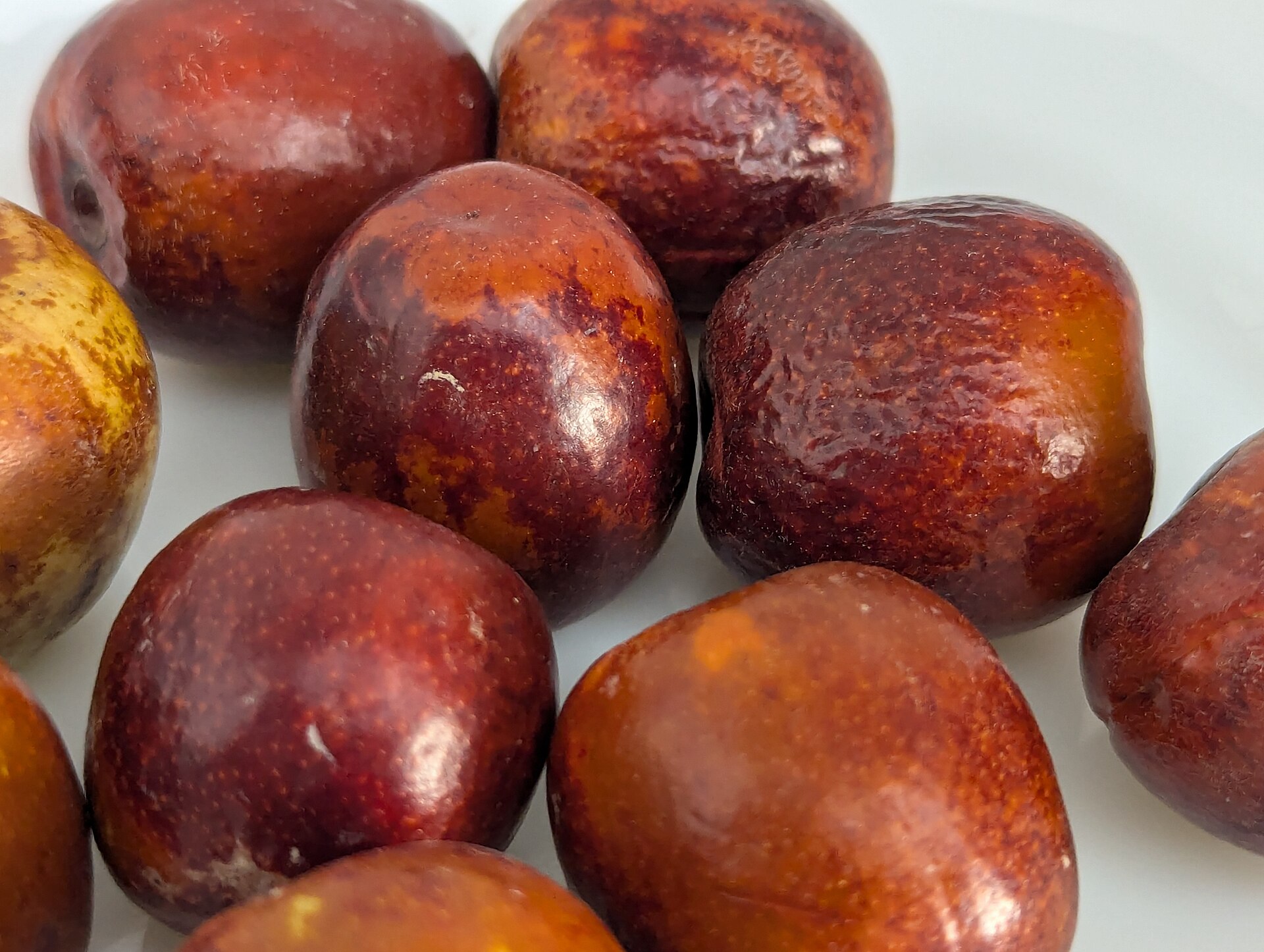
Jujube — annab in Persian, hong zao in Chinese medicine — has been used for thousands of years as a gentle calming, sleep-supporting, and blood-nourishing food. Fresh, it tastes like a crisp apple; dried, it softens to a sweet, date-like chew.
What to know in 30 seconds
- Traditional sleep and anxiety support (saponins, flavonoids)
- Vitamin C — higher per gram than oranges in fresh fruit
- Iron and gentle blood-nourishing effect
- Soothing for a dry, irritated throat
Why this matters for everyday wellness
Jujube earns a place in a healthy-aging routine because it combines traditional sleep and anxiety support (saponins, flavonoids) with vitamin c — higher per gram than oranges in fresh fruit — a rare combination that supports the cardiovascular, metabolic, and cellular systems that drive how we age.
Practical everyday uses
- Steep 5–10 dried jujubes in hot water for 10 minutes — drink before bed
- Eat 3–5 dried fruits as a calming snack
- Add to bone broths and stews for sweetness and depth
Traditional Persian perspective
Historical & cultural knowledge passed down through generations — not a medical claim.
Persian medicine considers jujube warm and moist — nourishing the blood, calming the nerves, and supporting restful sleep.
Traditional sleep and anxiety support (saponins, flavonoids) · Vitamin C — higher per gram than oranges in fresh fruit · Iron and gentle blood-nourishing effect
Dried annab is brewed into a calming tea across Iran for stress and sleep, and offered to guests as a healthful sweet.
Healthy aging relevance
Jujube has thousands of years of traditional use for calm and sleep, and modern research highlights saponins (jujubosides) studied for the GABA system and anxiety. Sleep and stress regulation are foundational to healthy aging, and a nightly cup of annab tea is one of the most accessible ways to support both.
Modern scientific evidence
Benefits supported by peer-reviewed studies & contemporary nutrition science — informational only, not medical advice.
- Traditional sleep and anxiety support (saponins, flavonoids)
- Vitamin C — higher per gram than oranges in fresh fruit
- Iron and gentle blood-nourishing effect
- Soothing for a dry, irritated throat
Nutritional profile
- Vitamin C
- Riboflavin
- Thiamin
- Iron
- Potassium
- Phosphorus
- Saponins
- Flavonoids
- Triterpenic acids
Traditional Persian medicine uses
- Annab tea — 5–10 dried jujubes steeped 10 minutes, drunk before bed for sleep
- Hong zao (Chinese jujube) simmered in broths for blood and spleen nourishment
- Dried jujubes eaten through the day as a calming snack
- Persian folk remedy of jujube decoction for the throat and chest
How it's commonly used
- Steep 5–10 dried jujubes in hot water for 10 minutes — drink before bed
- Eat 3–5 dried fruits as a calming snack
- Add to bone broths and stews for sweetness and depth
Safety & cautions
- Concentrated natural sugars when dried — modest portions for blood sugar
- May interact with sedatives or anticonvulsants — discuss with clinician if on these medications
Traditional preparation methods
- Steep dried jujubes whole — pierce or split for a stronger infusion
- Pair with chamomile or lavender for a calming evening blend
- Add to long-simmered bone broths for natural sweetness and minerals
- Store dried fruit in airtight jars away from light
Related conditions
Traditionally associated — not a treatment claim
Ask Holistic Health AI about Jujube
Personalized, evidence-informed guidance from your AI Wellness Coach.
Related Herbs
Related Foods
Related articles
Frequently asked questions
+How is jujube traditionally used?
Persian medicine considers jujube warm and moist — nourishing the blood, calming the nerves, and supporting restful sleep.
Sources & references
- Ziziphus jujuba: A comprehensive review of phytochemistry and pharmacology — Journal of Ethnopharmacology (PubMed)
- Jujube seed extract and sleep — Clinical study — Pharmacology Biochemistry and Behavior (PubMed)
- Office of Dietary Supplements — Fact Sheets — US National Institutes of Health (NIH)
- Herbal Database — Memorial Sloan Kettering Cancer Center
- Herbs at a Glance — US NIH National Center for Complementary and Integrative Health (NCCIH)
- FoodData Central — searchable nutrient database — US Department of Agriculture (USDA)
- The Nutrition Source — Harvard T.H. Chan School of Public Health
- PubMed — peer-reviewed biomedical literature — US National Library of Medicine