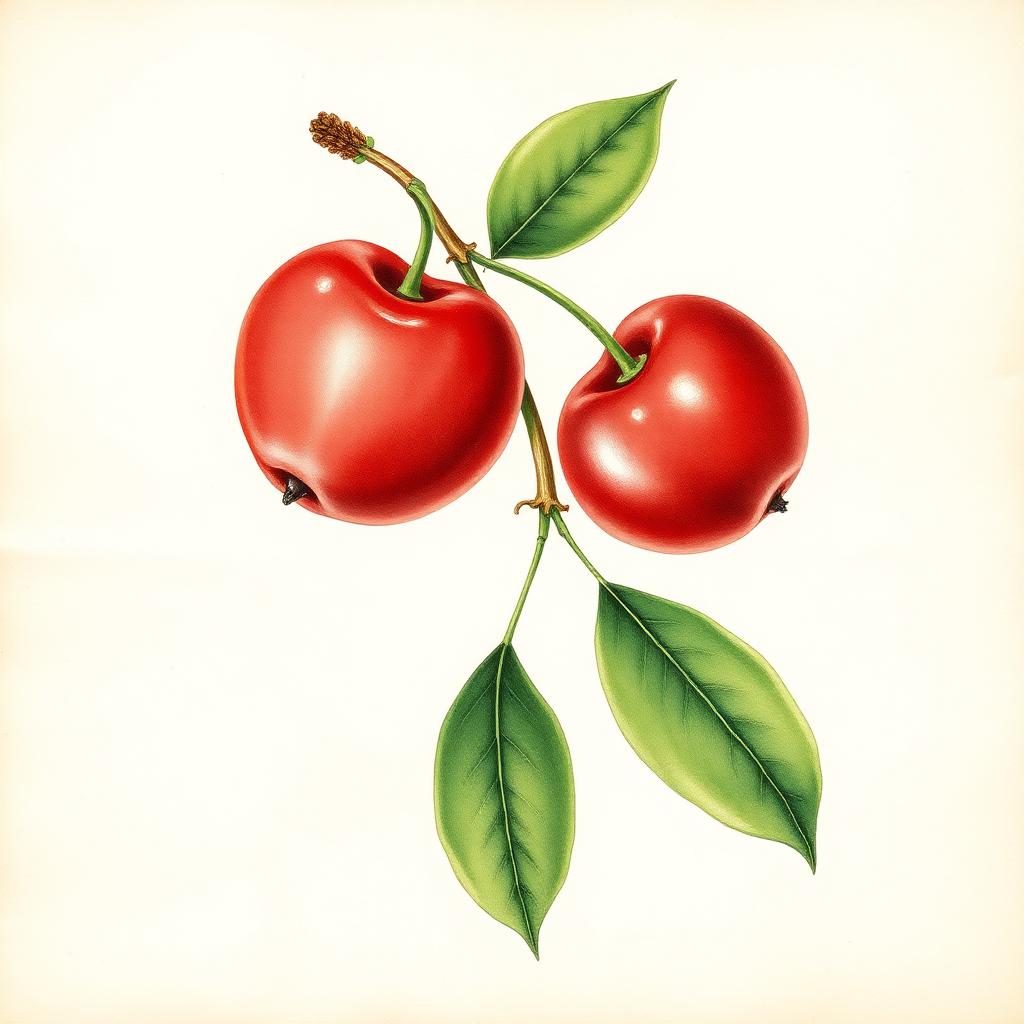
Overview
Albalu is the heart of one of Persia's most beloved rice dishes — albalu polo — and the syrup that flavors sharbat-e albalu. Sour cherries are unusually rich in melatonin and anthocyanins, supporting both sleep and recovery.
- Scientific name
- Prunus cerasus
What to know in 30 seconds
- One of the only food sources of natural melatonin.
- Trials suggest tart cherry juice eases muscle soreness and aids sleep.
- Anthocyanins support recovery and lower inflammation.
- Use unsweetened tart cherry juice — not sweetened cherry drinks.
Why this matters for everyday wellness
Deep sleep and low chronic inflammation are two of the most powerful drivers of healthy aging. Tart cherries support both gently and naturally — a small evening ritual with measurable benefit.
Practical everyday uses
- Drink 4–8 oz unsweetened tart cherry juice 1 hour before bed.
- Cook fresh or frozen albalu into Persian saffron rice (albalu polo).
- Stir albalu sharbat (small amount of syrup + cold water) on hot days.
- Add dried tart cherries to oatmeal, salads, or grain bowls.
Traditional Persian perspective
Historical & cultural knowledge passed down through generations — not a medical claim.
Persian medicine considers sour cherries cool and dry — cooling the liver, refreshing the blood, and easing summer heat.
Natural melatonin supports sleep quality · Anthocyanins ease post-exercise inflammation · Vitamin C and potassium
Sharbat-e albalu — sour cherry syrup with cold water and ice — is a quintessential Persian summer drink.
Healthy aging relevance
Sour cherries are one of the few foods that naturally contain melatonin — the body's sleep hormone — alongside anti-inflammatory anthocyanins. Sleep quality declines with age, and gentle dietary support is one of the safest places to start. A small evening glass of unsweetened tart cherry juice has clinical evidence for sleep duration and quality in older adults.
Modern scientific evidence
Benefits supported by peer-reviewed studies & contemporary nutrition science — informational only, not medical advice.
- Natural melatonin supports sleep quality
- Anthocyanins ease post-exercise inflammation
- Vitamin C and potassium
- Traditionally cooling for an overheated body
Nutritional profile
- Vitamin C
- Vitamin A
- Potassium
- Manganese
- Anthocyanins
- Quercetin
- Melatonin
Traditional Persian medicine uses
- Sharbat-e albalu — sour cherry syrup with cold water as a Persian summer cooler
- Albalu polo — saffron rice with sour cherries and almonds, a celebration dish
- Dried sour cherries (albalu khoshk) brewed into a tea before bed
- Sour cherry juice traditionally used after exertion to ease soreness
How it's commonly used
- Stir tart cherry juice (unsweetened) into water before bed
- Make albalu polo with saffron rice
- Sweeten naturally into sharbat with rose petals
Safety & cautions
- Pits contain cyanogenic compounds — never crush and consume
- Tart juice is acidic — rinse mouth to protect enamel
Traditional preparation methods
- Use unsweetened tart cherry juice for sleep — 8 oz, 30–60 minutes before bed
- Pit fresh cherries before cooking — pits contain trace cyanogenic compounds
- Freeze whole cherries in season for year-round use
- Sweeten gently with honey or date syrup to preserve the tartness
Related conditions
Traditionally associated — not a treatment claim
Ask Holistic Health AI about Sour Cherry
Personalized, evidence-informed guidance from your AI Wellness Coach.
Related Herbs
Related Foods
Related articles
- SleepWhat to Eat (and Drink) for Better Sleep
The connection between food, timing, and sleep — plus a Persian evening ritual that actually works.
- NutritionAnti-Inflammatory Foods That Actually Earn Their Reputation
Cutting through 'superfood' marketing to focus on the foods with the strongest evidence for reducing chronic inflammation.
Frequently asked questions
+How is sour cherry traditionally used?
Persian medicine considers sour cherries cool and dry — cooling the liver, refreshing the blood, and easing summer heat.
Sources & references
- Tart cherry juice and sleep quality in older adults — RCT — American Journal of Therapeutics (PubMed)
- Tart cherry and exercise recovery — Meta-analysis — Sports Medicine (PubMed)
- Prunus cerasus polyphenols and inflammation — Review — Nutrients (NIH PMC)
- Sad Giah Hezar Darman (صد گیاه و هزار درمان) — One Hundred Plants and One Thousand Remedies — Dr. Hossein Erfani, 4th edition (1375 / 1996–1997). Primary traditional Persian herbal reference cited throughout this platform; presented as traditional knowledge, not as modern medical proof.
- Office of Dietary Supplements — Fact Sheets — US National Institutes of Health (NIH)
- Herbal Database — Memorial Sloan Kettering Cancer Center
- Herbs at a Glance — US NIH National Center for Complementary and Integrative Health (NCCIH)
- FoodData Central — searchable nutrient database — US Department of Agriculture (USDA)
- The Nutrition Source — Harvard T.H. Chan School of Public Health
- PubMed — peer-reviewed biomedical literature — US National Library of Medicine