Sekanjabin · سکنجبین
Mint-vinegar syrup of summer — Persia's oldest soft drink.
Sekanjabin is one of the oldest drinks in the Persian repertoire — a mint-and-vinegar syrup diluted with cold water and poured over ice, traditionally sipped alongside crisp romaine leaves or grated cucumber on a hot afternoon. It is less a remedy taken in doses than a household ritual for beating the heat.
Key takeaways
- A cool-weather cooling drink — cool and moist in Persian medicine, meant for hot days and hot constitutions.
- The vinegar has genuine (if modest) evidence for blunting the after-meal blood sugar rise.
- Mint's effect on reflux is individual — some people are fine, others notice it worsens heartburn.
- Dilute generously and go light on sugar if you're watching blood sugar or calories.
Ingredients & preparation
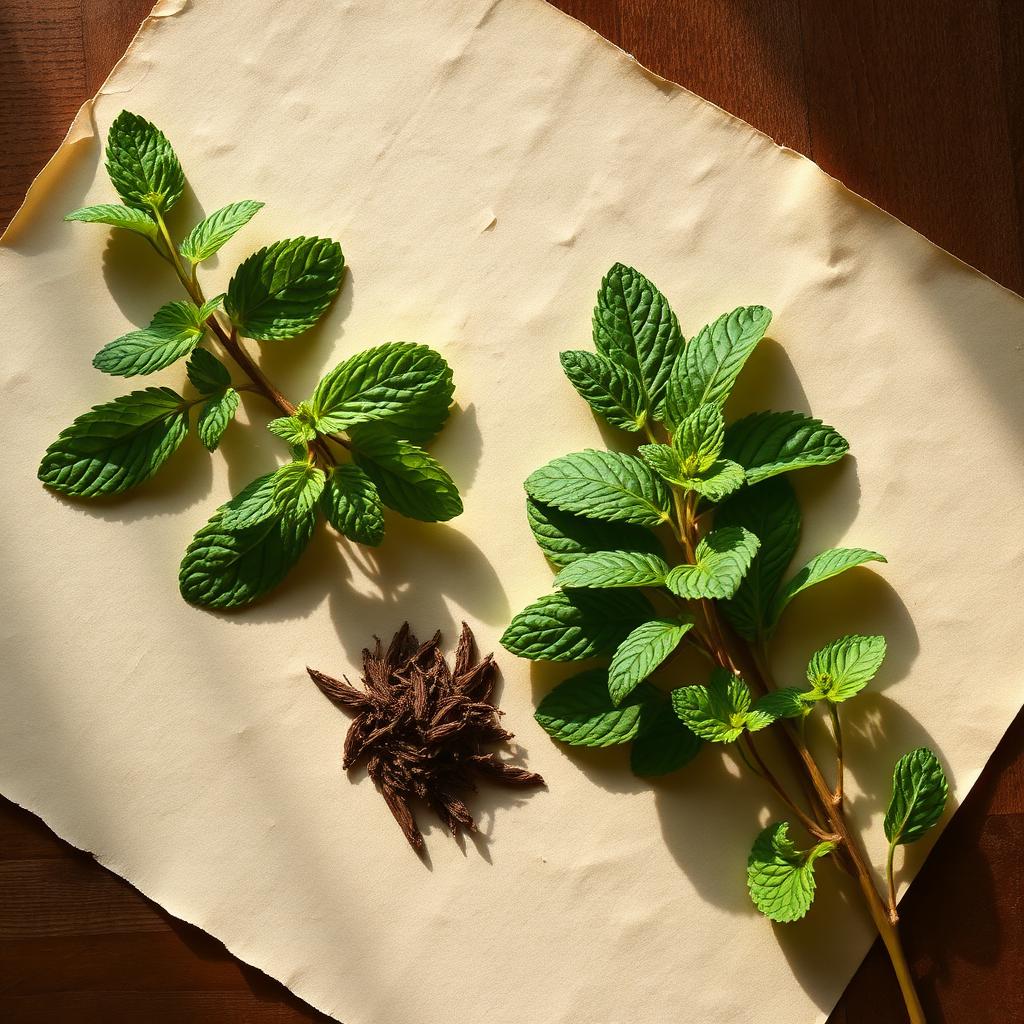 Mint
Mint- ·1 cup sugar
- ·1/2 cup white vinegar
- ·1 cup water
- 1.Simmer sugar and water until dissolved, then add vinegar; reduce 10 minutes.
- 2.Off heat, add a generous handful of fresh mint; cover and steep 1 hour.
- 3.Strain, refrigerate. Serve over ice with grated cucumber.
Midday in summer to refresh and cool — a classic with crisp romaine leaves.
Traditional Persian perspective
Persian medicine reads sekanjabin as cool and moist — vinegar (serkeh) is a sharp, cutting agent classically used to cool excess heat and cut through heaviness after rich food, while mint adds a light aromatic coolness that eases digestion. Served with cool, crisp vegetables like lettuce or cucumber, it reinforces the same cooling intent, which is why it has always been a summer drink rather than a winter one.
Modern scientific evidence
Diluted vinegar taken alongside a carbohydrate-containing meal has genuine small-trial evidence for blunting the after-meal rise in blood sugar and modestly improving insulin sensitivity — an effect generally attributed to acetic acid slowing how quickly starch is digested. Mint is a traditional carminative for mild bloating and digestive ease; its effect on the valve between the esophagus and stomach is less settled than older writing suggests — some early research found peppermint relaxed this valve, but a more recent study using spearmint specifically found no such effect in healthy volunteers, so the honest answer is that people vary.
Active compounds
- Acetic acid (vinegar) — slows starch digestion and blunts the after-meal blood sugar rise
- Menthol & menthone (mint) — carminative, cooling aromatic compounds
Benefits supported by evidence
- Refreshing, traditional hydration in hot weather, with far less sugar per serving than a commercial soft drink when made at home
- A modest blunting of the after-meal blood sugar spike when the vinegar is taken alongside a starchy meal
- Traditional carminative ease for mild bloating after eating
Evidence strength
Vinegar's effect on post-meal blood sugar has real, repeated small-trial support, though sekanjabin itself — a diluted, sweetened syrup — has never been trialled as a formula, and the sugar it's traditionally made with works somewhat against the very effect the vinegar provides. Mint's traditional use for digestive ease is long-standing but rests on weaker modern trial evidence.
Safety by life stage
Pregnancy & breastfeeding
Sekanjabin made and served the traditional way — a spoonful of syrup diluted into a full glass of water — is fine in pregnancy; vinegar and mint in these culinary amounts aren't a concern. If mint seems to trigger or worsen your heartburn, which is already common in pregnancy, dilute it further or skip the mint.
Children
A well-diluted glass on a hot day is a gentler, more traditional choice than a commercial soft drink, though it's still a sugar syrup at heart — treat it as an occasional refreshment rather than a daily habit, for the sake of both blood sugar and teeth.
Elderly
The sugar content is worth a thought for anyone managing diabetes or watching calories closely — ask for it lightly sweetened, or sweeten your own batch with a lighter hand. Otherwise this is a gentle, traditional way to stay hydrated through hot weather.
Contraindications
- Active, frequent GERD symptoms that worsen with mint — skip the mint or the drink entirely
Drug interactions
- Antidiabetic medication (insulin, sulfonylureas)low
Vinegar can add to the blood-sugar-lowering effect of these medications. If you drink sekanjabin regularly alongside insulin or a sulfonylurea, keep an eye on readings for unexpected dips, especially on hot days when you may be drinking more of it.
- Diuretics, particularly potassium-wasting typeslow
Frequent, concentrated vinegar intake has a theoretical mild effect on potassium levels. Unlikely to matter for an occasional glass, but worth mentioning to your doctor if you drink it daily through the summer and take a diuretic.
When to see a clinician
- Heartburn or reflux that noticeably worsens after mint-based drinks
- Unexplained dips in blood sugar if taken regularly alongside diabetes medication
Hakim's perspective
Sekanjabin rewards patience more than precision. Let the syrup cool completely and let the mint steep its full hour — rushing either step gives you a thin, sharp drink instead of the rounded, cooling one that's kept Persian households comfortable through summer for a very long time.
Sources & citations
- · Ibn Sīnā (Avicenna) — Al-Qānūn fī al-Ṭibb, listing sikanjabīn among cooling preparations for fever and thirst
Vinegar taken with a high-carbohydrate meal improved insulin sensitivity in adults with insulin resistance or type 2 diabetes in a small controlled trial.
Johnston, Kim & Buller, Diabetes Care, 2004 — PubMed 14694010 ↗
Ask Hakim
Last updated 2026-09-23
Every reference page in the Living Library is written by our editorial team, cross-checked against classical Persian medical sources and peer-reviewed modern research, and reviewed on a rolling schedule. This is educational content — not a diagnosis or treatment plan. For symptoms that concern you, please consult a qualified clinician.