Food Library
Asparagus
مارچوبه

Asparagus

Asparagus officinalis
Warm · Moist

Asparagus — Persian mārchubeh (مارچوبه). Spring spear traditionally used to support kidneys, clear the urinary tract, and cleanse the blood.

Overview

Asparagus was prized in Persian, Greek, and Roman medicine long before it became a culinary delicacy. Avicenna devotes a section of the Canon to mārchubeh — particularly the root — as a gentle diuretic and kidney-cleansing remedy. Modern research confirms asparagine, asparagusic acid, and asparagus-specific saponins underlie its diuretic and prebiotic actions.

Scientific name
Asparagus officinalis
Plant family
Asparagaceae

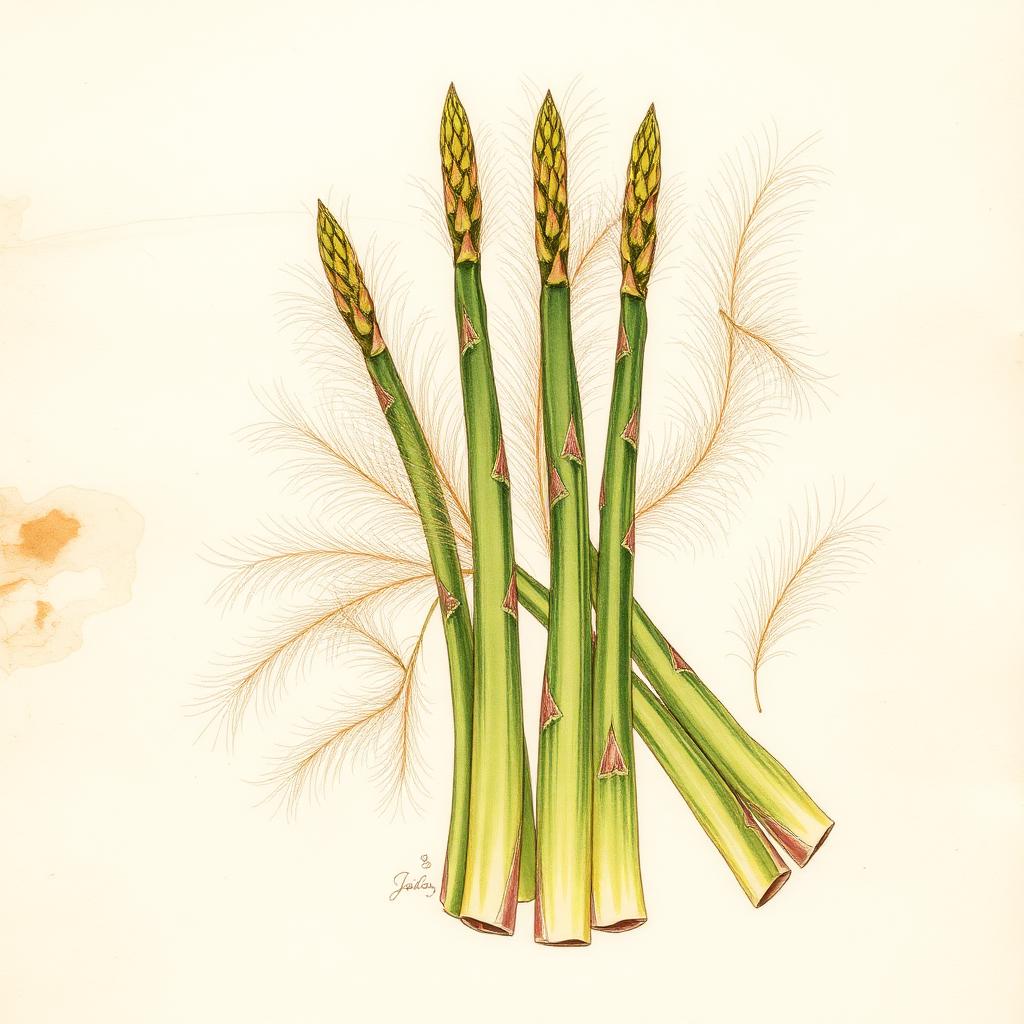
Botanical descriptionPerennial vegetable producing edible young spears in spring from a long-lived underground rootstock (crown). The mature plant becomes a tall, feathery, fern-like green up to 1.5 m.

Key Takeaways

What to know in 30 seconds

  • Inulin and prebiotic fibers feed beneficial gut bacteria
  • Diuretic — supports healthy fluid balance and uric acid clearance
  • Folate for blood and heart health
  • Glutathione, the body's master antioxidant
Why It Matters

Why this matters for everyday wellness

Asparagus earns a place in a healthy-aging routine because it combines inulin and prebiotic fibers feed beneficial gut bacteria with diuretic — supports healthy fluid balance and uric acid clearance — a rare combination that supports the cardiovascular, metabolic, and cellular systems that drive how we age.

Practical Everyday Uses

Practical everyday uses

  • Roast at 425°F with olive oil, lemon, and sea salt for 12 min
  • Steam 4–6 min; serve with lemon and good olive oil
  • Add to spring frittata, kuku, or rice pilaf
  • Save the trimmed ends for a kidney-tonic broth
Source: Traditional Persian Wisdom

Traditional Persian perspective

Historical & cultural knowledge passed down through generations — not a medical claim.

Historical use

Persian medicine considers asparagus warm and moist (گرم و تر) — gently warming, diuretic, and blood-cleansing. The shoot is gentle enough for daily food use; the root is stronger and traditionally reserved for medicinal decoctions.

Traditional applications

Inulin and prebiotic fibers feed beneficial gut bacteria · Diuretic — supports healthy fluid balance and uric acid clearance · Folate for blood and heart health

Cultural significance

Used across household wellness traditions as a culinary herb with daily-life relevance.

Healthy Aging

Healthy aging relevance

In a healthy-aging context, asparagus bridges tradition and science: persian medicine considers asparagus warm and moist (گرم و تر) — gently warming, diuretic, and blood-cleansing. The shoot is gentle enough for daily food use; the root is stronger and traditionally reserved for medicinal decoctions, while modern research highlights its role in the same pathways — inflammation, vascular health, and cellular resilience — that compound over decades to shape how we feel in our 60s, 70s, and beyond.

Source: Modern Scientific Research

Modern scientific evidence

Benefits supported by peer-reviewed studies & contemporary nutrition science — informational only, not medical advice.

  • Inulin and prebiotic fibers feed beneficial gut bacteria
  • Diuretic — supports healthy fluid balance and uric acid clearance
  • Folate for blood and heart health
  • Glutathione, the body's master antioxidant
  • Vitamin K for bone health

Nutritional profile

Fiber~3 g per cup
Vitamins
  • Vitamin K
  • Folate
  • Vitamin C
  • Vitamin A
  • B vitamins
Minerals
  • Potassium
  • Copper
  • Iron
Antioxidants
  • Glutathione
  • Rutin
  • Quercetin
  • Saponins
Other notable nutrients
  • Inulin (prebiotic)
  • Asparagine (diuretic amino acid)
Historical Uses

Historical uses across cultures

From classical Persian, Greek, and Islamic-Golden-Age sources.

  • Spring kidney and urinary tract cleanse
  • Mild diuretic for cold-type fluid retention
  • Tonic for convalescents and after long winter diets
  • Root decoction for stubborn urinary stagnation (practitioner guidance)
Internal Uses

Taken internally

  • Steamed or roasted spears as a spring vegetable
  • Asparagus broth (boil trimmed ends 20 min) sipped as a kidney tonic
  • Root decoction: 1 tsp dried sliced root per cup, simmered 15 min (practitioner)
Traditional Formulas

Named traditional formulas

  • Spring Kidney Brothآبگوشت بهاری مارچوبه

    Asparagus trimmings simmered with parsley stems, celery, and a slice of lemon for 30 min — sipped warm as a gentle spring kidney tonic.

Contraindications

Who should avoid this — and known interactions

  • Active kidney inflammation (the diuretic load may aggravate)
  • Severe gout flare — start with small portions
  • Pregnancy: limit root preparations to culinary spear amounts
Everyday Use

How it's commonly used

  • Roast at 425°F with olive oil, lemon, and sea salt for 12 min
  • Steam 4–6 min; serve with lemon and good olive oil
  • Add to spring frittata, kuku, or rice pilaf
  • Save the trimmed ends for a kidney-tonic broth
Safety

Safety & cautions

  • Produces characteristic sulfur-scented urine — harmless
  • Diuretic action: ensure adequate fluid intake
  • Avoid medicinal root preparations in pregnancy

Ask Holistic Health AI about Asparagus

Personalized, evidence-informed guidance from your AI Wellness Coach.

Open AI Wellness Coach

Related Herbs

Related Foods

Related articles

Frequently asked questions

+How is asparagus traditionally used?

Persian medicine considers asparagus warm and moist (گرم و تر) — gently warming, diuretic, and blood-cleansing. The shoot is gentle enough for daily food use; the root is stronger and traditionally reserved for medicinal decoctions.

References

Sources & references

Reviewed by Holistic Health AI Editorial Team Last updated Traditional wisdom + modern evidence Educational, not medical advice