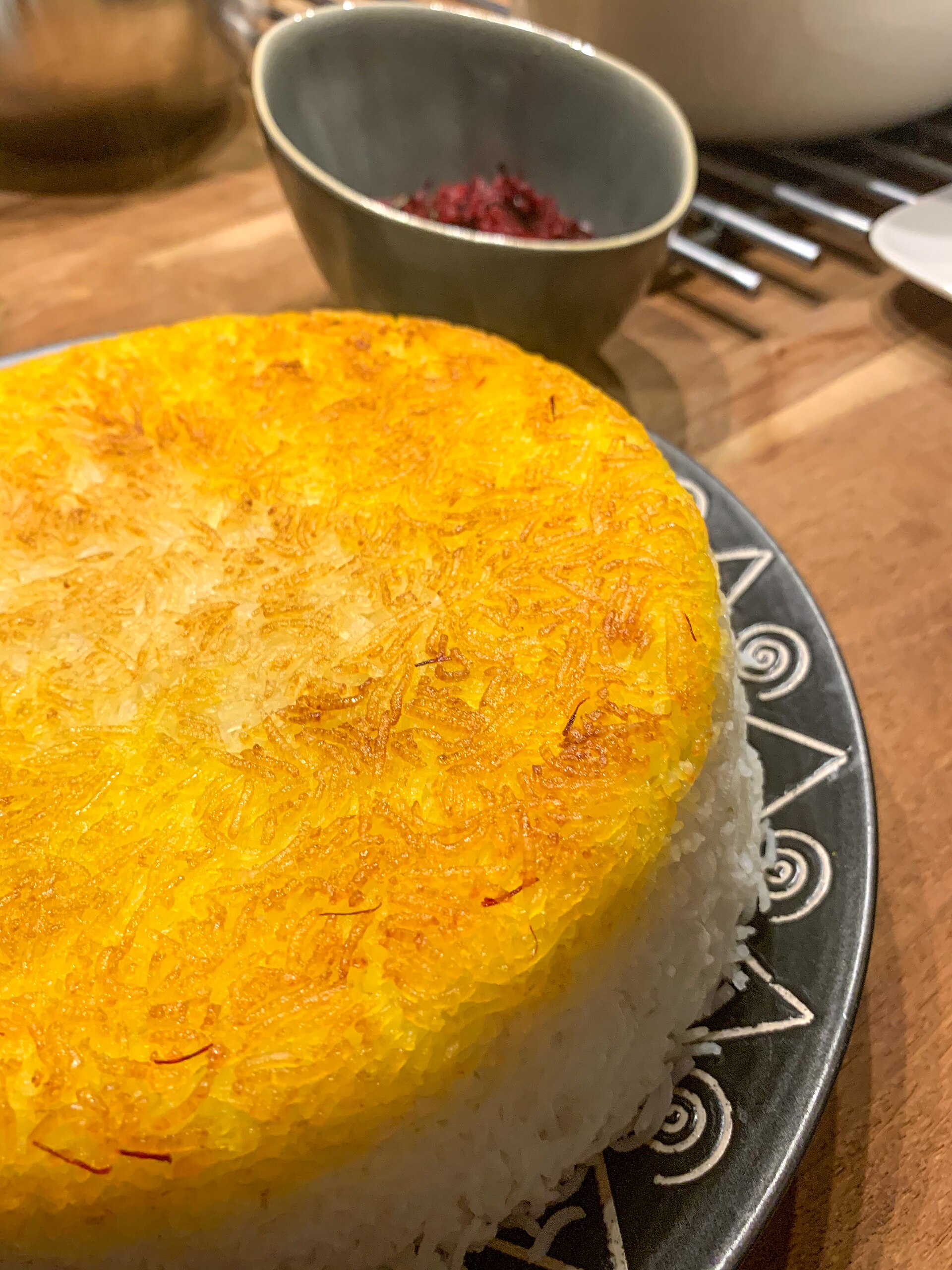
Persian Rice
Almost every khoresh on this site is served with rice, so the rice is explained once, here, rather than repeated on each dish page. There is more than one legitimate way to cook it, and this page covers three: the parboiled-and-steamed method, the one-pot method, and the rice cooker.
The basics
Persian rice is long-grain — usually an aged basmati or an Iranian variety such as domsiah or sadri. Aged rice absorbs water more evenly and is less likely to break, which is why it is preferred.
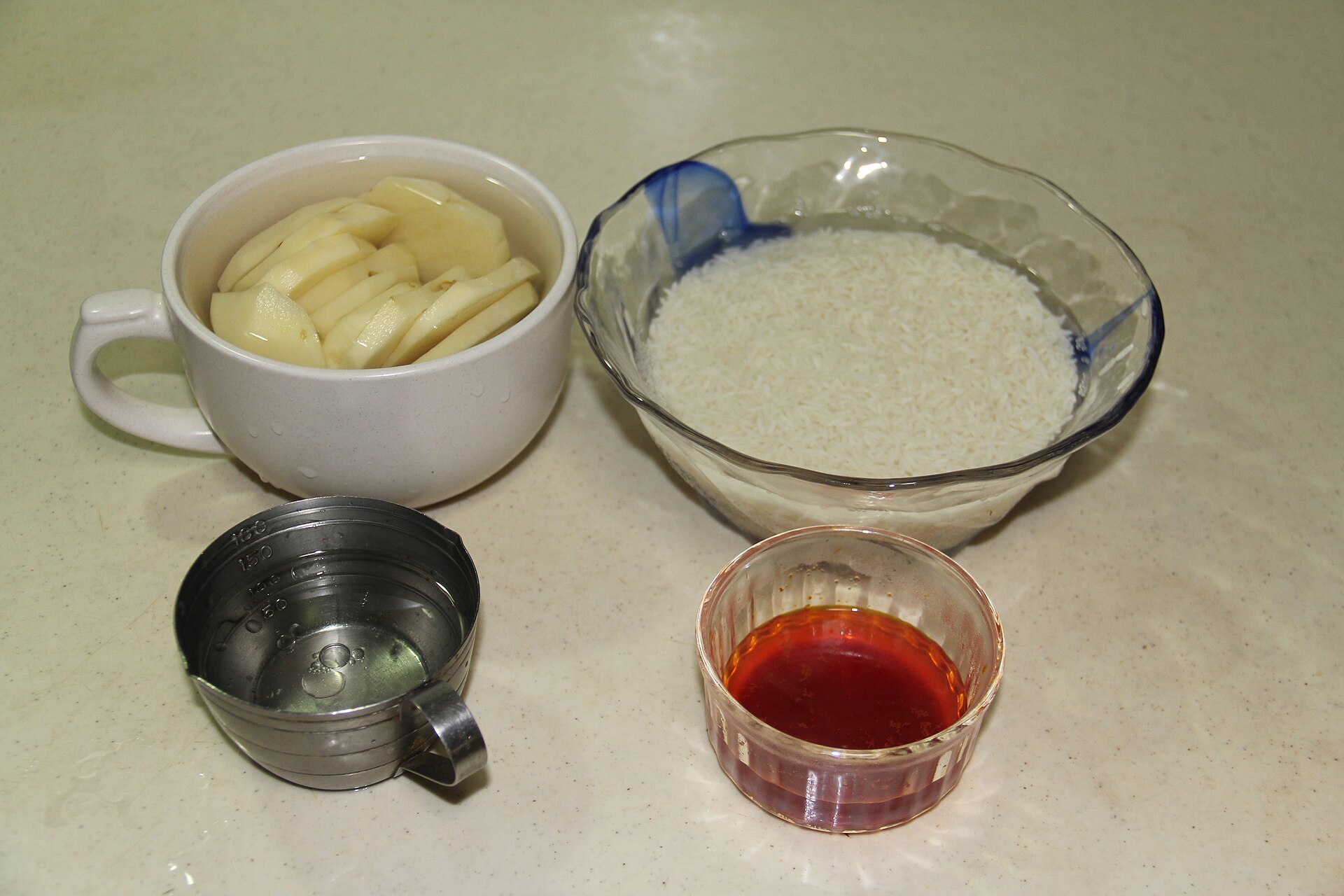
Two habits do most of the work. Rinse the rice in several changes of cold water until the water runs close to clear, which removes loose surface starch and stops the grains gluing together. Then soak it — 30 minutes at minimum, an hour or two is common, in salted water. Soaked grains cook through without needing a long boil, so they lengthen rather than split.
For planning, about ½–¾ cup dry rice per person is a useful starting range; the amount varies with appetite and what else is served.
Chelow — parboiled and steamed
This method is associated with guests and celebration, and it is the one that produces separate, standing grains and the best tahdig. It takes about an hour of attention, most of it unattended.
- 1Rinse 2 cups of rice until the water runs nearly clear, then soak it in water with 2 tbsp of salt for at least 30 minutes.
- 2Bring a large pot of water to a rolling boil and salt it well. Drain the rice and add it.
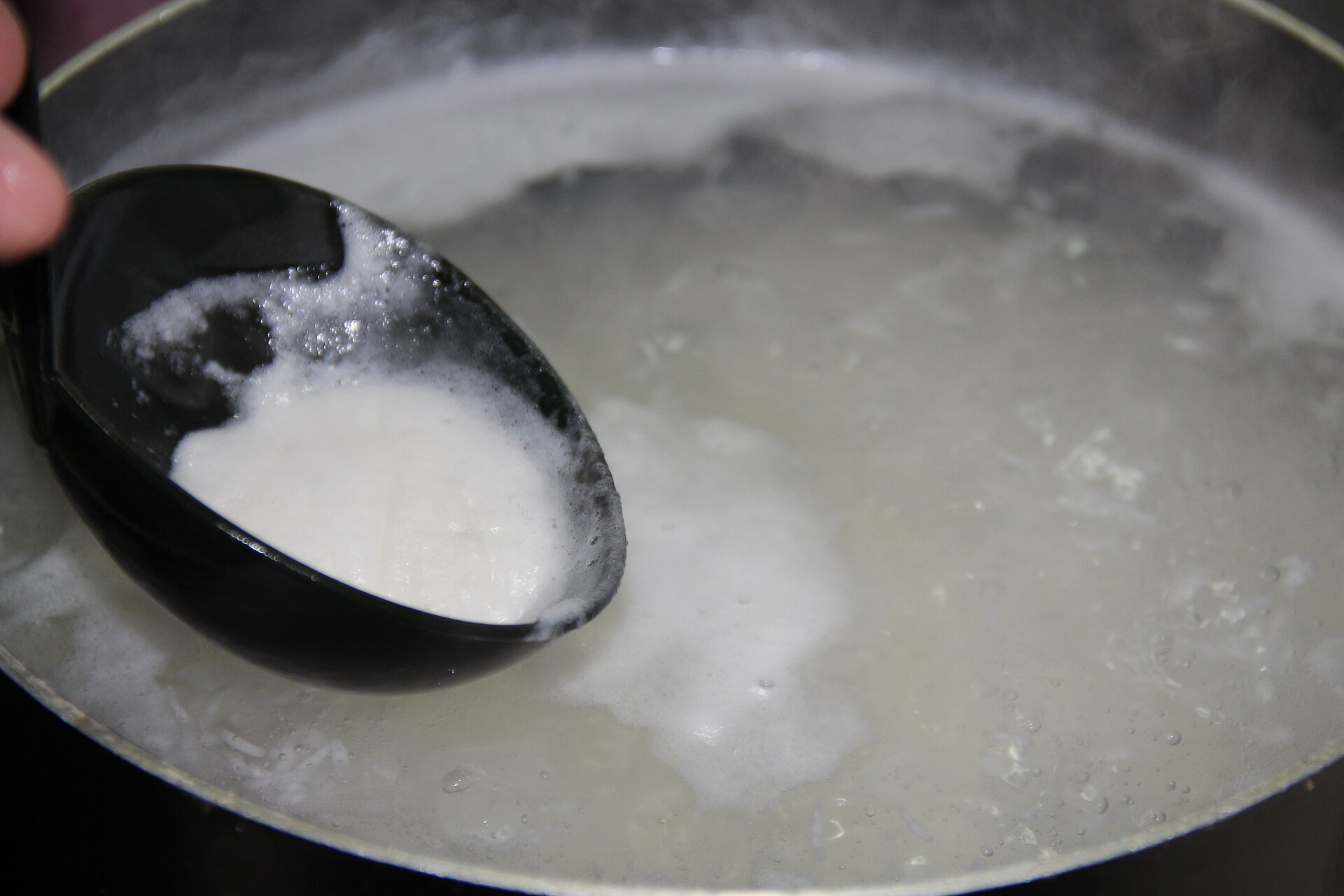
- 3Boil hard for 4–8 minutes, uncovered. Start tasting at 4. The grain should be soft at the outside but still firm at the very centre — this is the whole judgement of the method.
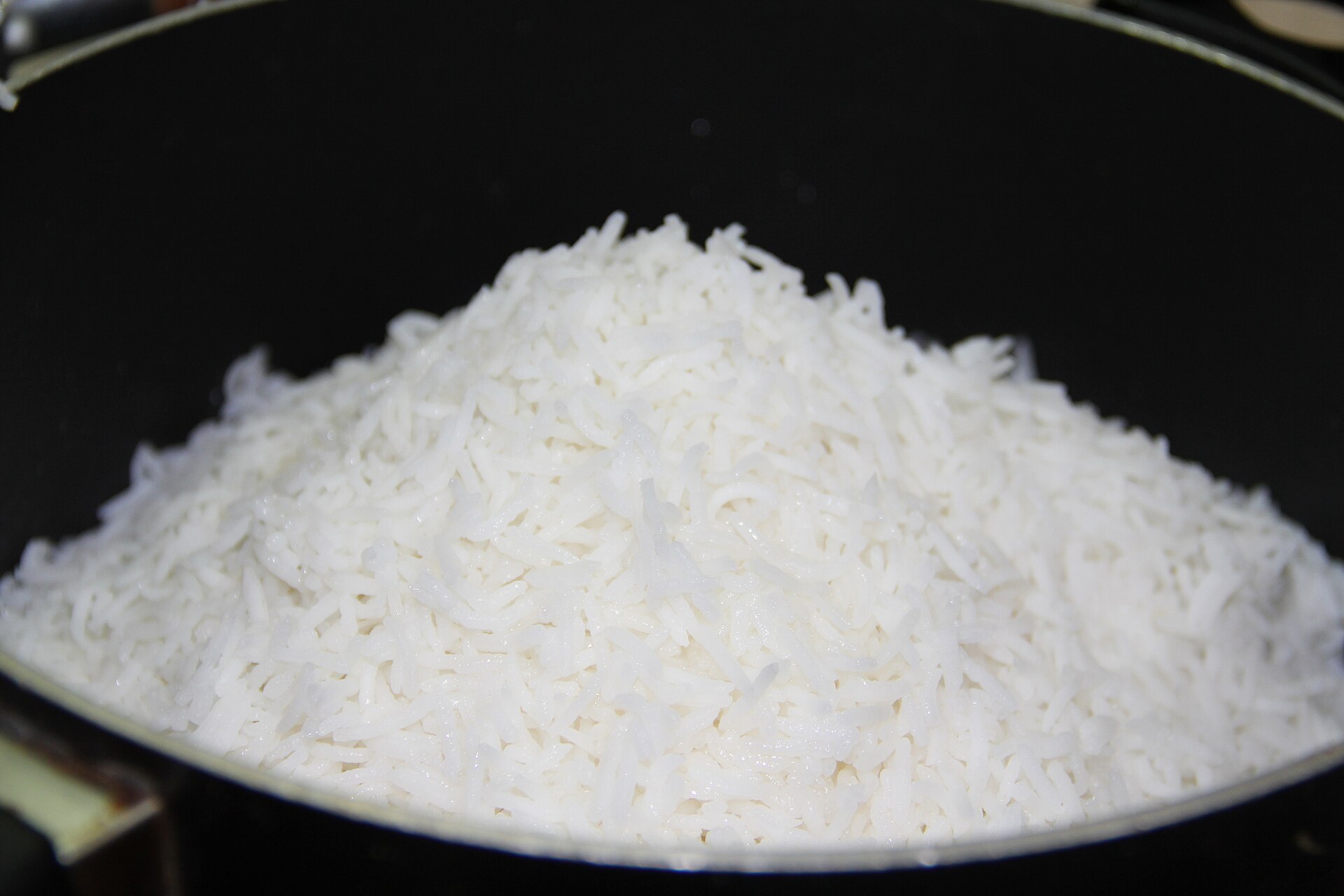
- 4Drain immediately in a colander and rinse briefly with lukewarm water to stop the cooking.
- 5Mound the rice in a pyramid and poke a few holes down through it with the handle of a spoon so steam can travel.
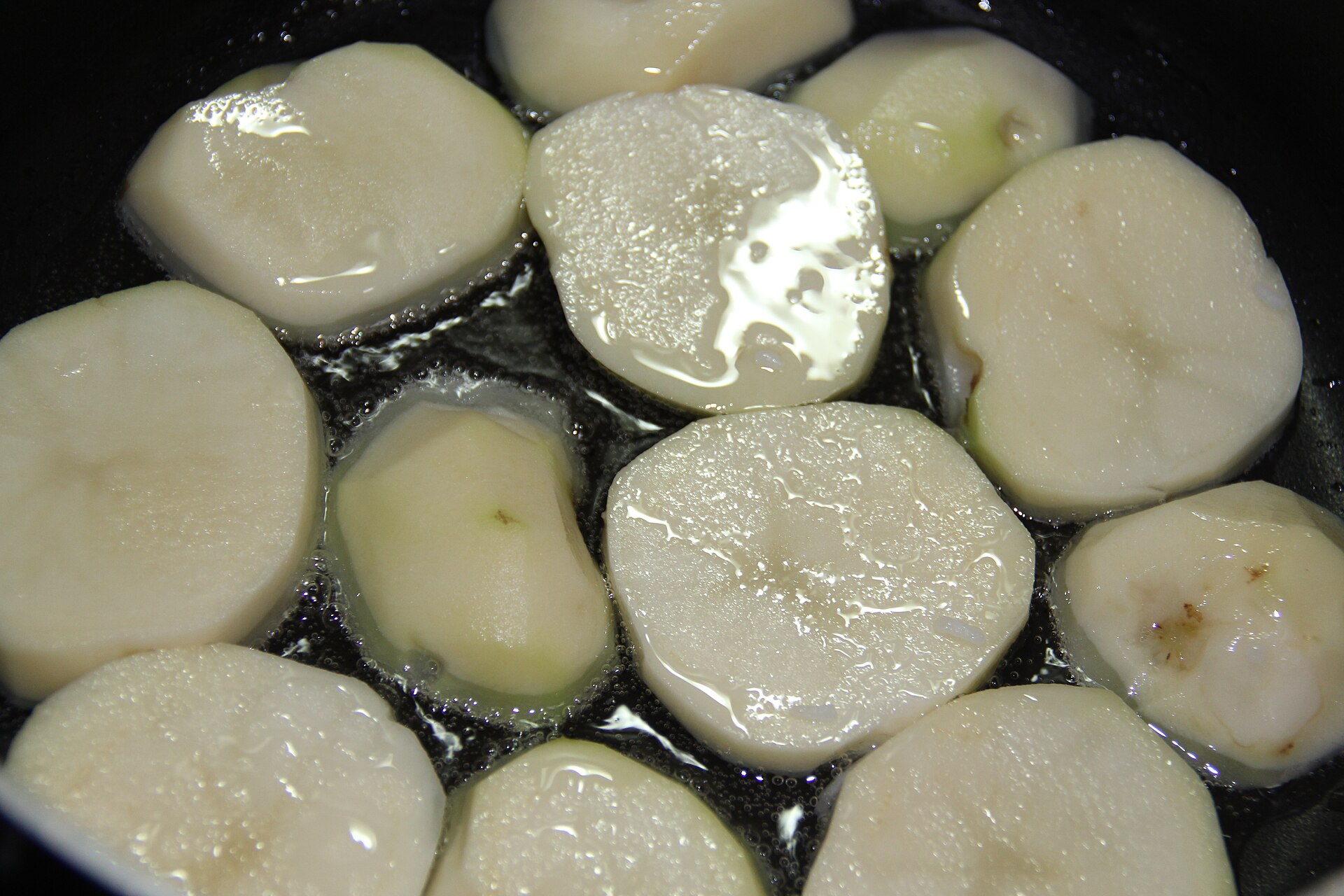
- 6Return the pot to the heat with 3 tbsp oil or butter and 2 tbsp water. Lay in whatever tahdig you are making, or a first thin layer of rice.
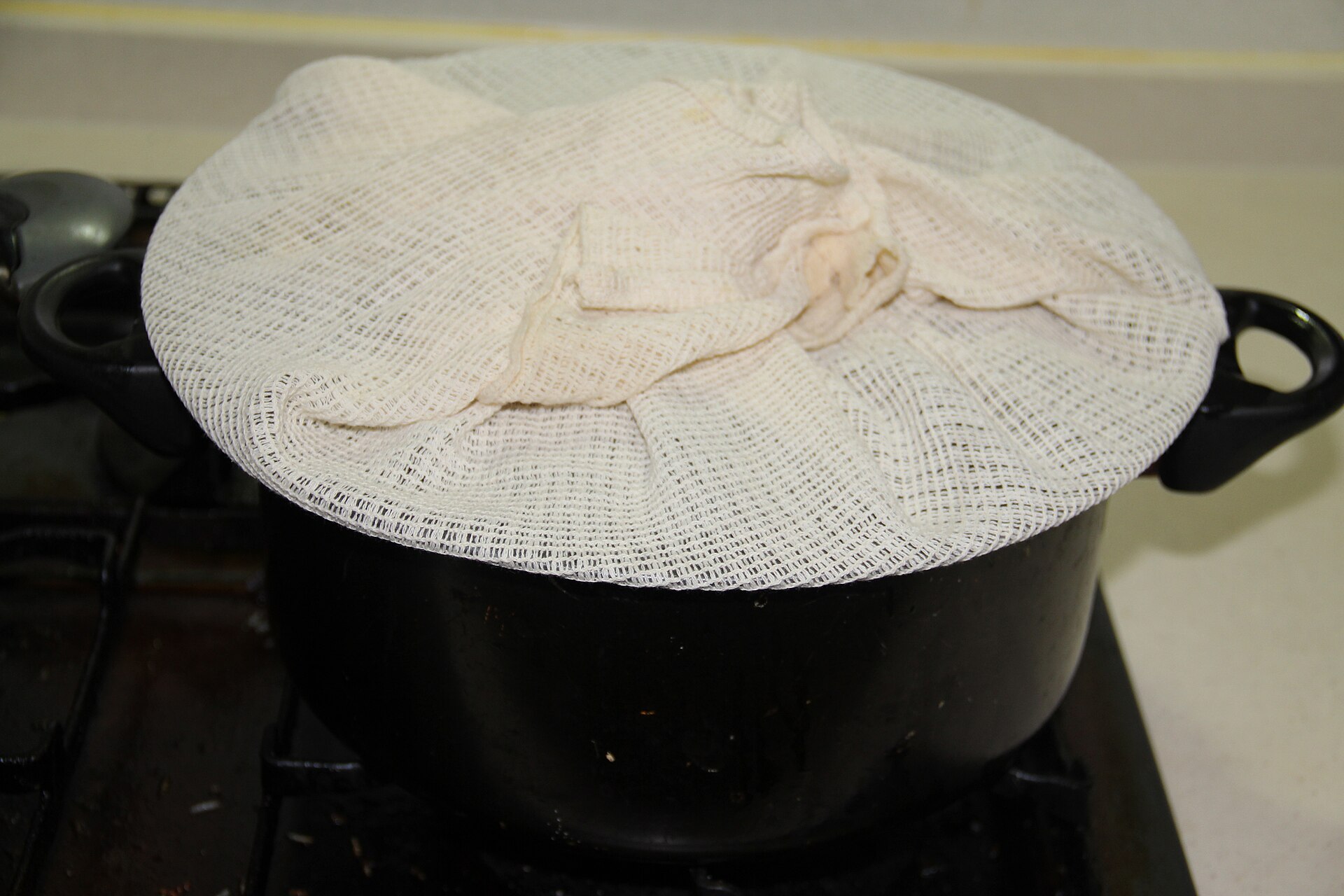
- 7Cover the lid with a clean tea towel, put it on tightly, and cook on medium-high for 8–10 minutes until you hear it sizzle.
- 8Turn the heat to low and steam for 35–45 minutes. Do not lift the lid during this time.
The tea towel absorbs condensation that would otherwise drip back and make the top layer wet. It is not decorative.
Kateh — the one-pot method
Kateh is the everyday version, long associated with the north of Iran and cooked on ordinary weekdays. The rice is not drained; it absorbs all its water. The grains sit closer together and the result is softer than chelow — that is the point, not a failure.
- 1Rinse 2 cups of rice well. A soak is optional here.
- 2Put the rice in a pot with 3 cups of water, 1 tsp salt and 2 tbsp oil or butter.
- 3Bring to a boil uncovered and cook until the water has dropped to the level of the rice and craters appear on the surface, about 8–10 minutes.
- 4Cover with a tea-towel-wrapped lid, turn the heat to its lowest setting, and steam for 30–35 minutes.
Kateh also makes tahdig, straight from the rice at the base of the pot.
The rice cooker route
Rice cookers designed for Persian-style rice are also widely used, particularly because some models are designed to develop a browned crust. They hold a steady low heat for a long time, which is what the steaming stage needs, and using one is ordinary practice rather than a shortcut to apologise for.
- 1For kateh-style rice, add rinsed rice, water, salt and fat in the same proportions as above and run the standard cycle.
- 2For chelow-style rice, parboil and drain on the stove first, then transfer to the oiled cooker bowl and let the cooker handle the steaming.
- 3Brush the bowl generously with oil or butter before the rice goes in if you want a crust.
- 4Leave it on the keep-warm setting for 10–15 minutes at the end; the crust firms up and releases more easily.
A general-purpose Western rice cooker will cook the rice but often will not hold heat long enough at the base to brown a tahdig.
Tahdig — the crust beneath
Tahdig is what forms against the base of the pot: golden, crisp, and served in pieces on top of the rice or on its own plate. It is made in several ways, and no one of them is the correct one.
- Plain rice. A first layer of parboiled rice pressed into the oiled base. The simplest form.
- Yogurt, egg and saffron. A cup of rice mixed with 2–3 tbsp yogurt, one egg yolk and saffron water, spread across the base. Richer, and thicker.
- Potato. Thin rounds of potato laid in the oil in a single layer.
- Flatbread. Lavash torn to line the base. The fastest and the most forgiving.
Examples of tahdig
Photographs of selected forms — not every version listed above.
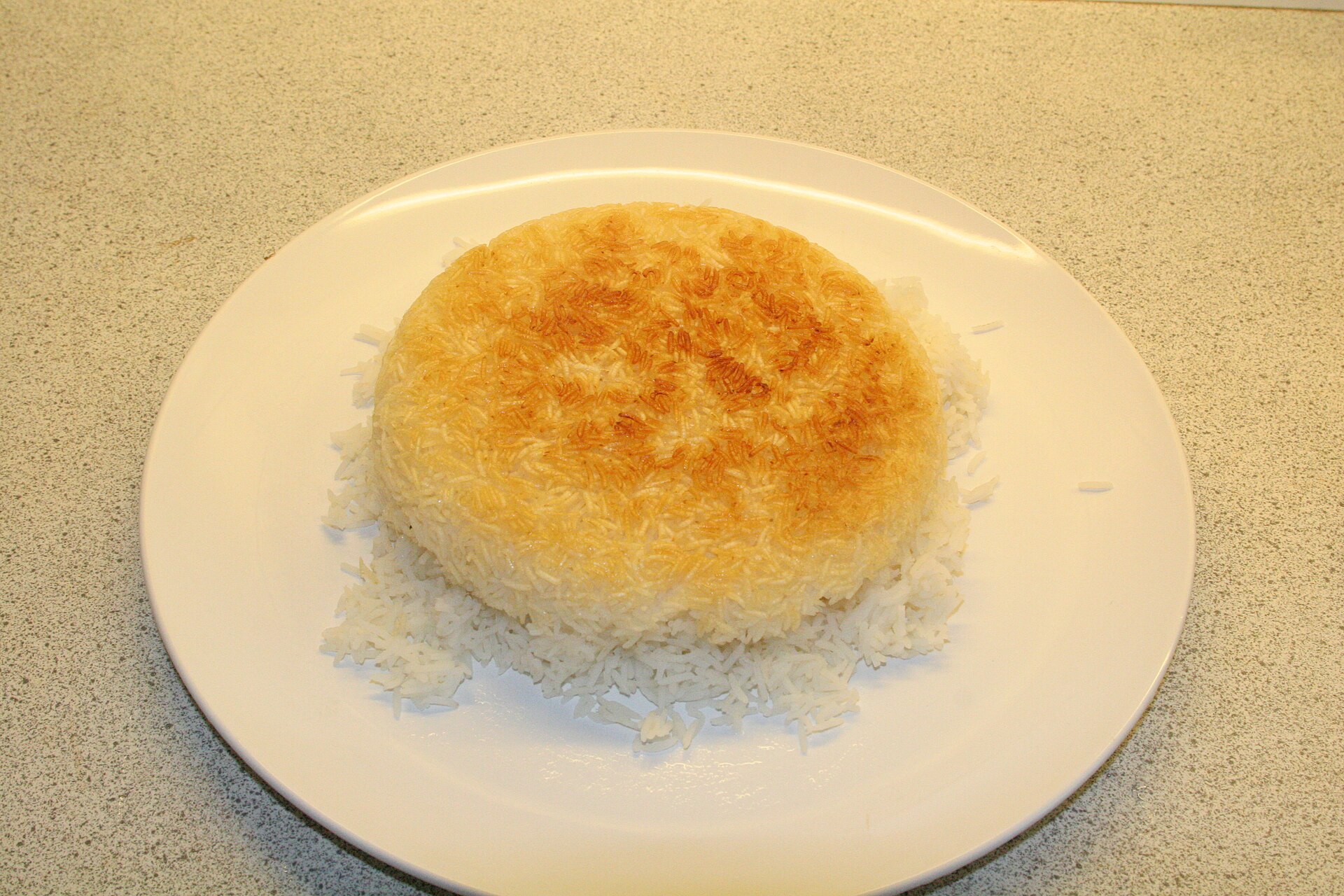
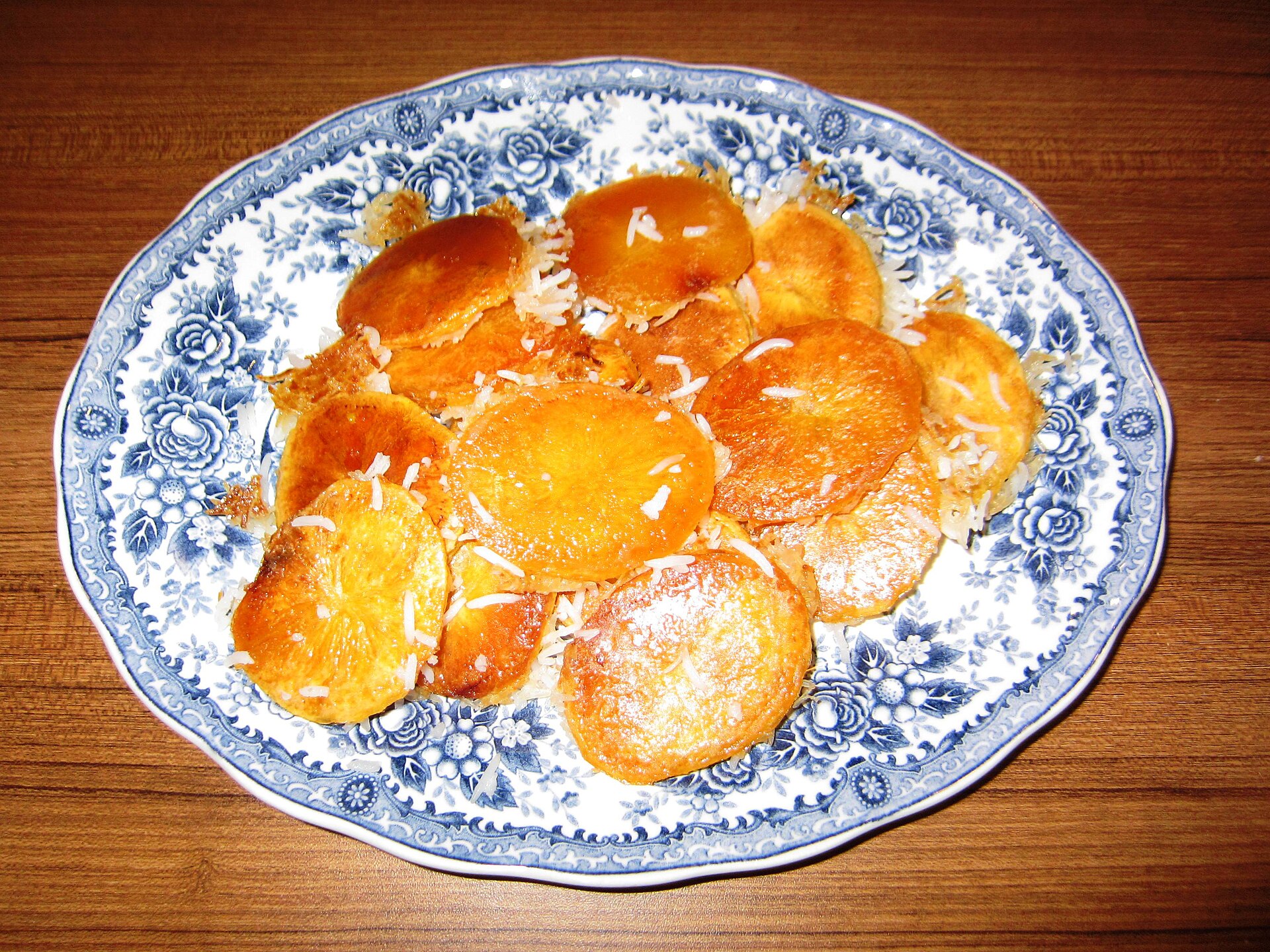
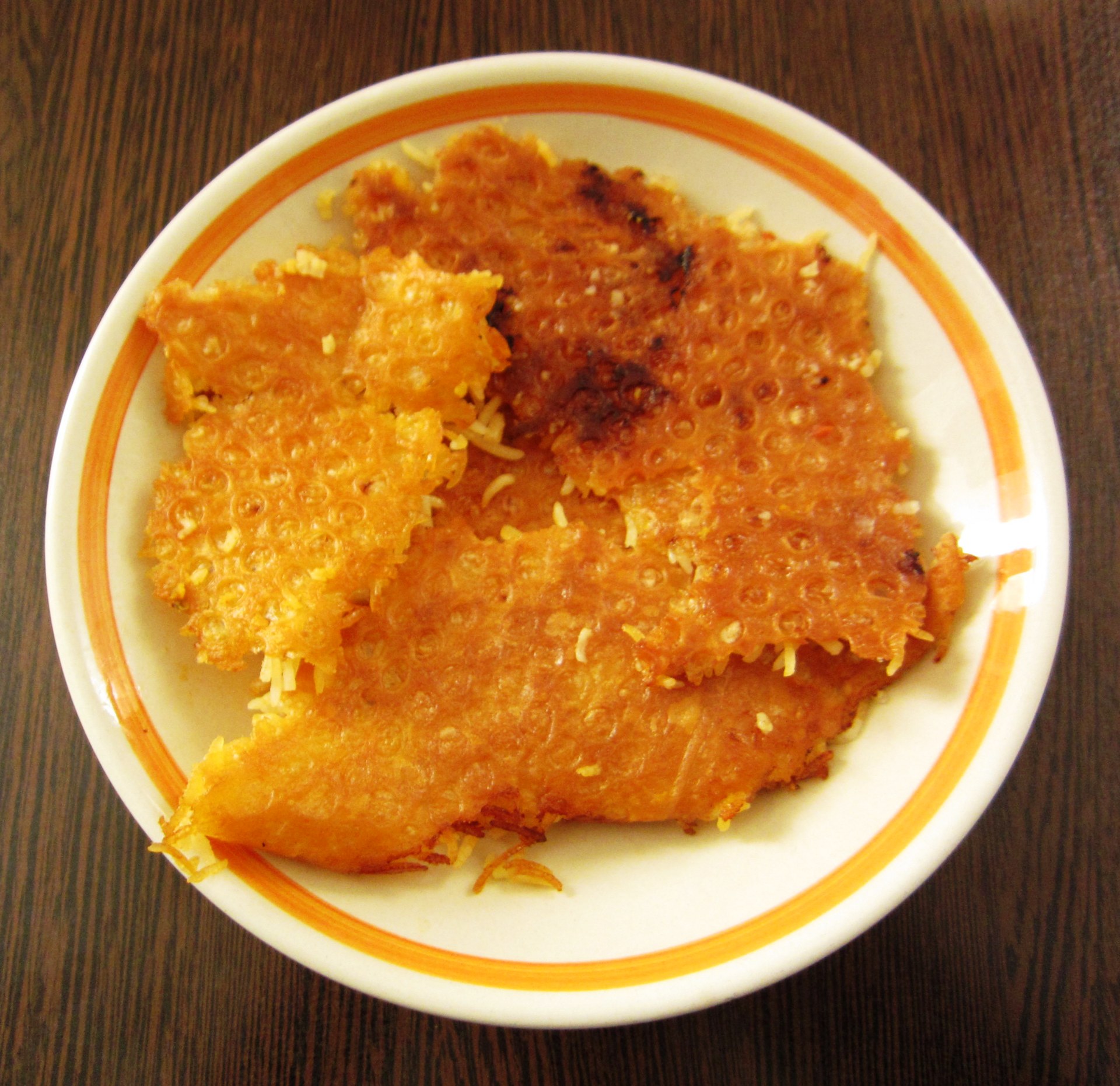
Whichever you use: enough fat to coat the base, medium-high heat for the first 8–10 minutes to set the crust, then low heat for the rest. Rushing the second half is what burns it.
To turn it out, rest the base of the pot in a shallow tray of cold water for a minute or two — the crust contracts and lets go — then invert onto a plate.
What usually goes wrong
- Sticky, clumped rice. Not rinsed enough, or boiled past the point where the centre was still firm.
- Broken grains. Stirred during the boil, or boiled too long. Persian rice is not stirred once it is in the pot.
- Wet top layer. No tea towel under the lid, or the lid was lifted mid-steam.
- Burnt tahdig. The heat was never brought down after the crust set.
- No crust at all. Too little fat, or a pot with a thin base that never held steady heat.
References +−
This page is independently written from general practice and published cookery references, including Najmieh Batmanglij's Food of Life and Margaret Shaida's The Legendary Cuisine of Persia, which are recorded as source material only. No author has reviewed or endorsed this page.
Photo credits
- Saffron tahdig — Tahdig mit Safran.jpg by Alice Wiegand, CC BY-SA 4.0, via Wikimedia Commons. Resized to 1920 px wide. No crop, no colour change.
- Rice soaking before cooking — Making Chelow 1.jpg by Roozitaa, CC BY-SA 3.0, via Wikimedia Commons. Resized to 1920 px wide. No crop, no colour change.
- Rice at the boil, before draining — Making Chelow 2.jpg by Roozitaa, CC BY-SA 3.0, via Wikimedia Commons. Resized to 1920 px wide. No crop, no colour change.
- Drained rice mounded loosely for steaming — Making Chelow 4.jpg by Roozitaa, CC BY-SA 3.0, via Wikimedia Commons. Resized to 1920 px wide. No crop, no colour change.
- Potato slices laid in oil at the base of the pot — Making Chelow 3.jpg by Roozitaa, CC BY-SA 3.0, via Wikimedia Commons. Resized to 1920 px wide. No crop, no colour change.
- Lid wrapped in a cloth for the steaming stage — Making Chelow 6.jpg by Roozitaa, CC BY-SA 3.0, via Wikimedia Commons. Resized to 1920 px wide. No crop, no colour change.
- Plain rice tahdig, turned out whole — Ailin15VeganRiceWithTahdig.JPG by AilinParsa, CC0 1.0, via Wikimedia Commons. Resized to 1920 px wide. No crop, no colour change.
- Potato tahdig — Potato Tahdig.JPG by MRG90, CC BY-SA 4.0, via Wikimedia Commons. Resized to 1920 px wide. No crop, no colour change.
- Lavash bread tahdig — Lavash bread Tahdig.png by MRG90, CC BY-SA 3.0, via Wikimedia Commons. Converted from PNG to JPEG and resized to 1920 px wide. No crop.