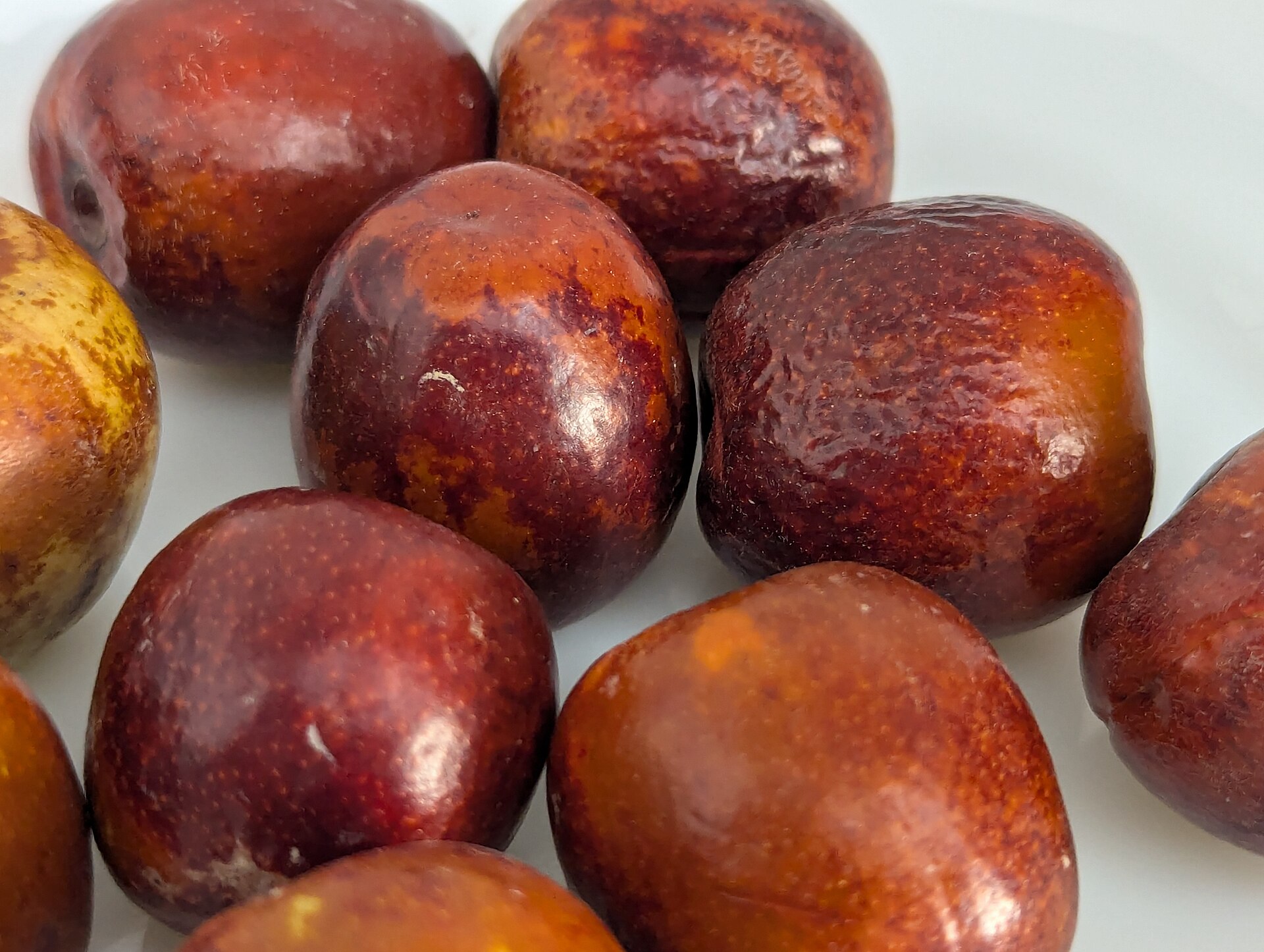
Jujube
Persian annab — a calming, sleep-friendly fruit traditionally used to nourish the blood.
Traditional wisdom and modern evidence—clearly explained.
“Before we go deeper into Jujube, step through — even people who have known it all their lives rarely notice these small things.”
A curiosity cabinet. Open each drawer.
6 small things about Jujube that quietly surprise most people.
Traditional sleep and anxiety support (saponins, flavonoids)
Vitamin C
Iron and gentle blood-nourishing effect
Soothing for a dry, irritated throat
Dried annab is brewed into a calming tea across Iran for stress and sleep, and…
“People have practiced this quietly for centuries — long before we had a science to explain why it worked.”
How Persian physicians understood jujube
Persian medicine considers jujube warm and moist — nourishing the blood, calming the nerves, and supporting restful sleep.
Traditional Persian physicians developed these observations over centuries. The next section explores which of these ideas have been investigated by modern scientific research.
Jujube — annab in Persian, hong zao in Chinese medicine — has been used for thousands of years as a gentle calming, sleep-supporting, and blood-nourishing food. Fresh, it tastes like a crisp apple; dried, it softens to a sweet, date-like chew.
Health rarely arrives as a single decision. It gathers.
“And in their own careful language, the modern laboratories have been quietly agreeing.”
What tradition and modern nutrition agree on.
A plain-English read of the research. Each line says what was studied and what was found — links go to the original source. The tag on the right notes how strong the evidence is today, and what still remains uncertain.
Traditional sleep and anxiety support (saponins, flavonoids)
Traditional and editorial synthesisVitamin C — higher per gram than oranges in fresh fruit
Traditional and editorial synthesisIron and gentle blood-nourishing effect
Traditional and editorial synthesisSoothing for a dry, irritated throat
Traditional and editorial synthesis
“Knowing all this, one small question remains — are you preparing Jujube the way it deserves? Most people are not.”
How to prepare jujube, step by step.
Most people prepare Jujube incorrectly. Can you guess how?
- Steep dried jujubes whole
pierce or split for a stronger infusion
- Pair with chamomile or lavender for a calming evening blend
A traditional preparation of jujube.
- Add to long-simmered bone broths for natural sweetness and minerals
A traditional preparation of jujube.
- Store dried fruit in airtight jars away from light
A traditional preparation of jujube.
Green returns to the sofreh. The body wakes with the garden.
“This shifts the moment you bring Jujube into your own kitchen. Here are two gentle ways to begin.”
A gentle word of care.
“So — if you were to sit across from me and ask quietly what to do, this is what I would say.”
Dear friend,
Jujube earns a place in a healthy-aging routine because it combines traditional sleep and anxiety support (saponins, flavonoids) with vitamin c — higher per gram than oranges in fresh fruit — a rare combination that supports the cardiovascular, metabolic, and cellular systems that drive how we age.
Warmly,
One more note —
Jujube has thousands of years of traditional use for calm and sleep, and modern research highlights saponins (jujubosides) studied for the GABA system and anxiety. Sleep and stress regulation are foundational to healthy aging, and a nightly cup of annab tea is one of the most accessible ways to support both.
— With warmth, Hakim
کم گوی و گزیده گوی چون در.
Speak little; speak like a pearl.
“Before you leave, one small thread to pull — Jujube rarely travels alone.”