Holistic Health AI
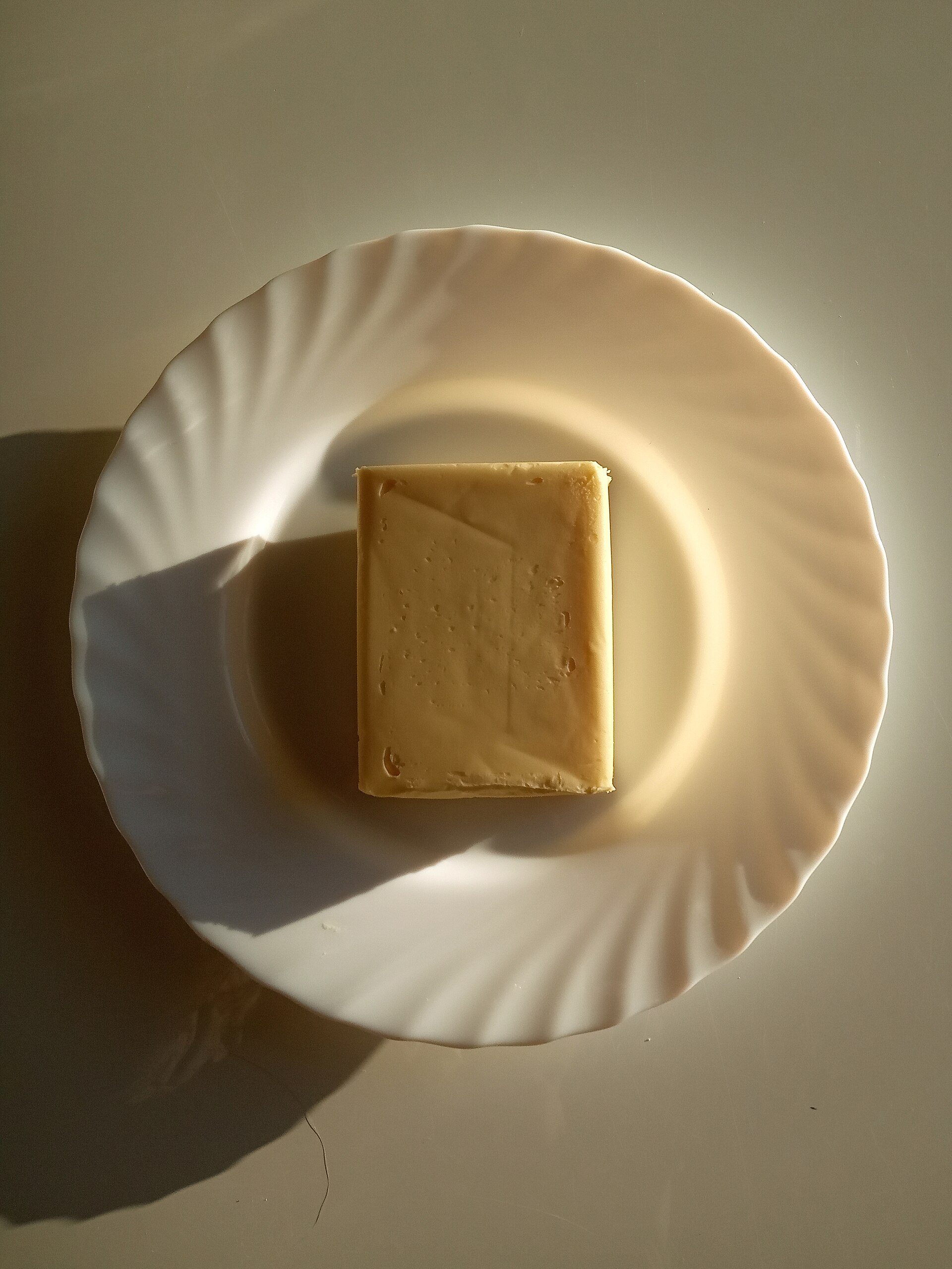
Butter
Exhibit I · The Invitation

Butter

کره

Kareh — churned cream used in small amounts on sangak, in haleem, and to finish rice.

Traditional wisdom and modern evidence—clearly explained.

Evidence
Traditional

Before we go deeper into Butter, step through — even people who have known it all their lives rarely notice these small things.

Exhibit II · Hidden Discoveries

A curiosity cabinet. Open each drawer.

5 small things about Butter that quietly surprise most people.

Fact I

Source of fat-soluble vitamins A, D, E and K2

Fact III

Small amounts make plain grains and vegetables more satisfying

Fact IV

Warm sangak, butter and honey is one of the simplest and most loved Iranian breakfasts

Fact V

In a healthy-aging context, butter bridges tradition and science

People have practiced this quietly for centuries — long before we had a science to explain why it worked.

Exhibit III · Traditional Persian Perspective

How Persian physicians understood butter

What Persian physicians believed

Traditionally read as warm and moist and considered nourishing and softening, particularly for dryness and for convalescence.

Traditional Persian physicians developed these observations over centuries. The next section explores which of these ideas have been investigated by modern scientific research.

The blueprint
Now.What modern research is seeing —

Kareh is churned cream. On the Persian table it appears in small quantities and in specific places: a slick on hot bread with honey or jam, stirred through haleem, folded into saffron rice at the end. It is distinct from ghee (roghan-e kareh) which has had the milk solids removed, and from kashk, which is fermented whey.

Evidence · traditional
a quiet moment

Butter — before the words, before the science, simply this.

And in their own careful language, the modern laboratories have been quietly agreeing.

Exhibit IV · Modern Research · food spread

What tradition and modern nutrition agree on.

A plain-English read of the research. Each line says what was studied and what was found — links go to the original source. The tag on the right notes how strong the evidence is today, and what still remains uncertain.

specimen · butter
  1. Source of fat-soluble vitamins A, D, E and K2

    Traditional and editorial synthesis
  2. Carries flavour and aroma — including saffron — better than most fats

    Traditional and editorial synthesis
  3. Small amounts make plain grains and vegetables more satisfying

    Traditional and editorial synthesis
Where the evidence stands today

Composition and culinary use only; no cardiovascular or metabolic health claim is made in either direction.

Knowing all this, one small question remains — are you preparing Butter the way it deserves? Most people are not.

Exhibit V · Preparation

How to prepare butter, step by step.

Most people prepare Butter incorrectly. Can you guess how?

  1. Spread thinly on warm sangak with honey or feta

    A traditional preparation of butter.

  2. Stir a spoonful through haleem before serving

    A traditional preparation of butter.

  3. Melt with bloomed saffron and pour over rice at the end

    A traditional preparation of butter.

A cup of chai, a piece of bread,

and the day begins again.

Persian household

This shifts the moment you bring Butter into your own kitchen. Here are two gentle ways to begin.

Exhibit VII · Safe Use

A gentle word of care.

Consultation notes
Read this first
  • Allergy risk

    Contains milk protein and traces of lactose; unsuitable for a milk allergy A severe allergic reaction (anaphylaxis) is a medical emergency: use an adrenaline auto-injector if you have one and call emergency services immediately. Watch for cross-contact in shared kitchens and packaged foods.

Concern
Note
High in saturated fatBe careful
Contains milk protein and traces of lactoseBe careful
Salted butter adds meaningful sodium when used generouslyBe careful

So — if you were to sit across from me and ask quietly what to do, this is what I would say.

Hakim's Perspective
A short note on butter

Dear friend,

Butter is largely saturated fat, so quantity is the whole question. Used as flavour rather than as the cooking medium, it stays a small part of the day.

Warmly,

Hakim
Your companion
A letter from Hakim

One more note —

In a healthy-aging context, butter bridges tradition and science: traditionally read as warm and moist and considered nourishing and softening, particularly for dryness and for convalescence, while modern research highlights its role in the same pathways — inflammation, vascular health, and cellular resilience — that compound over decades to shape how we feel in our 60s, 70s, and beyond.

— With warmth, Hakim

a note in the margin

The body speaks quietly. The trick is learning to listen without arguing.

— H

Before you leave, one small thread to pull — Butter rarely travels alone.

End of Page

You’ve completed this page. Continue exploring the Living Library.

Living Library Progress
0 of 101 foods explored0%